
Mera Peak Climbing 18 Days

Mera Peak Climbing 18 Days
Activities
Group Size
Reviews
Keywords
Trip code
WT-CODE 3075
- Overview
- Trip Outline
- Trip Includes
- Trip Excludes
- Gallery
- Reviews
- Booking
- FAQ
Mera Peak Trekking with Climbing (6,476m / 21,247ft)
The Highest Trekking Peak in Nepal
Duration: 18 Days
Difficulty: Strenuous
Activity: Trekking & Peak Climbing
Maximum Altitude: 6,476 meters (21,247 feet)
Trip Starts: Lukla
Trip Ends: Lukla
Group Size: 1–12 People
Best Seasons: March–May & September–November.
Mera Peak Trekking with Climbing Highlights
Embark on an unforgettable Himalayan adventure by climbing Mera Peak (6,476m), Nepal’s highest officially designated trekking peak. This extraordinary expedition combines an exciting trekking journey through the pristine Hinku Valley with the rewarding challenge of reaching one of Nepal’s most spectacular summits. Suitable for adventurous trekkers looking to experience their first Himalayan peak, Mera Peak offers breathtaking scenery, rich Sherpa culture, and one of the finest panoramic viewpoints in the Himalayas.
Trip Highlights
- Conquer Mera Peak (6,476m / 21,247ft), the highest trekking peak in Nepal and enjoy an unforgettable mountaineering achievement.
- Witness one of the world’s most spectacular Himalayan panoramas, featuring Mount Everest (8,848.86m), Lhotse (8,516m), Makalu (8,485m), Cho Oyu (8,188m), Kanchenjunga (8,586m), Baruntse, Chamlang, Ama Dablam, Nuptse, and many other snow-capped giants.
- Experience a thrilling scenic flight between Kathmandu and Lukla, often regarded as one of the world’s most exciting mountain flights.
- Trek through the untouched beauty of the Makalu Barun National Park, home to dense rhododendron forests, ancient pine and juniper woodlands, alpine meadows, glacial rivers, and diverse Himalayan wildlife.
- Explore the peaceful and less-traveled Hinku Valley, far from the crowded Everest Base Camp trail, offering a true wilderness experience.
- Cross the spectacular Zatrwa La Pass (4,610m) while enjoying magnificent views of the surrounding Himalayan landscape.
- Experience the warm hospitality of the Sherpa, Rai, and Limbu communities, learning about their unique traditions, culture, and mountain lifestyle.
- Receive comprehensive climbing instruction from experienced, government-licensed mountaineering guides, including glacier travel, rope techniques, crampon walking, and ice axe skills.
- Trek across glaciers and snowfields while using professional mountaineering equipment under expert supervision.
- Spend a memorable night at Mera High Camp (5,780m) surrounded by breathtaking Himalayan scenery.
- Challenge yourself physically and mentally on a rewarding high-altitude expedition suitable for trekkers seeking their first Himalayan summit.
- Celebrate an unforgettable achievement after standing atop one of Nepal’s most iconic trekking peaks.
Mera Peak Trekking with Climbing Overview
Mera Peak Trekking with Climbing is one of Nepal’s most rewarding adventure holidays, combining spectacular trekking with an exciting high-altitude climbing experience. Standing proudly at 6,476 meters (21,247 feet) above sea level, Mera Peak is the highest officially recognized trekking peak in Nepal and offers climbers one of the most breathtaking panoramic viewpoints in the entire Himalayan range.
The journey begins with a scenic mountain flight from Kathmandu to Lukla, the gateway to the Everest region. Instead of following the busy Everest Base Camp route, the trail diverts south into the peaceful Hinku Valley, a hidden gem known for its pristine forests, alpine landscapes, crystal-clear rivers, and spectacular mountain scenery. This quieter route provides trekkers with an authentic Himalayan wilderness experience, where the tranquility of nature far outweighs the crowds found on more popular trekking trails.
As you gradually ascend through rhododendron forests, bamboo groves, pine woodlands, and remote mountain villages, you’ll witness dramatic changes in vegetation and landscape. The lush forests eventually give way to alpine meadows, rocky valleys, glaciers, and snow-covered terrain as you approach the base of Mera Peak. Throughout the trek, you’ll have ample opportunities to encounter Himalayan wildlife, including Himalayan thar, musk deer, colorful pheasants, mountain goats, and, if you’re fortunate, even the elusive red panda or snow leopard inhabiting the protected forests of Makalu Barun National Park.
One of the most appealing aspects of the Mera Peak expedition is its accessibility. Unlike many technical Himalayan expeditions, climbing Mera Peak requires only basic mountaineering techniques. Climbers use crampons, harnesses, helmets, ice axes, and fixed ropes where necessary, making it an excellent introduction to Himalayan mountaineering for those with little or no previous climbing experience. Before attempting the summit, professional climbing guides conduct a comprehensive training session at Khare, ensuring every participant is comfortable using climbing equipment and understands glacier travel techniques.
Although the climb itself is technically straightforward, the altitude presents the greatest challenge. At nearly 6,500 meters, oxygen levels are approximately half of those at sea level, making proper acclimatization essential. The carefully designed itinerary includes gradual altitude gain and dedicated acclimatization days, significantly improving the chances of a safe and successful summit.
The summit day begins well before dawn under a sky filled with stars. Equipped with headlamps, climbers ascend steadily across the glacier, following experienced guides toward the summit. As the first rays of sunlight illuminate the snow-covered Himalayas, the breathtaking beauty of the surrounding peaks unfolds before your eyes. Standing on the summit of Mera Peak is a truly unforgettable experience, rewarding climbers with panoramic views of five of the world’s fourteen highest mountains—Everest, Lhotse, Makalu, Cho Oyu, and Kanchenjunga—along with countless other towering Himalayan giants.
After celebrating this remarkable achievement, climbers descend safely back to High Camp and continue toward Khare before retracing the scenic Hinku Valley to Lukla. The return journey offers an opportunity to reflect on an incredible adventure that combines physical endurance, cultural exploration, and one of the most rewarding climbing experiences in the Himalayas.
Whether you are an experienced trekker seeking your first Himalayan summit or an adventurous traveler looking to take your mountaineering journey to the next level, Mera Peak Trekking with Climbing offers an exceptional combination of adventure, natural beauty, and personal accomplishment. With stunning scenery, expert guidance, and an unforgettable summit experience, this expedition remains one of Nepal’s finest trekking peak adventures.
How Difficult is Mera Peak Trekking with Climbing?
Mera Peak Trekking with Climbing is generally classified as a strenuous adventure that combines high-altitude trekking with basic mountaineering. Although it is considered one of Nepal’s most accessible trekking peaks from a technical perspective, the expedition should not be underestimated. The primary challenge is not technical climbing but the combination of high altitude, long trekking days, glacier travel, and changing mountain weather.
The expedition typically lasts around 18 days, allowing sufficient time for gradual acclimatization while trekking through remote valleys, forests, alpine terrain, and glacial landscapes. Trekkers can expect to walk between 5 and 8 hours each day, with summit day requiring approximately 10 to 12 hours of continuous effort.
Unlike technical climbing peaks that require advanced rock climbing or ice climbing experience, Mera Peak follows a relatively straightforward route. Climbers use essential mountaineering equipment such as crampons, harnesses, helmets, ascenders, descenders, and ice axes while crossing glaciers and ascending snow slopes. Fixed ropes are installed on steeper sections of the summit route to provide additional safety and support.
The greatest challenge is the altitude. At 6,476 meters, the air contains roughly 50 percent less oxygen than at sea level, making even simple physical activities considerably more demanding. For this reason, maintaining a slow, steady pace and following a well-planned acclimatization schedule are essential for minimizing the risk of altitude sickness.
Good physical fitness is highly recommended before attempting Mera Peak. Regular cardiovascular training, endurance exercises, strength conditioning, hiking with a loaded backpack, and mental preparation can significantly increase the likelihood of reaching the summit successfully. While previous trekking experience at altitudes above 4,000 meters is beneficial, it is not mandatory, as professional guides provide climbing instruction and technical support throughout the expedition.
With proper preparation, expert guidance, favorable weather conditions, and a positive attitude, Mera Peak offers an achievable and immensely rewarding introduction to Himalayan mountaineering.
Best Time for Mera Peak Climbing
Selecting the right season is one of the most important factors for a safe, enjoyable, and successful Mera Peak expedition. The mountain can technically be climbed throughout much of the year, but weather conditions vary significantly between seasons. Based on decades of mountaineering experience and hundreds of successful expeditions, the best seasons for Mera Peak climbing are Spring (March to May) and Autumn (September to November). These periods offer stable weather, clear mountain views, moderate temperatures, and the highest summit success rates.
Spring Season (March to May)
Spring is widely regarded as one of the finest times to climb Mera Peak. As winter gradually retreats, the Himalayas come alive with blooming rhododendron forests, colorful alpine flowers, and lush green landscapes. The weather is generally stable, with mild daytime temperatures ranging from 5°C to 20°C, while nighttime temperatures at higher elevations can drop to 0°C to -25°C.
Clear skies provide exceptional visibility, allowing climbers to enjoy uninterrupted views of Everest, Lhotse, Makalu, Cho Oyu, Kanchenjunga, and numerous surrounding peaks. Longer daylight hours make trekking and climbing safer and more comfortable, while pleasant temperatures create ideal conditions for both acclimatization and summit attempts.
Spring also coincides with several vibrant Nepalese festivals, including Holi and the Nepali New Year, offering visitors an opportunity to experience the country’s rich cultural heritage alongside their Himalayan adventure.
Autumn Season (September to November)
Autumn is equally popular and is considered by many mountaineers to offer the most stable weather of the year. Following the summer monsoon, the atmosphere becomes remarkably clear, revealing crystal-clear views of the snow-covered Himalayas. Daytime temperatures generally range between 1°C and 20°C, while nighttime temperatures at higher elevations can fall to 0°C to -25°C.
The landscapes are exceptionally beautiful during autumn, with vibrant forests, golden vegetation, and fresh mountain air creating ideal trekking conditions. Dry trails, minimal rainfall, and stable weather contribute to excellent climbing conditions and high summit success rates.
Autumn is also Nepal’s main festival season, allowing trekkers to witness and experience traditional celebrations such as Dashain and Tihar, adding a unique cultural dimension to the expedition.
Mera Peak Trekking and Climbing Permit Cost
Climbing Mera Peak requires several mandatory permits issued by the Government of Nepal and the relevant authorities. These permits help support conservation efforts, regulate mountaineering activities, and ensure the safety and sustainable management of the trekking and climbing routes. All permits are typically arranged by your trekking or expedition operator before the trip begins.
Makalu Barun National Park Entry Permit
As the Mera Peak trekking route passes through the pristine Makalu Barun National Park, every trekker and climber must obtain a park entry permit. This protected area is renowned for its remarkable biodiversity, dense forests, alpine meadows, glacial rivers, and rare Himalayan wildlife, including the red panda, Himalayan black bear, musk deer, and snow leopard.
- Permit Cost: NPR 3,000 per person
- Validity: Covers trekking and climbing activities within Makalu Barun National Park.
Nepal Mountaineering Association (NMA) Climbing Permit
In addition to the national park permit, all climbers must obtain an official Mera Peak Climbing Permit, issued under Nepal’s mountaineering regulations. The permit fee varies according to the climbing season.
Climbing Season Permit Fee (Per Person) Spring (March – May) USD 250 Autumn (September – November) USD 125 Winter (December – February) USD 70 Summer/Monsoon (June – August) USD 70 Spring carries the highest permit fee due to its popularity and the excellent climbing conditions, while winter and summer permits are more affordable but are generally less popular because of harsher weather conditions.
Most trekking companies include all required permits in their package price, allowing climbers to focus entirely on their adventure without worrying about administrative procedures.
Essential Equipment for Mera Peak Trekking and High-Altitude Climbing
Proper equipment plays a vital role in the success and safety of any high-altitude expedition. Mera Peak reaches an elevation of 6,476 meters (21,247 feet), where temperatures can fall well below freezing and weather conditions can change rapidly. Packing the appropriate clothing and technical climbing gear will help ensure comfort, safety, and a successful summit.
Clothing
Layering is essential for adapting to changing temperatures throughout the trek and climb. Your clothing system should include moisture-wicking base layers, insulating mid-layers, and waterproof outer shells.
Upper Body
- Waterproof rain jacket or poncho with matching waterproof trousers
- Four-season expedition-quality down jacket
- Lightweight insulated down vest
- Warm fleece jacket or soft-shell jacket
- Four moisture-wicking trekking T-shirts
- Two sets of thermal base layers (Merino wool or synthetic equivalent)
Lower Body
- Windproof and insulated down trousers for high-altitude climbing
- Two pairs of lightweight trekking pants
- One pair of comfortable trekking shorts
- Waterproof over-trousers for rain or snow protection
Hands and Head
- Lightweight fleece or Merino wool gloves
- Waterproof insulated climbing gloves or mittens
- Warm wool or fleece hat
- Sun hat or cap with a wide brim
- Neck gaiter or buff for wind and cold protection
Socks and Undergarments
- Four pairs of moisture-wicking trekking socks
- Two pairs of thick insulated wool socks for higher elevations
- Comfortable thermal underwear and sufficient undergarments for the duration of the trip
Mountaineering Equipment
Professional climbing equipment is essential during glacier travel and the summit push. Most reputable expedition companies provide the technical gear required for climbing, although some climbers may prefer to use their own equipment.
Essential climbing gear includes:
- Mountaineering harness
- Climbing helmet
- Ice axe
- Crampons
- Ascender (Jumar)
- Descender device
- Locking and non-locking carabiners
- Safety sling
- Dynamic and fixed climbing ropes
- Ice screws
- Snow pickets and snow bars
- Four-season expedition tents (for High Camp)
Footwear
Choosing appropriate footwear is critical for both comfort and safety.
Recommended footwear includes:
- Insulated mountaineering boots compatible with crampons
- Comfortable trekking shoes or lightweight sneakers for lower elevations
- Sandals or flip-flops for relaxing at tea houses and camps
Personal Equipment and Accessories
To ensure a comfortable and safe journey, the following personal items are highly recommended:
- UV-protection glacier sunglasses
- High-SPF sunscreen (SPF 50+)
- Lip balm with UV protection
- Headlamp with spare batteries
- Trekking poles
- Gaiters for snow protection
- Reusable water bottles or hydration bladder (CamelBak)
- Thermos flask for hot drinks
- Water purification tablets or Steripen
- Power bank
- Universal travel adapter
- Personal first-aid kit
- Prescription medications
- Multi-tool or Swiss Army knife (optional)
- Waterproof backpack cover
- Lightweight towel
- Biodegradable soap and shampoo
- Toothbrush and personal toiletries
- Hand sanitizer and wet wipes
- Female hygiene products (if required)
- Mosquito repellent (for lower elevations)
- Earplugs
- Books, journal, playing cards, or other entertainment for evenings
Sleeping Equipment
A high-quality sleeping system is essential for staying warm at high altitude.
Recommended sleeping gear includes:
- Four-season sleeping bag rated between -15°C and -20°C
- Sleeping bag liner for additional warmth and hygiene
- Inflatable pillow (optional)
Backpacks
Carrying the right backpack makes trekking significantly more comfortable.
- Main Backpack or Duffel Bag: Approximately 60–70 liters for gear carried by porters.
- Daypack: Approximately 25–35 liters for carrying your daily essentials, including water, snacks, camera, extra clothing, gloves, and personal items during the trek.
Packing wisely and using high-quality equipment greatly increases your comfort, safety, and chances of successfully reaching the summit of Mera Peak. If you do not own technical climbing equipment, most professional trekking companies in Nepal offer high-quality rental gear, allowing you to minimize travel weight while ensuring you have reliable equipment for your expedition.
Detailed Day-by-Day Itinerary for Mera Peak Climbing (18 Days)
“Below is the complete day-by-day itinerary for the Mera Peak Climbing expedition, providing a comprehensive overview of daily activities, trekking routes, walking hours, distances, overnight altitudes, accommodations, and the major highlights of each stage of this unforgettable Himalayan adventure.”
Itineraries
Day 1
Arrival in Kathmandu (1,400m / 4,593ft) – Airport Transfer and Welcome
Accommodation: 3-Star Hotel
Welcome to Nepal! Upon your arrival at Tribhuvan International Airport in Kathmandu, our friendly airport representative will greet you and transfer you to your comfortable hotel in the heart of the city. As you drive through Kathmandu, you’ll experience the vibrant atmosphere of Nepal’s bustling capital, where ancient temples, colorful markets, and lively streets create a unique cultural setting.
Day 2
Trek Preparation and Sightseeing in Kathmandu Valley
Overnight Altitude: 1,400m / 4,593ft
Meals: Breakfast
Accommodation: 3-Star Hotel
Today is dedicated to final preparations before leaving for the mountains. After breakfast, you’ll have the opportunity to inspect your trekking and climbing equipment with your guide. Any missing or additional gear can easily be rented or purchased from Kathmandu’s well-stocked trekking shops.
If time permits, you may also enjoy a guided sightseeing tour of the Kathmandu Valley, visiting several UNESCO World Heritage Sites such as Pashupatinath Temple, Boudhanath Stupa, or Swayambhunath (Monkey Temple). These remarkable monuments offer fascinating insights into Nepal’s rich history, Buddhist traditions, and Hindu culture.
The evening is spent relaxing and preparing for the early morning mountain flight to Lukla, the gateway to the Everest region.
Day 3
Fly to Lukla (2,860m / 9,383ft) and Trek to Paiya (2,730m / 8,957ft)
Walking Distance: 9 km
Walking Duration: 5–6 Hours
Meals: Breakfast, Lunch & Dinner
Accommodation: Tea House
Your Himalayan adventure truly begins today with an unforgettable early morning flight from Kathmandu to Lukla. Lasting approximately 35 minutes, this spectacular mountain flight offers breathtaking aerial views of snow-capped peaks, deep river valleys, and picturesque mountain villages.
Upon landing at the famous Tenzing-Hillary Airport in Lukla, you’ll meet the rest of the trekking crew before setting off on the trail. The route initially descends through traditional Sherpa settlements before reaching Surke, where you’ll enjoy beautiful views of the surrounding hillsides.
Continuing through dense forests filled with pine and rhododendron trees, the trail crosses suspension bridges over rushing mountain streams before gradually ascending to Chutok La Pass. From the pass, a pleasant walk leads to the peaceful village of Paiya, where you’ll spend your first night in the Himalayas. The quiet surroundings and fresh mountain air provide the perfect introduction to the journey ahead.
Day 4
Trek from Paiya to Panggom (2,804m / 9,199ft)
Walking Distance: 10 km
Walking Duration: 5–6 Hours
Meals: Breakfast, Lunch & Dinner
Accommodation: Tea House
Following breakfast, today’s trek begins with a gentle descent through beautifully terraced farmland cultivated by local villagers. Crossing the Paiya Khola, you’ll gradually climb through forests and traditional settlements before reaching the scenic Kari La Pass.
From the pass, magnificent views open across the surrounding hills and distant Himalayan peaks. Along the route, you’ll encounter colorful Buddhist prayer flags, chortens, and ancient Mani walls, reflecting the deep spiritual traditions of the mountain communities.
The trail continues through peaceful forests before arriving at the charming Sherpa village of Panggom, where friendly locals warmly welcome trekkers. This picturesque settlement offers wonderful opportunities to experience authentic Himalayan culture and hospitality.
Day 5
Trek from Panggom to Ramailo Danda (3,276m / 10,748ft)
Walking Distance: 10 km
Walking Duration: Approximately 6 Hours
Meals: Breakfast, Lunch & Dinner
Accommodation: Tea House
Today’s journey follows a series of gentle ascents and descents through dense forests of rhododendron, bamboo, pine, and oak. During spring, these forests burst into brilliant colors as thousands of rhododendron flowers bloom across the mountainsides.
As you gain elevation, panoramic views of the surrounding valleys and distant snow-covered peaks become increasingly impressive. Along the way, numerous Mani stones and Buddhist monuments remind travelers of the spiritual significance of these ancient Himalayan trails.
After several hours of trekking through peaceful wilderness, you’ll reach Ramailo Danda, a beautiful ridge offering stunning mountain scenery and a tranquil environment for an overnight stay.
Day 6
Trek from Ramailo Danda to Chhatra Khola (3,122m / 10,243ft)
Walking Distance: 10 km
Walking Duration: 5–6 Hours
Meals: Breakfast, Lunch & Dinner
Accommodation: Tea House
The adventure becomes even more exciting today as the trail winds through remote mountain landscapes and lush forests. Crossing several streams and narrow ridges, you’ll enjoy magnificent views of untouched valleys and rugged Himalayan terrain.
The peaceful surroundings, diverse vegetation, and occasional sightings of Himalayan wildlife make today’s walk particularly enjoyable. As you gradually descend toward Chhatra Khola, the trail enters the beautiful Hinku Valley, one of Nepal’s least-visited trekking regions.
The evening is spent relaxing beside the river while listening to the soothing sounds of flowing mountain water.
Day 7
Trek from Chhatra Khola to Kothe (3,580m / 11,745ft)
Walking Distance: 6 km
Walking Duration: 6–7 Hours
Meals: Breakfast, Lunch & Dinner
Accommodation: Tea House
Today’s trail follows the scenic Hinku River through dense forests dominated by towering pine, fir, and juniper trees. The fresh mountain air and peaceful surroundings provide a refreshing trekking experience far from the crowds of the Everest Base Camp route.
As the valley gradually widens, spectacular views of Mera Peak, Mera Ridge, and surrounding snow-capped mountains begin to appear. After crossing several streams and climbing gentle hillsides, you’ll arrive at the picturesque village of Kothe, beautifully situated beside the Hinku River.
Day 8
Trek from Kothe to Thangnak (4,358m / 14,298ft)
Walking Distance: 7 km
Walking Duration: 3–4 Hours
Meals: Breakfast, Lunch & Dinner
Accommodation: Tea House
Leaving the forest behind, today’s route enters the alpine zone where towering peaks dominate the landscape. The trail follows the Hinku River through wide glacial valleys surrounded by dramatic cliffs and snow-covered mountains.
Magnificent views of Kusum Kanguru, Peak 43, and Mera Peak accompany you throughout the day’s trek. Arriving early at Thangnak, you’ll have ample time to rest, explore the nearby glacial landscapes, and prepare for higher elevations.
Day 9
Acclimatization Day at Thangnak (4,358m / 14,298ft)
Meals: Breakfast, Lunch & Dinner
Accommodation: Tea House
Proper acclimatization is essential for a successful summit. Today is reserved for rest while allowing your body to gradually adjust to the increasing altitude.
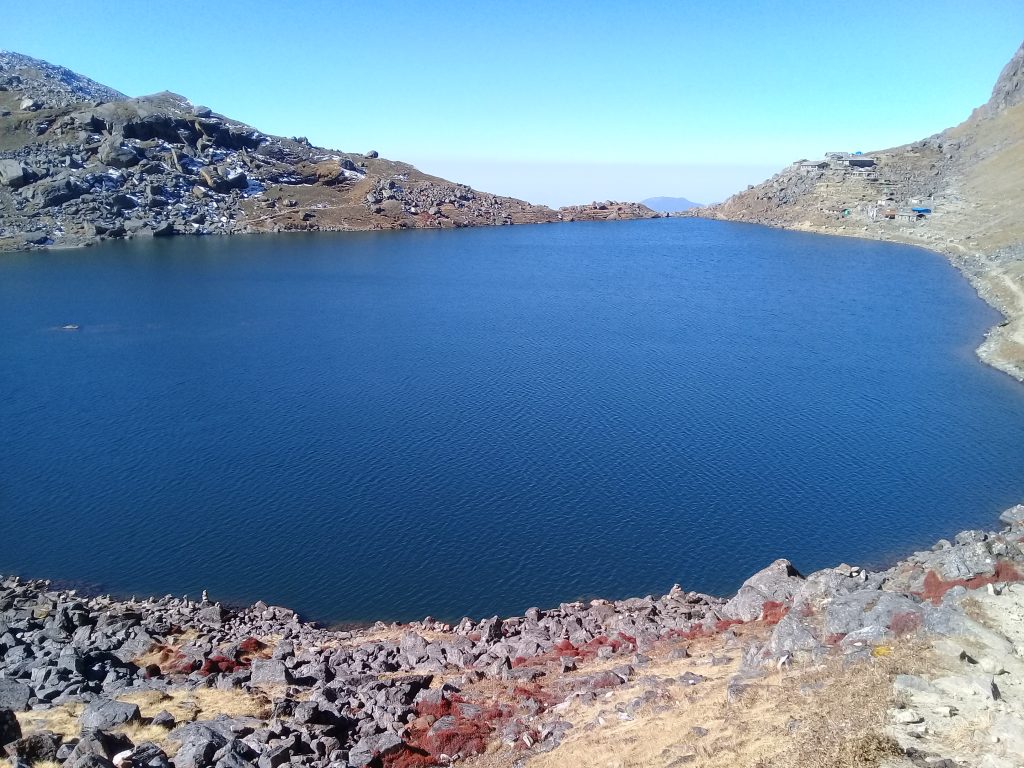
Rather than remaining inactive, you’ll enjoy a short acclimatization hike to Sabai Tsho, a beautiful glacial lake formed after a dramatic glacier collapse. Your guide will explain the geological history of the lake while monitoring your health and oxygen levels.
Returning to Thangnak for the afternoon, you’ll have time to relax and prepare for the higher elevations that lie ahead.
Day 10
Trek from Thangnak to Khare (5,045m / 16,551ft)
Walking Distance: 5 km
Walking Duration: Approximately 3 Hours
Meals: Breakfast, Lunch & Dinner
Accommodation: Tea House
Today’s relatively short trek gains significant altitude as the trail climbs alongside the Dig Glacier toward Khare, the final permanent settlement before Mera Peak.
The surrounding scenery becomes increasingly dramatic, with glaciers, towering rock faces, and magnificent views of Mera Peak, Kusum Kanguru, Kyashar, and nearby Himalayan summits.
Khare serves as the primary base for summit preparations, offering breathtaking views in every direction.
Day 11
Acclimatization, Climbing Training and Sherpa Briefing at Khare
Overnight Altitude: 5,045m / 16,551ft
Meals: Breakfast, Lunch & Dinner
Accommodation: Tea House
Today’s acclimatization day is one of the most important parts of the expedition. Under the guidance of experienced climbing Sherpas, you’ll receive comprehensive instruction on the proper use of technical mountaineering equipment, including crampons, ice axes, harnesses, ascenders, descenders, helmets, and fixed ropes.
Practical training on nearby snow slopes allows every participant to become comfortable with glacier travel techniques before the summit attempt. Your guide will also conduct a thorough equipment inspection and discuss the summit strategy, weather forecast, and safety procedures.
Day 12
Tarek from Khare to Mera High Camp (5,780m / 18,963ft)
Walking Distance: 5 km
Walking Duration: Approximately 5 Hours
Meals: Breakfast, Lunch & Dinner
Accommodation: Tent
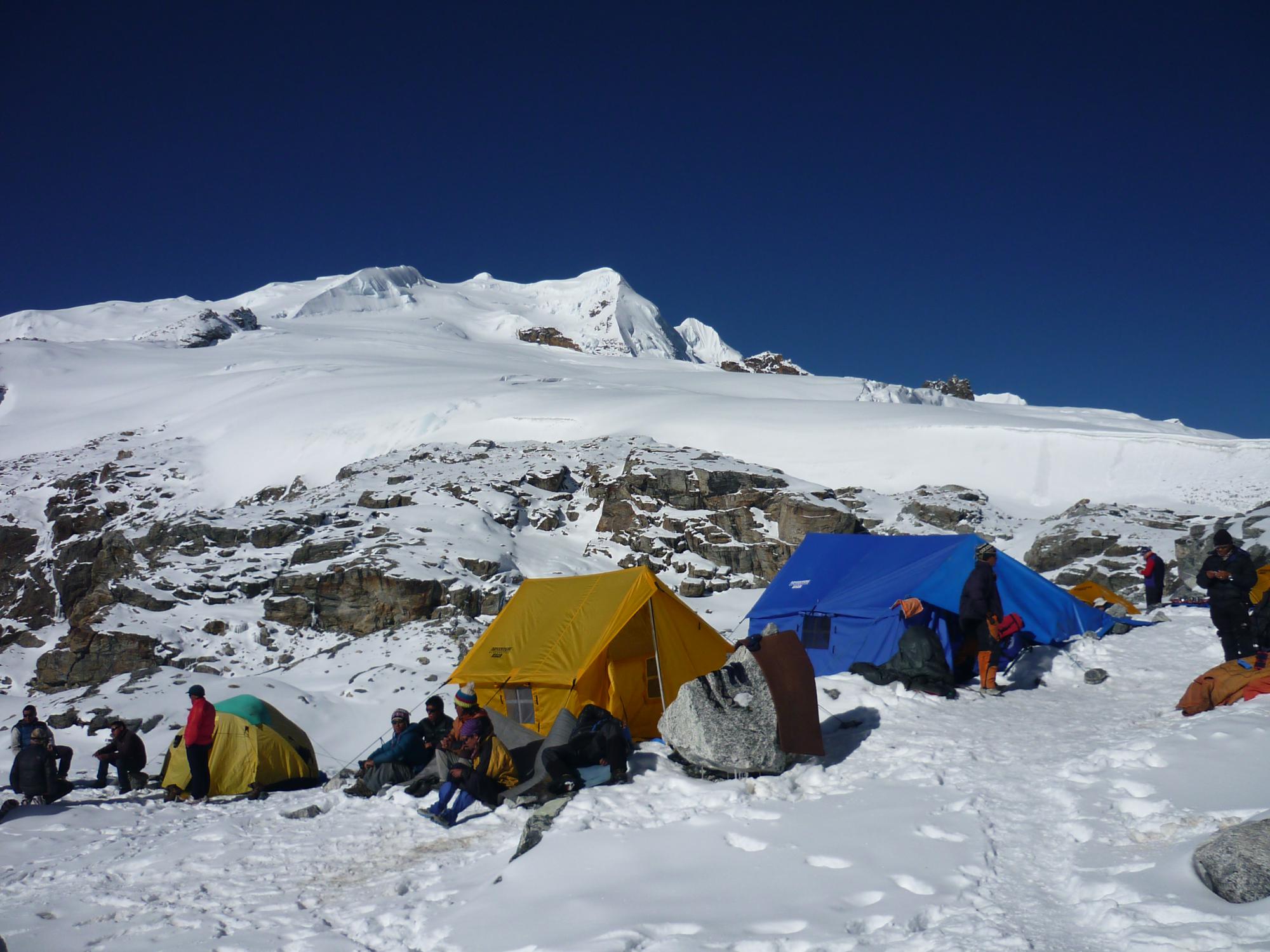
Today’s journey marks the beginning of the climbing phase. After leaving Khare, you’ll cross the Mera Glacier while wearing crampons before ascending steadily toward Mera La.
The route continues along the glacier to Mera High Camp, spectacularly positioned on a rocky ridge overlooking the surrounding Himalayan giants. From camp, breathtaking panoramic views stretch across Everest, Makalu, Baruntse, Chamlang, Nuptse, and countless other snow-covered peaks.
After an early dinner, you’ll rest in expedition tents while preparing mentally and physically for the summit climb.
Day 13
Summit Mera Peak (6,476m / 21,247ft) and Descend to Khare
Meals: Breakfast, Lunch & Dinner
Accommodation: Tea House
Today is the highlight of your expedition.
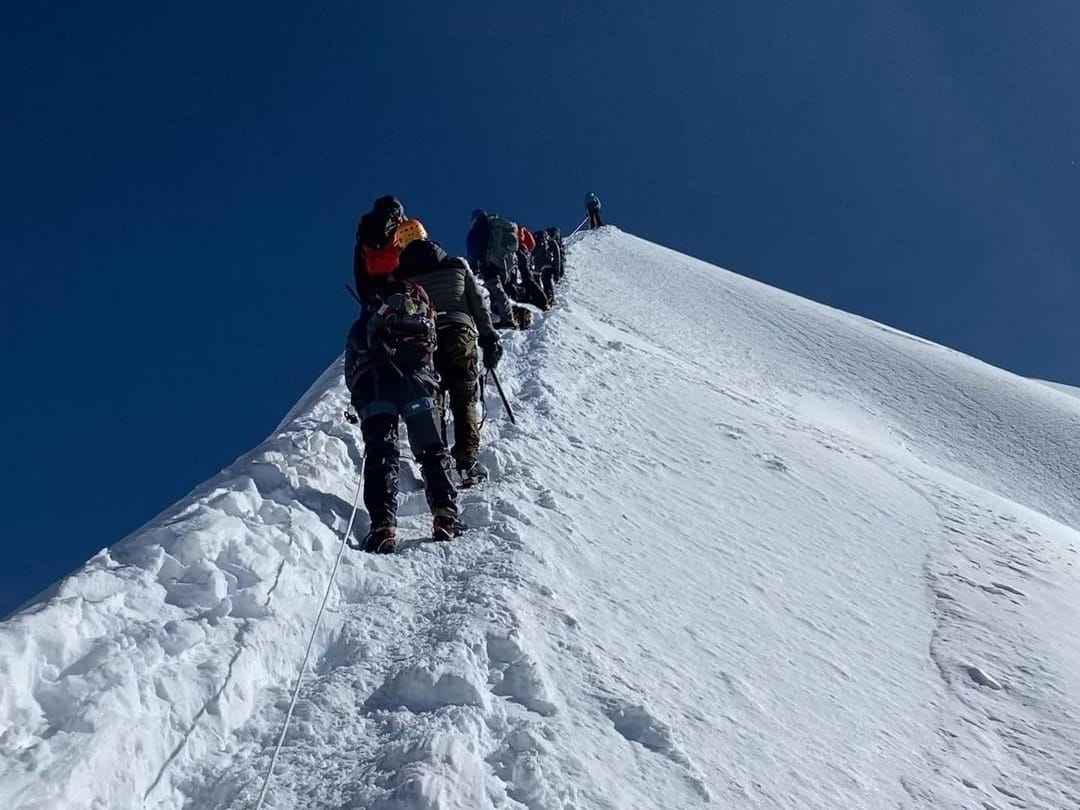
Your summit attempt begins well before sunrise, usually around 2:00–3:00 AM. Equipped with headlamps, crampons, harnesses, and climbing gear, you’ll gradually ascend across the glacier under the guidance of your experienced climbing Sherpas.
As daylight slowly illuminates the Himalayas, breathtaking views emerge across one of the world’s most spectacular mountain landscapes. The final section follows fixed ropes to the summit, where you’ll stand proudly atop Mera Peak (6,476m).
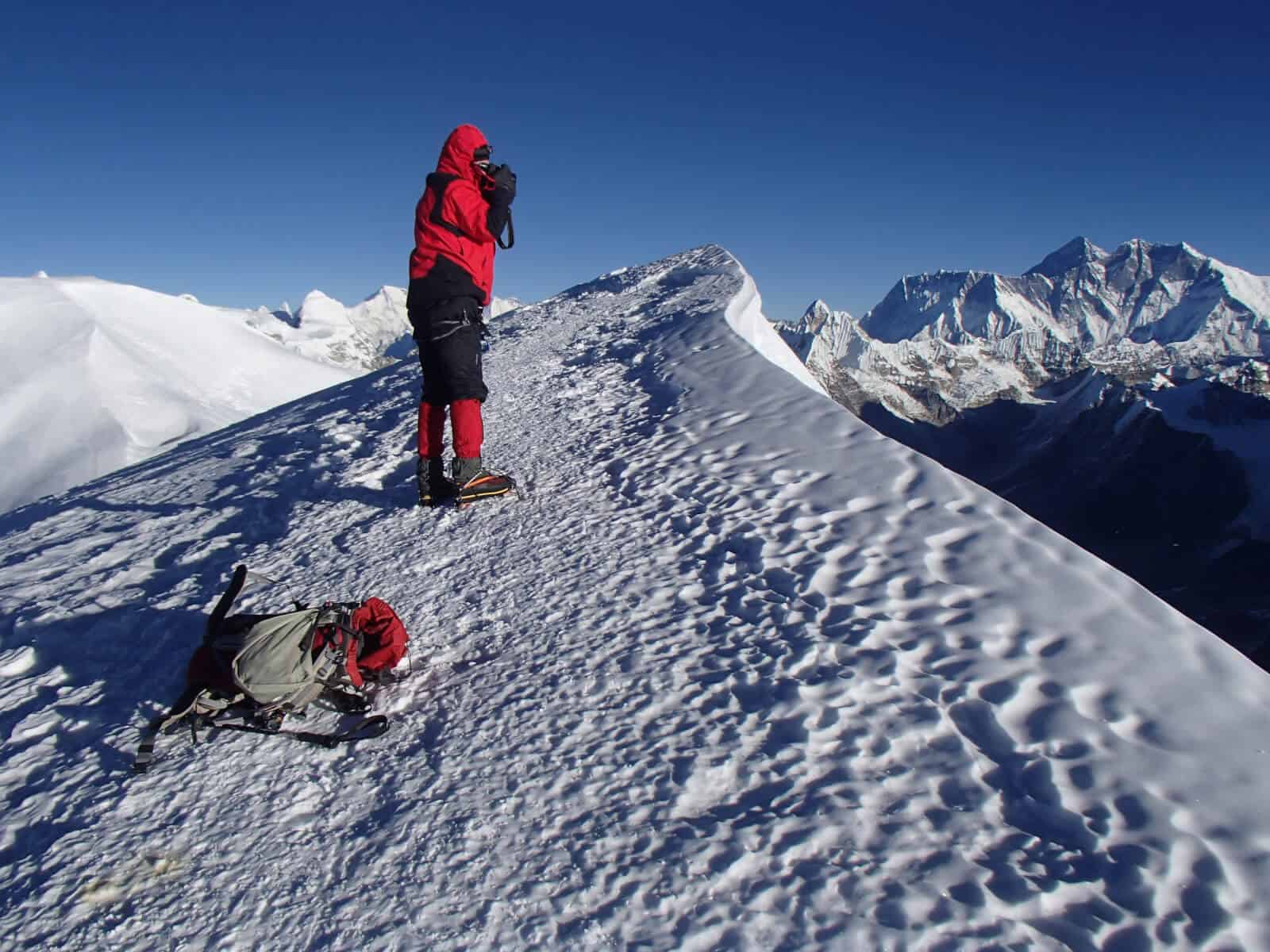
From the summit, you’ll enjoy an extraordinary 360-degree panorama featuring Mount Everest, Lhotse, Makalu, Cho Oyu, Kanchenjunga, Nuptse, Ama Dablam, Baruntse, Chamlang, Peak 41, and countless surrounding Himalayan peaks.
After celebrating your remarkable achievement and capturing unforgettable photographs, you’ll carefully descend back to High Camp before continuing to Khare, where a well-earned hot meal and comfortable night’s rest await.
This incredible day marks the successful completion of one of Nepal’s finest trekking peak expeditions and will undoubtedly remain one of the most memorable achievements of your lifetime.
Day 14
Trek from Khare to Kothe (3,580m / 11,745ft)
Walking Duration: 7–8 Hours
Walking Distance: 12 km
Meals: Breakfast, Lunch & Dinner
Accommodation: Tea House
After the excitement and sense of achievement from successfully summiting Mera Peak, today’s journey begins with a steady descent from Khare back into the beautiful Hinku Valley. Although the trail retraces part of the route taken during the ascent, the scenery appears entirely different from this perspective, allowing you to fully appreciate the magnificent landscapes you may have overlooked while climbing toward higher elevations.
The descent follows glacial moraines, alpine meadows, and rocky mountain trails before gradually entering lush forests of juniper, pine, and rhododendron. As you lose altitude, breathing becomes noticeably easier, making the trek more comfortable and enjoyable after the physically demanding summit day. Along the way, you’ll be treated to spectacular views of Mera Peak, Kusum Kanguru, and the surrounding Himalayan ranges, offering one last opportunity to admire these magnificent mountains.
Following lunch on the trail, you will continue descending alongside the Hinku River before arriving at the peaceful village of Kothe. Nestled in the heart of the valley and surrounded by dense forests, Kothe provides a relaxing atmosphere to celebrate your successful summit with your climbing team. Enjoy a warm meal, share stories from the expedition, and unwind after one of the most memorable days of your Himalayan adventure.
Day 15
Trek from Kothe to Thuli Kharka (4,300m / 14,107ft)
Walking Duration: 4–5 Hours
Walking Distance: 8 km
Meals: Breakfast, Lunch & Dinner
Accommodation: Tea House
After breakfast, the return journey continues as you leave the Hinku Valley and begin climbing toward Thuli Kharka. Although today’s trekking distance is relatively short, the trail involves a sustained uphill climb through beautiful forests of pine, fir, and rhododendron, making it one of the more physically demanding days of the return trek.
As you ascend higher, the dense woodland gradually opens into alpine grasslands, revealing breathtaking panoramic views of the surrounding valleys and distant Himalayan peaks. The peaceful mountain environment, fresh alpine air, and colorful prayer flags fluttering along the trail create a truly rewarding trekking experience.
Thuli Kharka is a small alpine settlement situated on a scenic ridge overlooking the Hinku Valley. On clear days, the lodge offers magnificent sunset views over the surrounding mountains, providing the perfect setting to relax before crossing the final mountain pass on the following day. Spend the evening enjoying the tranquil atmosphere while reflecting on your remarkable journey through one of Nepal’s most spectacular mountain regions.
Day 16
Trek from Thuli Kharka to Lukla (2,860m / 9,383ft) via Zatrwa La Pass (4,610m)
Walking Duration: 5–6 Hours
Walking Distance: 10 km
Meals: Breakfast, Lunch & Dinner
Accommodation: Tea House
Today marks the final day of trekking in the Himalayas. After an early breakfast, you’ll begin the climb toward Zatrwa La Pass (4,610m), one of the most scenic viewpoints along the entire Mera Peak route. As you reach the summit of the pass, breathtaking panoramic views unfold across the Everest region, including distant snow-covered peaks stretching across the horizon.
Take a moment to admire the spectacular Himalayan scenery and capture some final photographs before beginning the long descent toward Chutanga through forests of rhododendron, pine, and juniper. The trail continues downhill across suspension bridges and picturesque mountain paths before eventually returning to Lukla, where your incredible trekking and climbing adventure first began.
Upon arrival in Lukla, you’ll have time to relax and celebrate the successful completion of your expedition with your trekking crew, climbing Sherpas, and fellow adventurers. Many groups enjoy a small farewell celebration, expressing gratitude to the dedicated local staff whose hard work and support made the expedition both safe and memorable.
Day 17
Fly from Lukla to Kathmandu (1,400m / 4,593ft)
Flight Duration: Approximately 35 Minutes
Meals: Breakfast
Accommodation: 3-Star Hotel
Early in the morning, you’ll board one of the world’s most scenic mountain flights from Lukla back to Kathmandu. As the aircraft soars above the rugged Himalayan landscape, you’ll enjoy one final aerial view of the towering mountains, deep valleys, and picturesque villages that have been your home throughout the expedition.
Upon arrival in Kathmandu, our representative will transfer you to your hotel. The remainder of the day is free to relax, enjoy a hot shower, indulge in a massage, or explore the vibrant streets of Thamel for souvenir shopping and cultural experiences. This is also an excellent opportunity to visit cafés, restaurants, or heritage sites you may have missed before your trek.
In the evening, you’ll join your guide and fellow climbers for a special farewell dinner at a traditional Nepali restaurant. Enjoy authentic local cuisine accompanied by cultural performances while celebrating your successful ascent of Mera Peak (6,476m). This memorable evening offers the perfect opportunity to reflect on your incredible adventure, share stories with your teammates, and receive your well-deserved climbing achievement certificate.
Day 18
Final Departure
Meals: Breakfast (depending on your flight schedule)
Your unforgettable Mera Peak Trekking and Climbing adventure comes to an end today. Depending on your international flight schedule, our representative will transfer you to Tribhuvan International Airport approximately three hours before your departure.
If your holiday in Nepal is not yet over, you may also choose to extend your adventure by joining one of our additional trekking, climbing, jungle safari, rafting, cultural sightseeing, or Bhutan and Tibet tour programs. We would be delighted to help you plan your next Himalayan journey and look forward to welcoming you back to Nepal for another unforgettable adventure.
Cost Includes
- Complimentary airport pick-up and drop-off
- Three nights’ accommodation in Kathmandu with breakfast
- Flight between Kathmandu/Ramechhap and Lukla. OR by jeep to Paiya.
- All necessary trekking permits, such as National Park, TIMS, climbing permits, etc.
- Three meals a day (Breakfast, Lunch, and Dinner)
- Complimentary duffel bag, down jacket, and sleeping bag if needed
- Guide and porters’ insurance, salary, meals, accommodations, equipment, transportation, etc.
- Government registered-English-speaking professional local trekking guide and porter.
- Medical kit with oximeter
- professional climbing Sherpa/guide and his meals, accommodations, insurance, salary, etc.
- All necessary personal and climbing gear, such as a tent, rope, ice axe, helmet, jumar, tents, cooking equipment, etc.
- Rescue arrangements, if necessary
- Certificate of Achievement if needed
- Agency service charge and government tax/VAT
Cost Excludes
- International airfares and Nepal visa fees
- Lunch and dinner in Kathmandu
- Personal insurance, personal expenses, property theft, etc.
- Sightseeing and Temple/monastery entrance fees in the city.
- All beverages, like cola, fanta, beers, mineral water, etc.
- Additional cost due to natural calamities and unforeseen circumstances
- Tips for staff.


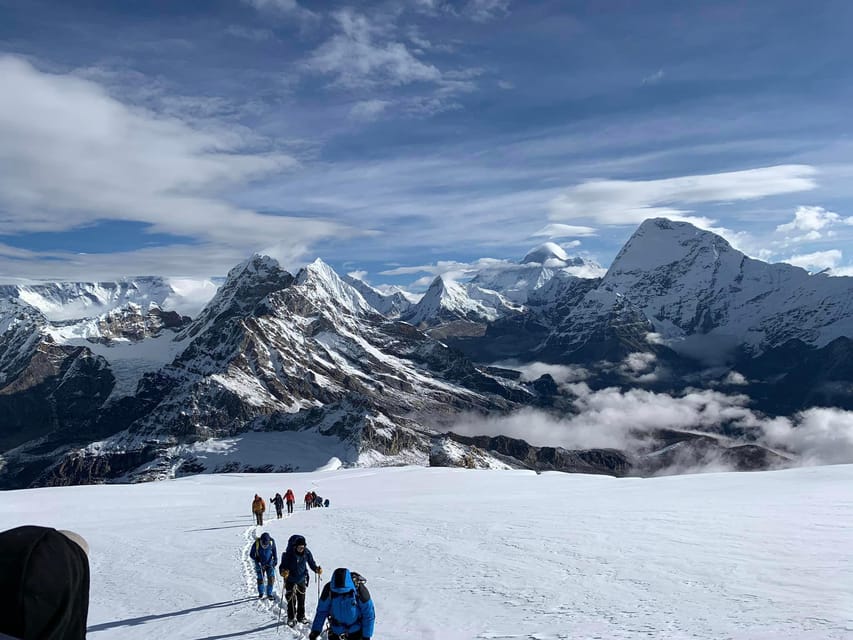

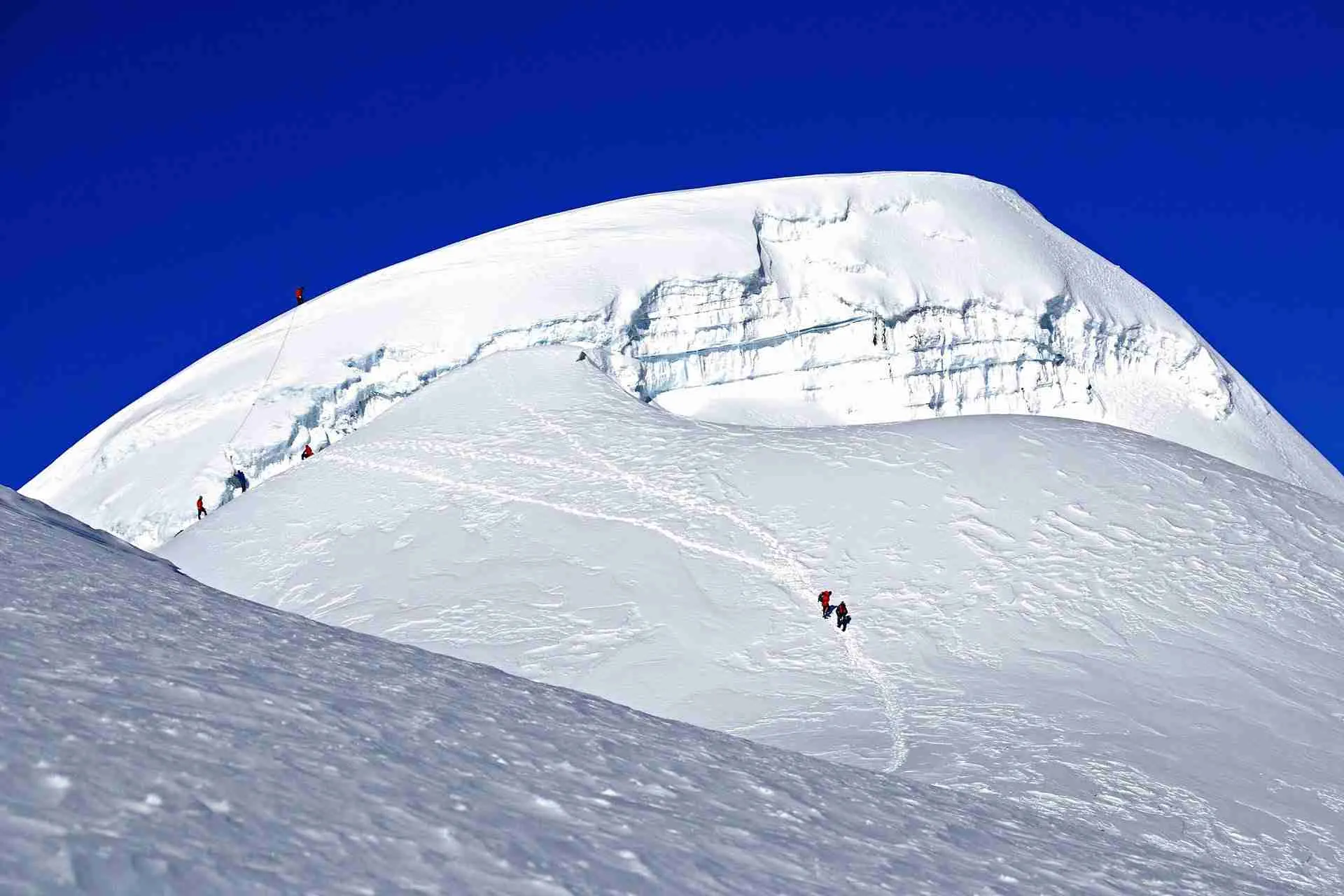
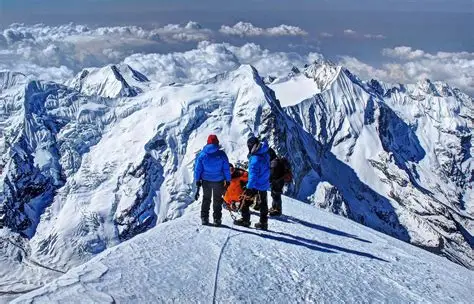
Mera Peak (6,476m / 21,247ft) is located in the remote Hinku Valley of the Everest region in eastern Nepal. It lies within the Makalu Barun National Park and is the highest officially designated trekking peak in Nepal.
Mera Peak is graded as a strenuous adventure due to its high altitude and long trekking days. Technically, it is considered one of Nepal’s easier trekking peaks because it does not require advanced mountaineering skills. However, excellent physical fitness, proper acclimatization, and determination are essential for a successful summit.
Previous climbing experience is beneficial but not mandatory. Beginners with good physical fitness and trekking experience can successfully climb Mera Peak. Before the summit attempt, experienced climbing guides provide training on using crampons, harnesses, ice axes, ascenders, and fixed ropes.
The best seasons for Mera Peak Climbing are:
Spring (March to May): Stable weather, blooming rhododendrons, and excellent mountain views.
Autumn (September to November): Clear skies, dry trails, and ideal climbing conditions.
These two seasons offer the highest summit success rates.
Mera Peak stands at an elevation of 6,476 meters (21,247 feet) above sea level, making it Nepal’s highest officially designated trekking peak.
The required permits include:
Makalu Barun National Park Entry Permit
Mera Peak Climbing Permit issued under Nepal’s mountaineering regulations
Khumbu Pasang Lhamu Rural Municipality Entry Permit (depending on the trekking route)
Most trekking companies arrange all necessary permits before the expedition begins.
A standard Mera Peak expedition typically lasts 17 to 18 days, including arrival, acclimatization, summit day, contingency time, and return to Kathmandu. This duration provides adequate time for safe altitude acclimatization and increases the chances of a successful summit.
The summit of Mera Peak offers one of the finest panoramic views in the Himalayas. On a clear day, you can see five of the world’s highest mountains, including:
Mount Everest (8,848.86m)
Lhotse (8,516m)
Makalu (8,485m)
Cho Oyu (8,188m)
Kanchenjunga (8,586m)
You’ll also enjoy spectacular views of Ama Dablam, Nuptse, Baruntse, Chamlang, Peak 41, and many other Himalayan peaks.
Yes. Because the expedition reaches an altitude of 6,476 meters, there is a risk of Acute Mountain Sickness (AMS). A carefully planned itinerary with gradual ascent, acclimatization days, proper hydration, and experienced guides significantly reduces the risk. Climbers should immediately inform their guide if they experience symptoms such as headaches, nausea, dizziness, or unusual fatigue.
Accommodation is provided in comfortable tea houses during the trekking portion of the trip, while High Camp is spent in fully equipped expedition tents. Meals generally include breakfast, lunch, and dinner, featuring a variety of Nepali, Tibetan, and international dishes such as dal bhat, noodles, rice, soups, potatoes, pasta, eggs, and seasonal vegetables.
Essential equipment includes insulated mountaineering boots, crampons, an ice axe, climbing harness, helmet, ascenders, down jacket, thermal clothing, sleeping bag, trekking poles, gloves, sunglasses, and a headlamp. Most trekking companies provide or rent technical climbing gear if needed.
With proper acclimatization, favorable weather, experienced climbing guides, and good physical preparation, Mera Peak has a high summit success rate. Most climbers who follow the itinerary carefully and maintain a steady pace successfully reach the summit.
Mera Peak is an excellent choice for trekkers seeking their first Himalayan climbing experience. It offers a non-technical ascent, breathtaking panoramic views, fewer crowds than many Everest-region routes, and the opportunity to summit Nepal’s highest trekking peak. Combined with the remote beauty of the Hinku Valley and expert guidance, Mera Peak delivers an unforgettable adventure and a rewarding introduction to high-altitude mountaineering.
There are no reviews yet.