
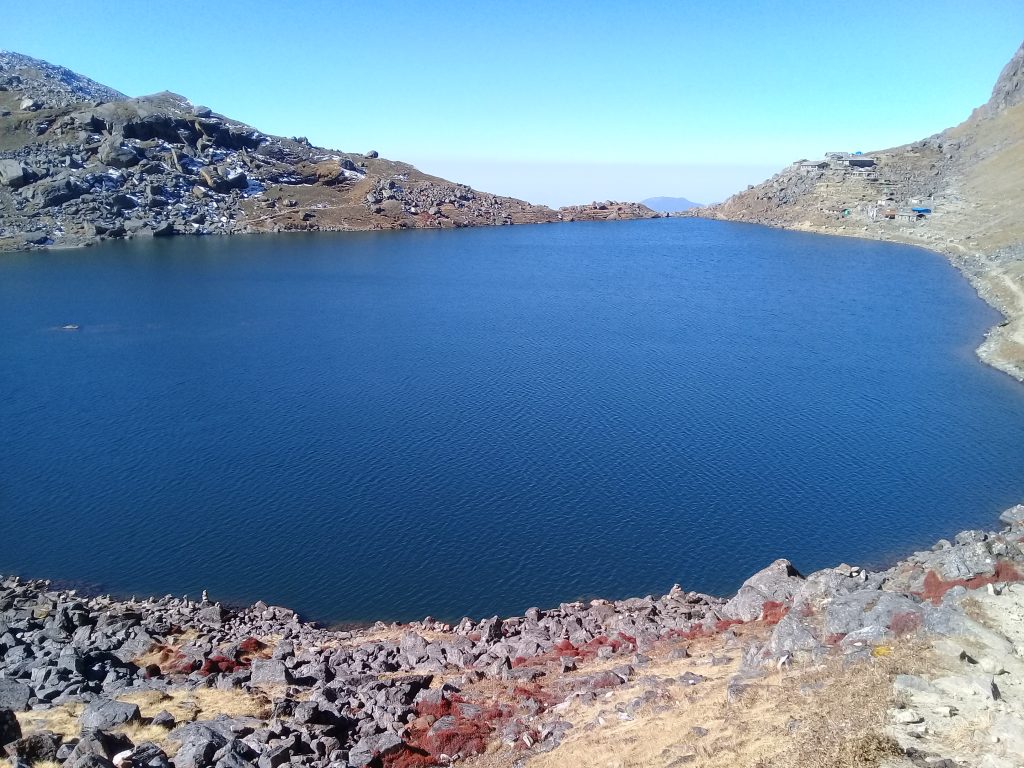
Makalu Base Camp Trek 18 Day

Makalu Base Camp Trek 18 Day
Keywords
Trip code
WT-CODE 3708
- Overview
- Trip Outline
- Trip Includes
- Trip Excludes
- Gallery
- Reviews
- Booking
- FAQ
Makalu Base Camp Trek
Makalu Barun National Park
- Duration = 18 Days
- Difficulty Level = Strenuous
- Activity = Trekking/Hiking
- Max. Altitude = 4870 meter
- Starts = Kathmandu
- Ends = Kathmandu
- Group Size =1-12
- Best Season = March to May and September to November.
Makalu Base Camp Trek Highlights
- Explore the pristine wilderness of Makalu Barun National Park, home to extraordinary biodiversity and dramatic Himalayan landscapes.
- Experience the authentic culture and traditional lifestyles of the region’s diverse ethnic communities.
- Trek to the base camp of Mount Makalu (8,485 meters), the world’s fifth-highest mountain.
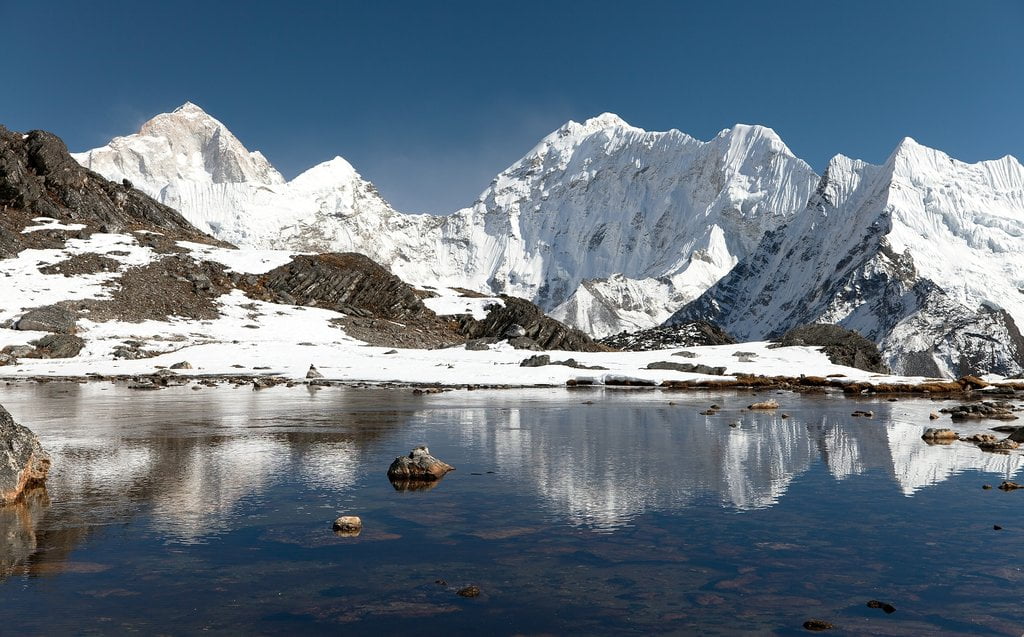
- Enjoy breathtaking panoramic views of Mount Everest, Lhotse, Makalu, Chamlang, Baruntse, and numerous other Himalayan peaks.
- Venture through one of Nepal’s most remote and least-crowded trekking regions, offering true wilderness and solitude.
Makalu Barun National Park
Established in 1992, Makalu Barun National Park is one of Nepal’s newest and most ecologically diverse protected areas. It is the only conservation area in the world that encompasses an elevation range of more than 8,000 meters, extending from subtropical forests at around 435 meters to the summit of Mount Makalu (8,485 meters).
The park protects an extraordinary variety of ecosystems, including lush tropical forests, rhododendron woodlands, alpine meadows, glacial valleys, and towering snow-covered peaks. It is home to a remarkable range of wildlife, including the endangered Red Panda, Snow Leopard, Himalayan Black Bear, Musk Deer, Clouded Leopard, and over 400 species of birds, making it a paradise for nature lovers and wildlife enthusiasts.
The Makalu Base Camp Trek follows one of Nepal’s most secluded and rewarding trekking routes. Due to its remote location and limited number of visitors, the trail offers an exceptional wilderness experience far from the busy trekking corridors of Everest and Annapurna. Trekkers are rewarded with untouched natural beauty, peaceful surroundings, and spectacular mountain scenery throughout the journey.
Journey from Kathmandu to Makalu Base Camp
Your adventure begins with a scenic flight from Kathmandu to Tumlingtar, followed by a drive to the hillside village of Num (1,560 meters), the gateway to the Makalu region. From here, the trail descends steeply to the Arun River before climbing through terraced fields, dense forests, and picturesque villages toward Seduwa (1,500 meters).
At Seduwa, you will complete the necessary permit formalities at the entrance to Makalu Barun National Park before continuing to Tashi Gaon (2,100 meters), the final permanent settlement in the valley. Beyond this point, the landscape gradually transforms into remote alpine terrain as the trail climbs through rhododendron forests, yak pastures, and rugged mountain ridges.
The journey continues across the famous Shipton La Pass (4,200 meters), named after renowned British mountaineer Eric Shipton, who, together with Sir Edmund Hillary, explored this region during the historic Everest reconnaissance expedition of 1952. Crossing this spectacular pass rewards trekkers with magnificent views of the surrounding Himalayan giants.
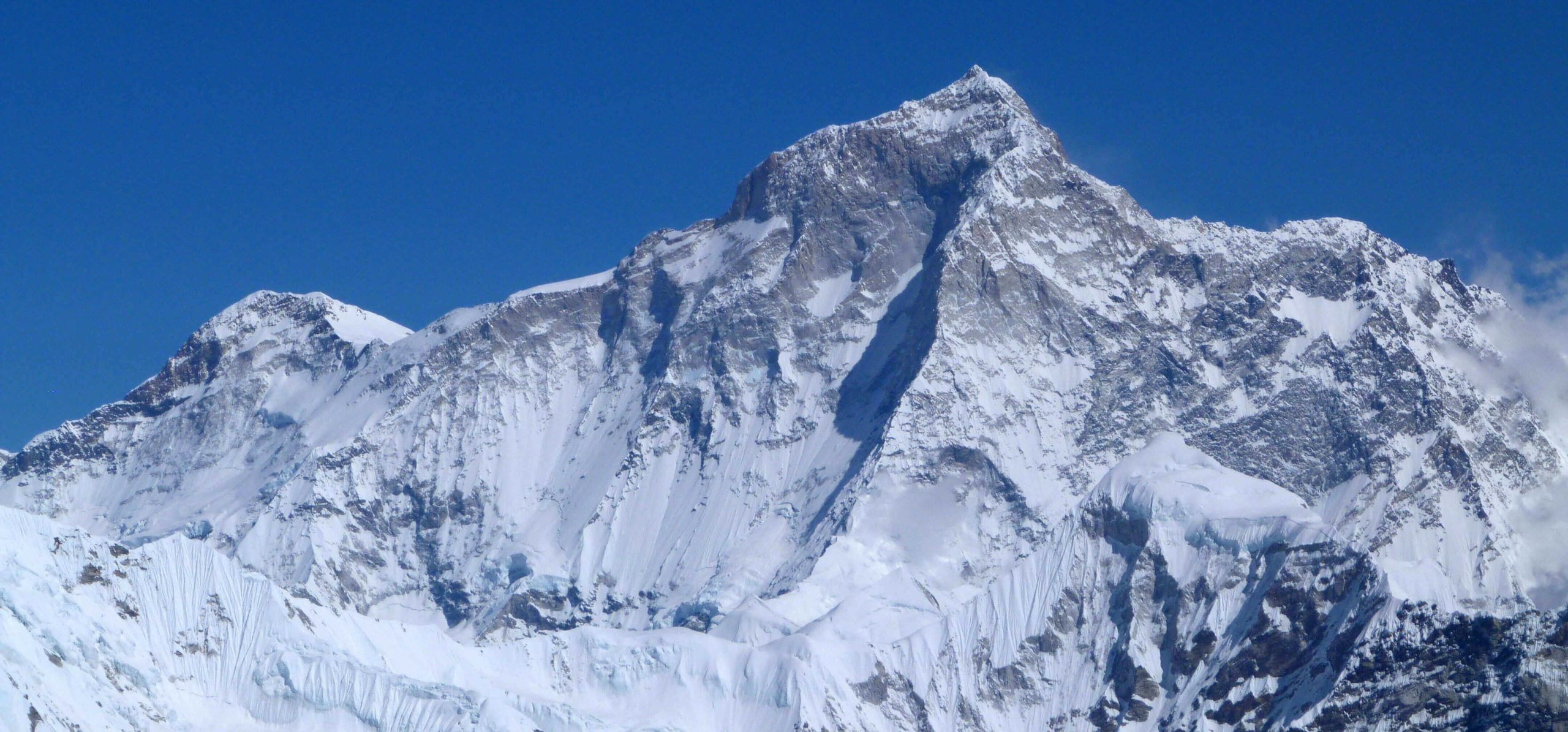
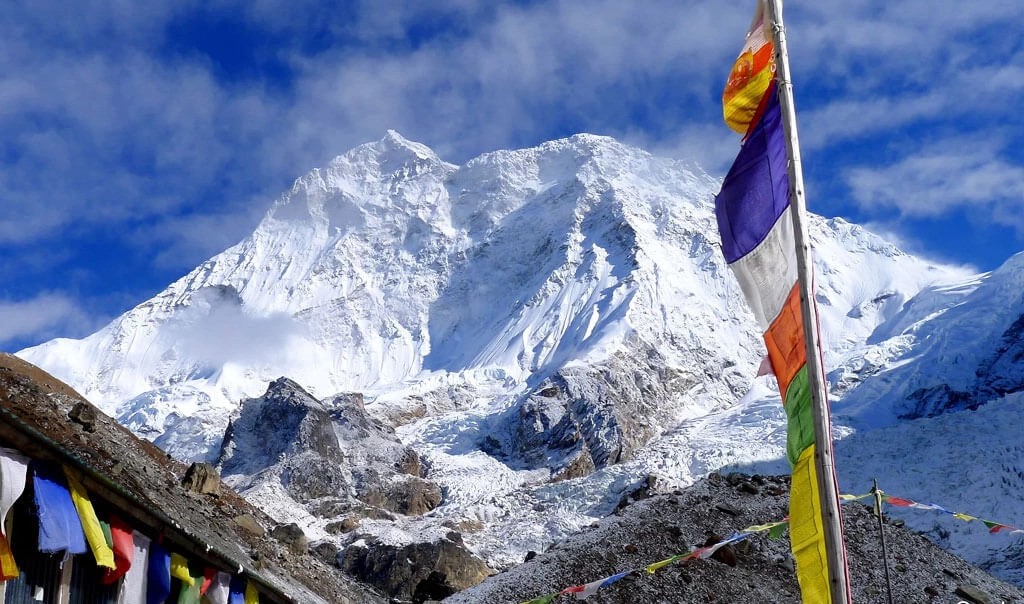
As the trail descends into the breathtaking Barun Valley, dramatic glaciers, towering cliffs, and pristine alpine landscapes unfold before you. Eventually, you arrive at Makalu Base Camp (approximately 4,870 meters), where the immense south face of Mount Makalu dominates the skyline. From the base camp, you will also enjoy unforgettable panoramic views of Everest, Lhotse, Baruntse, Chamlang, and countless snow-capped peaks stretching across eastern Nepal.
After spending time exploring and absorbing the extraordinary Himalayan scenery, the return journey follows the same route back to Tumlingtar, allowing you to appreciate the landscapes from a fresh perspective while reflecting on one of Nepal’s most rewarding trekking adventures.
Makalu Base Camp Trek Difficulty
The Makalu Base Camp Trek is widely regarded as one of Nepal’s most demanding and rewarding trekking adventures. Combining rugged mountain terrain, continuous elevation changes, remote wilderness, and limited infrastructure, this trek is best suited for experienced trekkers with excellent physical fitness and strong mental resilience.
Although the highest overnight altitude is approximately 4,870 meters, the trek is physically challenging due to the relentless ascents and descents encountered almost every day. Unlike many Himalayan treks that feature gradual elevation gains, the Makalu route frequently climbs and descends steep mountain ridges, placing significant demands on endurance and stamina.
Within just a few trekking days, you will ascend to Shipton La Pass (4,200 meters) after gaining substantial elevation over relatively short distances. For example, the trek from Num to Seduwa covers less than five kilometers yet involves nearly 800 meters of ascent along steep stone staircases and forest trails. Likewise, the route from Tashi Gaon to Khongma Danda gains well over 1,300 meters in a single day, making it one of the most physically demanding sections of the trek.
Another significant challenge is altitude. Much of the journey takes place above 3,500 meters, where the reduced oxygen levels can affect even experienced trekkers. Because of the rapid elevation changes, your body has limited time to acclimatize naturally, increasing the risk of Acute Mountain Sickness (AMS). Common symptoms include headaches, fatigue, dizziness, shortness of breath, nausea, and loss of appetite. Maintaining a slow, steady pace, staying well hydrated, and following proper acclimatization practices are essential for a safe and enjoyable trek.
The terrain further adds to the challenge. The trail traverses dense forests, narrow ridgelines, alpine meadows, glacial valleys, rocky paths, and steep stone staircases, with some sections reaching gradients of nearly 50 degrees. River crossings, uneven trails, and rugged mountain landscapes require careful footing and good balance throughout the journey.
One of the defining characteristics of the Makalu region is its remoteness. Compared to popular trekking destinations such as Everest Base Camp, Annapurna Base Camp, or Langtang Valley, the Makalu region receives far fewer visitors. While this offers unmatched tranquility, pristine nature, and an authentic wilderness experience, it also means that accommodation, food, communication, and medical facilities are much more basic and limited.
Weather conditions can also change rapidly, particularly at higher elevations, where strong winds, snowfall, and cold temperatures may occur even during the main trekking seasons. Trekkers should therefore be well-prepared with appropriate equipment and flexible travel plans.
Overall, the Makalu Base Camp Trek is a challenging expedition that rewards determined trekkers with spectacular mountain scenery, remarkable biodiversity, authentic cultural experiences, and the rare opportunity to explore one of Nepal’s last truly untouched Himalayan wilderness areas. For those seeking solitude, adventure, and a genuine off-the-beaten-path trekking experience, Makalu Base Camp remains one of the finest trekking destinations in the Himalayas.
Best Time to Trek to Makalu Base Camp
Choosing the right season is essential for a safe and rewarding Makalu Base Camp Trek. Located in one of Nepal’s most remote Himalayan regions, the trail passes through diverse landscapes and varying climatic zones, where weather conditions directly influence visibility, trail accessibility, and overall trekking experience.
For the best conditions, Spring (March to May) and Autumn (September to November) are widely regarded as the ideal trekking seasons. These months offer stable weather, clear mountain views, comfortable temperatures, and the safest trail conditions.
Autumn (September to November)
Autumn is the most popular and highly recommended season for the Makalu Base Camp Trek. Following the monsoon rains, the atmosphere becomes exceptionally clear, providing spectacular visibility and crisp mountain scenery.
The freshly washed landscapes reveal breathtaking panoramic views of Mount Makalu, Everest, Lhotse, Chamlang, Baruntse, Manaslu, and numerous surrounding Himalayan peaks. Clear blue skies, dry trails, and stable weather make this season ideal for both trekking and photography.
Temperatures remain pleasant throughout most of the journey:
- Lower elevations: 10°C to 20°C
- Higher elevations: -5°C to 10°C
Autumn also coincides with Nepal’s two largest cultural festivals, Dashain and Tihar, giving trekkers a wonderful opportunity to experience vibrant local traditions, celebrations, and hospitality in mountain villages.
Overall, autumn offers the perfect combination of excellent weather, stunning scenery, and unforgettable cultural experiences.
Spring (March to May)
Spring is another outstanding season for trekking to Makalu Base Camp. As winter snow gradually melts, the mountains come alive with warmer temperatures, longer daylight hours, and flourishing vegetation.
One of the season’s greatest attractions is the spectacular display of blooming rhododendrons, magnolias, and other alpine wildflowers that transform the hillsides into vibrant natural gardens. Dense forests become lush and green, creating a striking contrast against the snow-covered Himalayan peaks.
Spring also offers excellent opportunities for wildlife enthusiasts, as many animals emerge after the winter months, making wildlife sightings more frequent throughout Makalu Barun National Park.
Typical temperatures during spring are:
- Lower elevations: 10°C to 20°C
- Higher elevations: -5°C to 10°C
For the best trail conditions, we recommend trekking from mid-April to early May, when the snow has largely melted from higher elevations and the forests are in full bloom.
Monsoon / Summer (June to August)
The Makalu region experiences one of the heaviest monsoon seasons in Nepal, making summer the least favorable time for trekking.
Frequent heavy rainfall creates muddy, slippery trails and significantly reduces visibility due to dense clouds and persistent fog. Mountain views are often completely obscured, while swollen rivers and unstable hillsides increase the risk of landslides and flooding.
Average temperatures during the monsoon are:
- Lower elevations: 15°C to 25°C
- Higher elevations: 5°C to 15°C
Trekkers attempting the route during this season should be prepared for:
- Heavy rainfall and high humidity
- Slippery and challenging trails
- Limited mountain visibility
- Flight delays and cancellations
- Landslides and temporary trail closures
If trekking during the monsoon is unavoidable, adding several contingency days to your itinerary is strongly recommended.
Winter (December to February)
Winter transforms the Makalu region into a spectacular snow-covered wilderness. Crystal-clear skies often provide exceptional mountain views, while the landscapes become incredibly peaceful due to the small number of trekkers.
However, winter conditions are harsh, particularly at higher elevations.
Typical temperatures include:
- Lower elevations: 5°C to 15°C
- Higher elevations: -15°C to 5°C
Heavy snowfall frequently covers high passes and alpine trails, making navigation more difficult and occasionally impassable. Strong winds and freezing temperatures add further challenges.
Although the Makalu Base Camp Trek remains possible for experienced trekkers equipped with proper winter gear, it is not recommended for beginners or those without previous high-altitude trekking experience.
Permits Required for the Makalu Base Camp Trek
To trek in the Makalu region, all foreign trekkers must obtain the following permits:
Makalu Barun National Park Entry Permit
This permit allows entry into the protected area of Makalu Barun National Park, which safeguards the region’s exceptional biodiversity and fragile ecosystems.
Permit Fee: NPR 3,000 per person
Makalu Rural Municipality Permit
This local permit is required to enter and trek through the administrative areas managed by the Makalu Rural Municipality.
Permit Fee: NPR 2,000 per person
Both permits can be obtained through the Nepal Tourism Board in Kathmandu or conveniently arranged by a licensed trekking agency before the trek begins.
To obtain the permits, you will need:
- Original passport with a valid Nepal visa
- Two recent passport-sized photographs
Packing List for the Makalu Base Camp Trek
Packing appropriately is essential for a successful trek. Since porters have limited carrying capacity, it is important to pack only the essentials while ensuring you are fully prepared for changing weather conditions and remote mountain environments.
Clothing
- Thermal base layers (top and bottom)
- Moisture-wicking trekking T-shirts
- Fleece jacket and fleece trousers
- Heavy down jacket
- Waterproof and windproof jacket
- Waterproof trekking pants
- Trekking trousers and shorts
- Comfortable underwear
- Warm woolen gloves
- Sun hat or trekking cap
- Warm beanie
- Sunglasses with UV protection
Footwear
- High-quality waterproof trekking boots with ankle support
- Lightweight trekking socks
- Warm wool socks
- Hiking sandals
- Comfortable slippers for teahouses
Trekking Equipment
- Trekking poles
- Four-season sleeping bag
- Headlamp or flashlight with spare batteries
- Reusable water bottles or hydration bladder
- Water purification tablets or water filter
- Backpack rain cover
- Duffel bag (if using a porter)
Personal Essentials
- Personal first-aid kit
- Prescription medications
- Wet wipes
- Biodegradable soap
- Toothbrush and toothpaste
- Quick-drying towel
- Lip balm with SPF
- Sunscreen (SPF 50+)
- Hand sanitizer
- Female hygiene products (if required)
Electronics
- Power bank
- Camera
- Mobile phone
- Chargers and charging cables
- Extra memory cards and batteries
Travel Insurance
Comprehensive travel insurance is highly recommended for the Makalu Base Camp Trek due to the region’s remote location, challenging terrain, and high-altitude environment.
Medical facilities along the route are extremely limited, and emergency assistance often requires helicopter evacuation. For this reason, your insurance policy should provide adequate coverage for high-altitude trekking and emergency rescue operations.
“Below is the complete day-by-day itinerary for the Makalu Base Camp Trek. Each day is carefully planned to provide detailed information on the trekking route, walking hours, distance, overnight altitude, accommodation, meals, and the remarkable landscapes and cultural experiences you will encounter along the journey.”
Itineraries
Day 1
Fly from Kathmandu to Tumlingtar, then Drive to Num (1,560 m / 5,118 ft)
Duration: Flight: 50 minutes | Drive: 5–6 hours (48 km)
Overnight Altitude: 1,560 meters / 5,118 feet
Meals: Breakfast, Lunch & Dinner
Accommodation: Teahouse
Your adventure begins with a spectacular morning flight from Kathmandu to Tumlingtar, offering breathtaking aerial views of the eastern Himalayas, including Mount Everest, Lhotse, Makalu, and countless snow-capped peaks. Upon arrival, you will embark on a scenic drive through the lush Arun Valley, passing picturesque villages, terraced farmland, and dense forests. As the road winds through rolling hills and traditional settlements, you’ll experience the authentic rural charm of eastern Nepal before reaching the hilltop village of Num, the gateway to the Makalu Base Camp Trek. Spend the evening preparing for the trekking days ahead while enjoying the peaceful mountain atmosphere.
Day 2
Trek from Num to Seduwa (1,500 m / 4,921 ft)
Duration: 5–6 hours (9 km)
Overnight Altitude: 1,500 meters / 4,921 feet
Meals: Breakfast, Lunch & Dinner
Accommodation: Teahouse
Your first day on the trail begins with a steep descent through terraced fields and traditional farming villages to the Arun River. After crossing the suspension bridge, the route climbs steadily through subtropical forests and scattered settlements, offering beautiful views of the surrounding hills and valleys. The ascent is demanding but rewarding as you gradually reach Seduwa, a charming village located at the entrance to Makalu Barun National Park. Here, trekking permits are checked before you continue deeper into this pristine Himalayan wilderness.
Day 3
Trek from Seduwa to Tashi Gaon (2,100 m / 6,890 ft)
Duration: 5 hours (8 km)
Overnight Altitude: 2,100 meters / 6,890 feet
Meals: Breakfast, Lunch & Dinner
Accommodation: Teahouse
Today’s trek takes you through a beautiful landscape of terraced fields, grazing pastures, bamboo groves, and peaceful forests. Crossing several small streams and traditional villages, you’ll experience the warm hospitality and unique culture of the local communities. Gradually ascending along scenic mountain trails, you arrive at Tashi Gaon, the last permanent settlement before entering the higher alpine region. The village offers magnificent views of the surrounding hills and serves as an ideal resting point before the more challenging days ahead.
Day 4
Trek from Tashi Gaon to Khongma Danda (3,500 m / 11,483 ft)
Duration: 6–7 hours (6 km)
Overnight Altitude: 3,500 meters / 11,483 feet
Meals: Breakfast, Lunch & Dinner
Accommodation: Teahouse
Today marks one of the first major challenges of the trek as you gain nearly 1,400 meters in elevation. The trail climbs steeply through dense rhododendron, oak, and pine forests before emerging into alpine terrain. Stone staircases and rugged mountain paths test your endurance, but every step is rewarded with increasingly spectacular views of the surrounding peaks and valleys. Upon reaching Khongma Danda, you’ll be welcomed by panoramic Himalayan scenery and the first true alpine landscapes of the journey.
Day 5
Acclimatization Day at Khongma Danda (3,500 m / 11,483 ft)
Overnight Altitude: 3,500 meters / 11,483 feet
Meals: Breakfast, Lunch & Dinner
Accommodation: Teahouse
To ensure a safe and enjoyable high-altitude trek, today is dedicated to acclimatization. You may take a short hike to nearby viewpoints, allowing your body to gradually adapt to the thinner mountain air while enjoying magnificent panoramic views of the surrounding Himalayan peaks. The remainder of the day can be spent relaxing at the teahouse, preparing for the higher elevations that lie ahead.
Day 6
Trek from Khongma Danda to Dobate via Shipton La Pass (4,125 m / 13,533 ft)
Duration: 6–7 hours (7 km)
Overnight Altitude: 3,650 meters / 11,975 feet
Meals: Breakfast, Lunch & Dinner
Accommodation: Teahouse
Today’s journey is one of the most scenic and rewarding sections of the Makalu Base Camp Trek. After a steady ascent, you cross the spectacular Shipton La Pass (4,125 meters), named after legendary British mountaineer Eric Shipton. The trail then passes the tranquil alpine lake of Kalo Pokhari before continuing across Keke La Pass (4,170 meters). Throughout the day, you’ll enjoy breathtaking views of Makalu, Chamlang, and the surrounding Himalayan ranges before descending through alpine landscapes to the peaceful settlement of Dobate.
Day 7
Trek from Dobate to Yangle Kharka (3,557 m / 11,670 ft)
Duration: 6–7 hours (16 km)
Overnight Altitude: 3,557 meters / 11,670 feet
Meals: Breakfast, Lunch & Dinner
Accommodation: Teahouse
Leaving Dobate behind, the trail descends into the spectacular Barun Valley, one of Nepal’s most pristine and untouched Himalayan landscapes. The route follows forested trails alongside the Barun River before gradually opening into wide alpine meadows surrounded by towering cliffs and snow-covered peaks. Although today’s distance is relatively long, the terrain becomes gentler as you approach the beautiful grazing fields of Yangle Kharka, where yaks frequently roam beneath the dramatic mountain backdrop.
Day 8
Trek from Yangle Kharka to Langmale Kharka (4,410 m / 14,469 ft)
Duration: 6–7 hours (8 km)
Overnight Altitude: 4,410 meters / 14,469 feet
Meals: Breakfast, Lunch & Dinner
Accommodation: Teahouse
As you venture deeper into the high Himalayas, today’s trek follows the upper reaches of the Barun Valley through open alpine terrain. Passing seasonal yak pastures and the small settlement of Merek, you’ll enjoy magnificent views of Peak 6, Peak 7, Chamlang, and the towering south face of Makalu. Wildlife sightings, including Himalayan blue sheep and grazing yak herds, are common in this region. A final steady climb brings you to Langmale Kharka, where spectacular Himalayan scenery surrounds your overnight stop.
Day 9
Trek from Langmale Kharka to Shershong (4,630 m / 15,190 ft)
Duration: 6–7 hours (5 km)
Overnight Altitude: 4,630 meters / 15,190 feet
Meals: Breakfast, Lunch & Dinner
Accommodation: Teahouse
Today’s relatively short trek allows for gradual acclimatization as you continue toward Makalu Base Camp. The lush forests disappear, giving way to rugged alpine landscapes, glacial moraines, and vast open valleys. Every step reveals increasingly dramatic views of Makalu, Baruntse, Chamlang, and numerous surrounding peaks. Upon reaching Shershong, you’ll settle into one of the highest overnight stops of the trek while enjoying unforgettable Himalayan panoramas.
Day 10
Trek from Shershong to Makalu Base Camp (4,870 m / 15,978 ft)
Duration: 6–7 hours (4 km)
Overnight Altitude: 4,870 meters / 15,978 feet
Meals: Breakfast, Lunch & Dinner
Accommodation: Teahouse
Today is the highlight of your adventure as you reach the magnificent Makalu Base Camp, situated at the foot of the world’s fifth-highest mountain. The trail follows glacial terrain and rocky moraines before arriving at this spectacular alpine destination. Towering directly above is the immense south face of Mount Makalu (8,485 meters), while the surrounding panorama includes Everest, Lhotse, Baruntse, Chamlang, and countless Himalayan giants. Few places in Nepal offer such an extraordinary combination of wilderness, solitude, and breathtaking mountain scenery.
Day 11
Explore Makalu Base Camp and the Barun Glacier
Overnight Altitude: 4,870 meters / 15,978 feet
Meals: Breakfast, Lunch & Dinner
Accommodation: Teahouse
Unlike many standard itineraries that allow only a brief visit to the base camp, today is dedicated to fully experiencing the remarkable surroundings of Makalu Base Camp. Enjoy an optional excursion toward the spectacular Barun Glacier, where massive ice formations, glacial landscapes, and dramatic Himalayan vistas create an unforgettable high-altitude experience. Spend time exploring the area, photographing the incredible scenery, and soaking in panoramic views of Mount Makalu, Everest, Lhotse, Baruntse, and the surrounding peaks. This extra day not only enhances acclimatization but also allows you to appreciate one of the most remote and awe-inspiring mountain environments in the Himalayas.
Day 12
Trek from Makalu Base Camp to Yangle Kharka (3,557 m / 11,670 ft)
Duration: 6–7 hours (16 km)
Overnight Altitude: 3,557 meters / 11,670 feet
Meals: Breakfast, Lunch & Dinner
Accommodation: Teahouse
After witnessing the spectacular sunrise over Mount Makalu, you begin your descent from the base camp, retracing your steps through the breathtaking Barun Valley. Passing the alpine settlements of Shershong, Langmale Kharka, and Merek, you’ll enjoy ever-changing perspectives of the surrounding peaks and glacial landscapes. Descending is noticeably easier than the ascent, allowing you to comfortably cover in one day what previously required two days of trekking. By late afternoon, you arrive at the peaceful yak pasture of Yangle Kharka, where you can relax and reflect on your unforgettable experience at Makalu Base Camp.
Day 13
Trek from Yangle Kharka to Dobate (3,650 m / 11,975 ft)
Duration: 6–7 hours (9 km)
Overnight Altitude: 3,650 meters / 11,975 feet
Meals: Breakfast, Lunch & Dinner
Accommodation: Teahouse
Today’s journey continues through the magnificent Barun Valley, following forest trails alongside the Barun River before gradually climbing toward Dobate. As you descend into lower elevations, the landscape becomes increasingly lush, with dense forests, cascading streams, and abundant alpine vegetation replacing the barren high-altitude terrain. The return journey offers a fresh perspective of the region, revealing scenic viewpoints and natural beauty that may have gone unnoticed during the ascent.
Day 14
Trek from Dobate to Khongma Danda (3,500 m / 11,483 ft)
Duration: 5–6 hours (7 km)
Overnight Altitude: 3,500 meters / 11,483 feet
Meals: Breakfast, Lunch & Dinner
Accommodation: Teahouse
Today involves crossing two of the trek’s most memorable mountain passes once again. After a steady climb, you cross Keke La Pass (4,170 meters), followed by the scenic Shipton La Pass (4,125 meters), where magnificent Himalayan panoramas accompany your final high-altitude crossing. From there, the trail descends gradually into forests of rhododendron, pine, and oak, eventually returning to Khongma Danda. During the spring season, these forests burst into vibrant bloom, showcasing Nepal’s national flower in all its glory.
Day 15
Trek from Khongma Danda to Seduwa (1,500 m / 4,921 ft)
Duration: 8 hours (13 km)
Overnight Altitude: 1,500 meters / 4,921 feet
Meals: Breakfast, Lunch & Dinner
Accommodation: Teahouse
Leaving the alpine region behind, today’s trek features a long descent through dense forests, rugged mountain trails, and steep stone staircases. As you lose elevation, the warmer climate returns, accompanied by lush vegetation, cultivated farmland, and traditional villages. Throughout the day, you’ll enjoy beautiful views across the surrounding valleys before arriving once again at the welcoming village of Seduwa, marking your return to the lower Himalayan foothills.
Day 16
Trek from Seduwa to Num (1,560 m / 5,118 ft)
Duration: 5–6 hours (9 km)
Overnight Altitude: 1,560 meters / 5,118 feet
Meals: Breakfast, Lunch & Dinner
Accommodation: Teahouse
Your final day of trekking retraces the scenic route back to Num, crossing suspension bridges over the Arun River and climbing through picturesque terraced fields and rural settlements. Familiar landscapes, tranquil forests, and cascading streams accompany you throughout the journey, providing a fitting conclusion to your Himalayan adventure. Upon reaching Num, enjoy a well-deserved evening of relaxation while celebrating the successful completion of one of Nepal’s most remote and rewarding trekking experiences.
Day 17
Drive from Num to Tumlingtar (520 m / 1,706 ft)
Distance: 48 km
Duration: 5–6 hours
Overnight Altitude: 520 meters / 1,706 feet
Meals: Breakfast, Lunch & Dinner
Accommodation: Teahouse
After breakfast, you leave the mountains behind and begin the scenic drive back to Tumlingtar. The route winds through the beautiful Arun Valley, passing traditional villages, fertile farmland, and subtropical forests. As the altitude gradually decreases, the warmer climate offers a welcome contrast to the cool alpine air experienced during the trek. Upon arrival in Tumlingtar, you can relax and enjoy a comfortable evening while reflecting on the incredible memories and achievements of your Makalu Base Camp adventure.
Day 18
Fly from Tumlingtar to Kathmandu
Overnight Altitude: 1,400 meters / 4,593 feet
Meals: Breakfast
Accommodation: 3-Star Hotel
This morning, board a scenic domestic flight back to Kathmandu, enjoying one final aerial panorama of Nepal’s spectacular Himalayan landscape
No details found.
No details found.





The Makalu Base Camp Trek is considered a challenging to strenuous trekking adventure. It involves long hiking days, steep ascents and descents, remote mountain trails, and high-altitude trekking up to Makalu Base Camp (4,870 meters / 15,978 feet). Previous trekking experience and good physical fitness are highly recommended.
The highest point of the trek is Makalu Base Camp at 4,870 meters (15,978 feet). Most trekkers also enjoy panoramic viewpoints around the base camp, offering spectacular views of Mount Makalu, Everest, Lhotse, Baruntse, and Chamlang.
The best seasons are:
Spring (March to May): Rhododendron forests in bloom, stable weather, and clear mountain views.
Autumn (September to November): Crisp skies, pleasant temperatures, and excellent visibility.
Winter is possible but much colder, while the monsoon season (June to August) brings heavy rain, slippery trails, and leeches.
While beginners with excellent fitness can complete the trek, previous experience on multi-day Himalayan treks is highly beneficial. Experience with hiking at higher elevations will make the journey more enjoyable and safer.
You generally need:
Makalu Barun National Park Entry Permit
Makalu Rural Municipality Permit
Your trekking agency typically arranges all required permits before the trek.
Yes. Since the trek reaches nearly 4,900 meters, there is a risk of Acute Mountain Sickness (AMS). A carefully planned itinerary with gradual ascent, proper acclimatization, hydration, and an experienced guide significantly reduces the risk.
Yes, there are tea houses along most of the route. However, compared to Everest or Annapurna, accommodation is much more basic. Rooms are simple, and facilities become increasingly limited as you gain altitude.
You can expect to trek 5 to 8 hours daily, depending on the itinerary and trail conditions. Some days involve longer hikes with significant elevation gain.
Electricity is available in many villages but may require an extra charging fee. Mobile network coverage is intermittent and becomes unreliable in remote sections. Wi-Fi is limited and generally unavailable near the upper parts of the trail.
While independent trekking may be possible under current regulations depending on permit requirements, hiring a licensed local guide is strongly recommended for safety, navigation, emergency support, and to enhance your understanding of the local culture and environment.
The trek offers magnificent views of:
Mount Makalu (8,485 m)
Mount Everest (8,849 m)
Lhotse (8,516 m)
Baruntse (7,129 m)
Chamlang (7,319 m)
Peak 6
Peak 7
Numerous snow-covered Himalayan peaks within the Makalu-Barun region.
The Makalu Base Camp Trek is perfect for trekkers seeking a remote, less-crowded Himalayan adventure. It combines pristine forests, rich biodiversity, authentic Rai and Sherpa villages, dramatic river valleys, and breathtaking mountain scenery. Unlike the busier Everest and Annapurna regions, Makalu offers true wilderness, peaceful trails, and an unforgettable off-the-beaten-path trekking experience in eastern Nepal.
Yes. Comprehensive travel insurance covering high-altitude trekking (up to at least 5,000 meters), emergency helicopter evacuation, medical treatment, and trip interruptions is strongly recommended.
There are no reviews yet.