
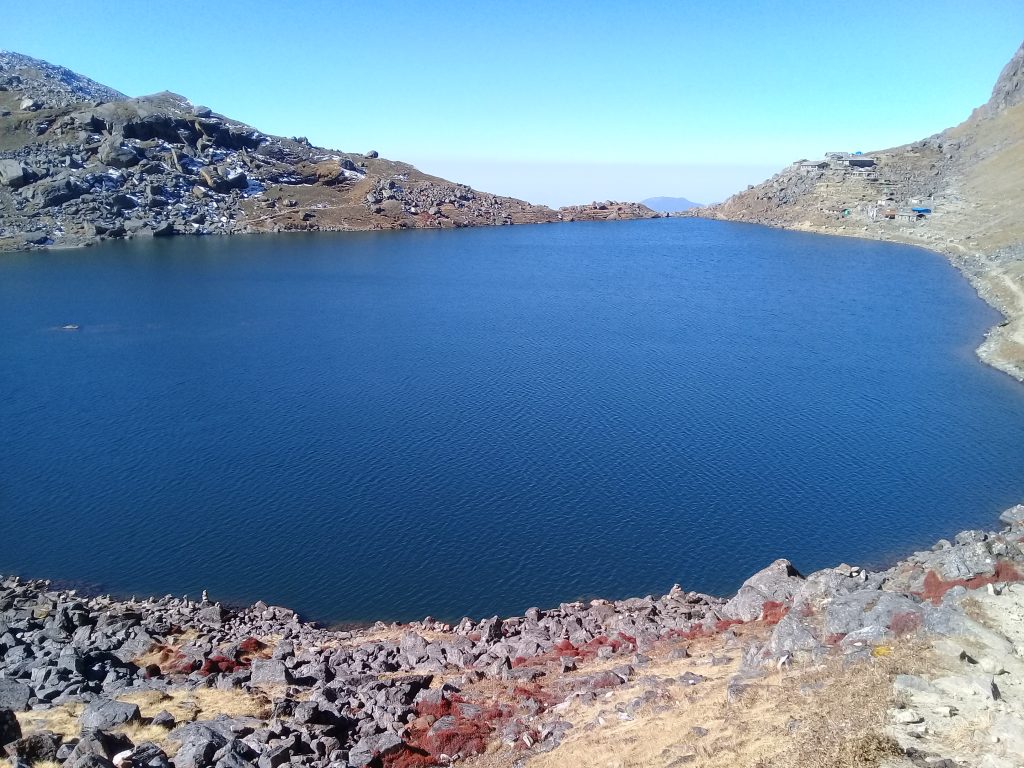
Langtang Valley Trek: 8 Days (short trek)

Langtang Valley Trek: 8 Days (short trek)
Keywords
Trip code
WT-CODE 2893
- Overview
- Trip Outline
- Trip Includes
- Trip Excludes
- Gallery
- Reviews
- Booking
- FAQ
Langtang Valley Trek
Experience Tamang culture along with the heart of the Himalayas.
- Duration = 8 Days
- Difficulty Level = Moderate
- Activity = Trekking/Hiking
- Max. Altitude = 4984 meters/ 16352 feet.
- Starts = Syabrubesi
- Ends = Syabrubesi
- Group Size = 1-12 People
- Best Season =September to May
Langtang Valley Trek Highlights
- Enjoy a scenic drive from Kathmandu to Syabrubesi through picturesque hills, terraced farmlands, rivers, and traditional villages.
- Trek through Langtang National Park, Nepal’s first Himalayan national park, renowned for its rich biodiversity and pristine alpine landscapes.
- Follow well-established trekking trails that are ideal for beginners, families, and senior trekkers.
- Walk through enchanting forests of rhododendron, pine, oak, bamboo, and maple.
- Admire spectacular Himalayan panoramas featuring Langtang Lirung, Langshisha Ri, Ganesh Himal, Yala Peak, and numerous snow-covered summits.
- Experience the authentic Tamang culture, traditions, hospitality, and Tibetan-influenced mountain lifestyle.
- Visit ancient Buddhist monasteries, mani walls, prayer wheels, and the sacred Kyanjin Gompa Monastery.
- Hike to Kyanjin Ri for breathtaking sunrise views over glaciers and towering Himalayan peaks.
- Challenge yourself with a rewarding day hike to Tsergo Ri (4,984 m), one of the finest viewpoints in the Langtang region.
- Visit the historic Yak Cheese Factory at Kyanjin Gompa and sample locally produced Himalayan yak cheese.
- Meet friendly mountain communities and gain insight into their unique way of life.
- Explore beautiful alpine meadows, yak grazing pastures, glacial rivers, and dramatic mountain valleys.
- Observe diverse Himalayan wildlife, including Himalayan langurs, musk deer, colorful pheasants, and numerous alpine bird species.
Langtang Valley Trek Overview
The Langtang Valley Trek is one of Nepal’s most rewarding short Himalayan adventures, offering an exceptional combination of spectacular mountain scenery, rich cultural heritage, and remarkable natural beauty. Located approximately 145 kilometers north of Kathmandu in the Rasuwa District, the Langtang region borders Tibet and is easily accessible with a scenic drive to Syabrubesi, the traditional gateway to the valley.
Ideal for trekkers seeking an authentic Himalayan experience without taking domestic flights, the Langtang Valley Trek provides a perfect balance of accessibility and wilderness. Within a single day, you leave the bustling streets of Kathmandu behind and enter a pristine mountain environment filled with towering peaks, dense forests, glacial rivers, and welcoming Tamang villages.
The entire trekking route lies within Langtang National Park, Nepal’s first Himalayan national park, established in 1976 to protect the region’s exceptional biodiversity. The park encompasses lush rhododendron forests, bamboo groves, oak and pine woodlands, alpine meadows, and high-altitude yak pastures. It is home to a variety of wildlife, including Himalayan langurs, musk deer, Himalayan thar, red pandas, numerous alpine bird species, and many rare medicinal plants.
Your journey begins with a scenic 6 to 7-hour drive from Kathmandu to Syabrubesi, following winding mountain roads through terraced farmland, traditional villages, cascading rivers, and rolling green hills. Throughout the drive, magnificent views of Ganesh Himal and surrounding mountain ranges accompany your journey.
From Syabrubesi, the trekking trail follows the Bhote Koshi River before gradually ascending alongside the Langtang Khola. The trail winds through peaceful forests filled with rhododendron, bamboo, oak, and pine trees before reaching Lama Hotel, a tranquil settlement surrounded by pristine woodland.
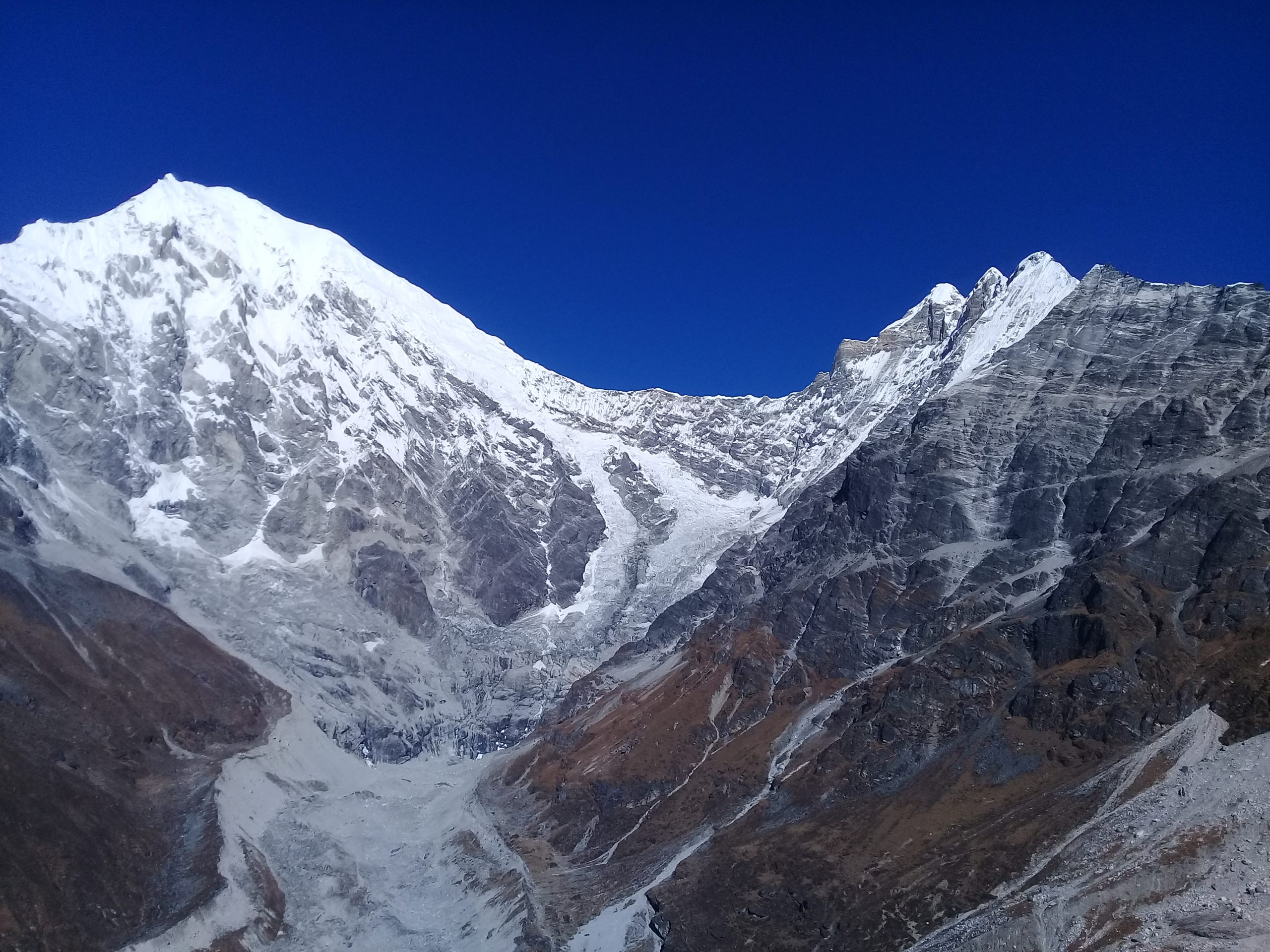
As you continue higher, the dense forests gradually give way to open alpine landscapes. Passing through Riverside, Ghodatabela, and Thyangsyap, the magnificent summit of Langtang Lirung (7,227 meters) begins to dominate the skyline, offering increasingly dramatic mountain scenery.
The trail eventually reaches Langtang Village, a resilient community that was rebuilt after the devastating 2015 Nepal earthquake. Today, visitors can pay their respects at the memorial dedicated to those who lost their lives during the tragedy while witnessing the remarkable determination of the local people who restored their homeland.
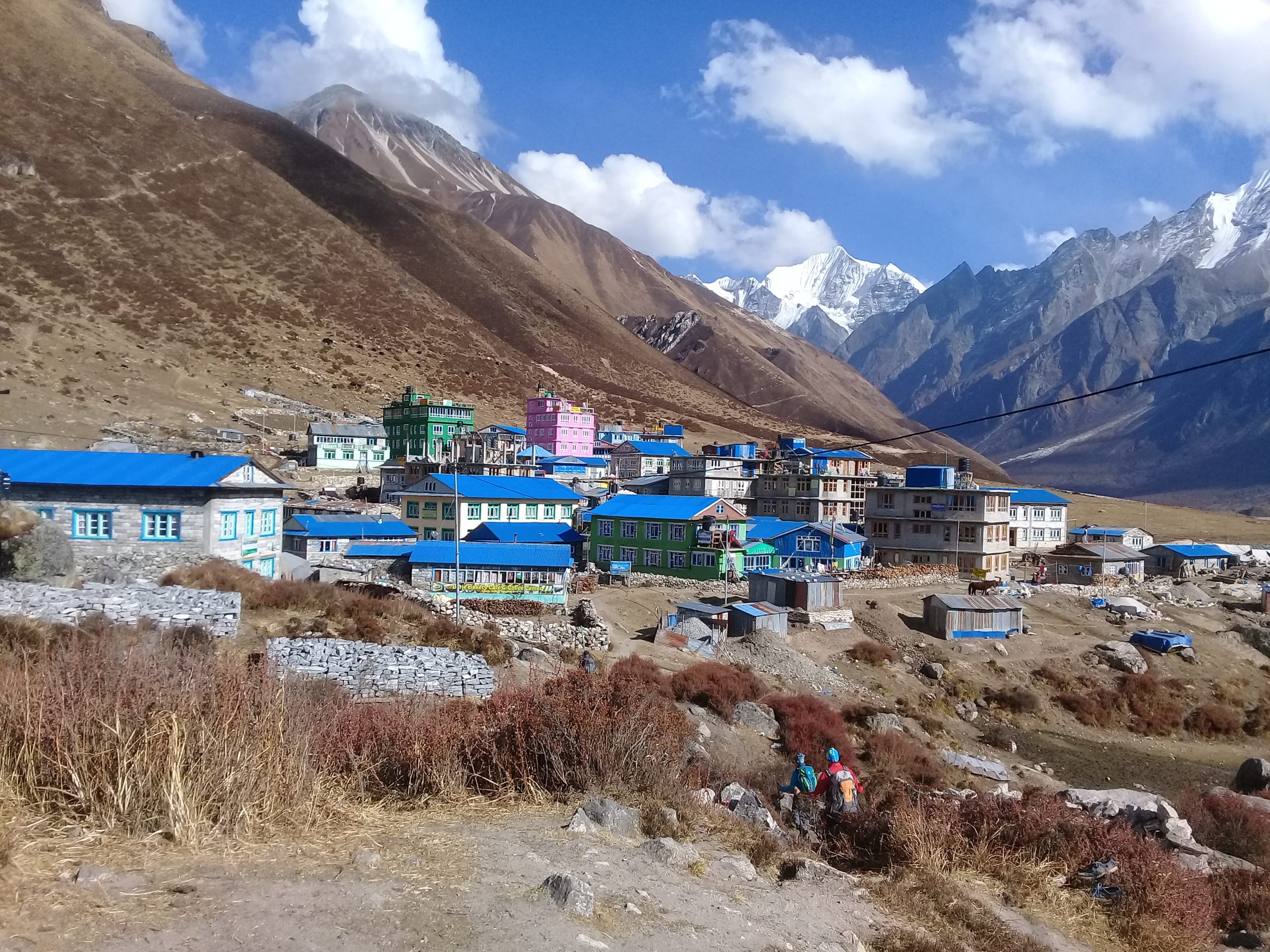
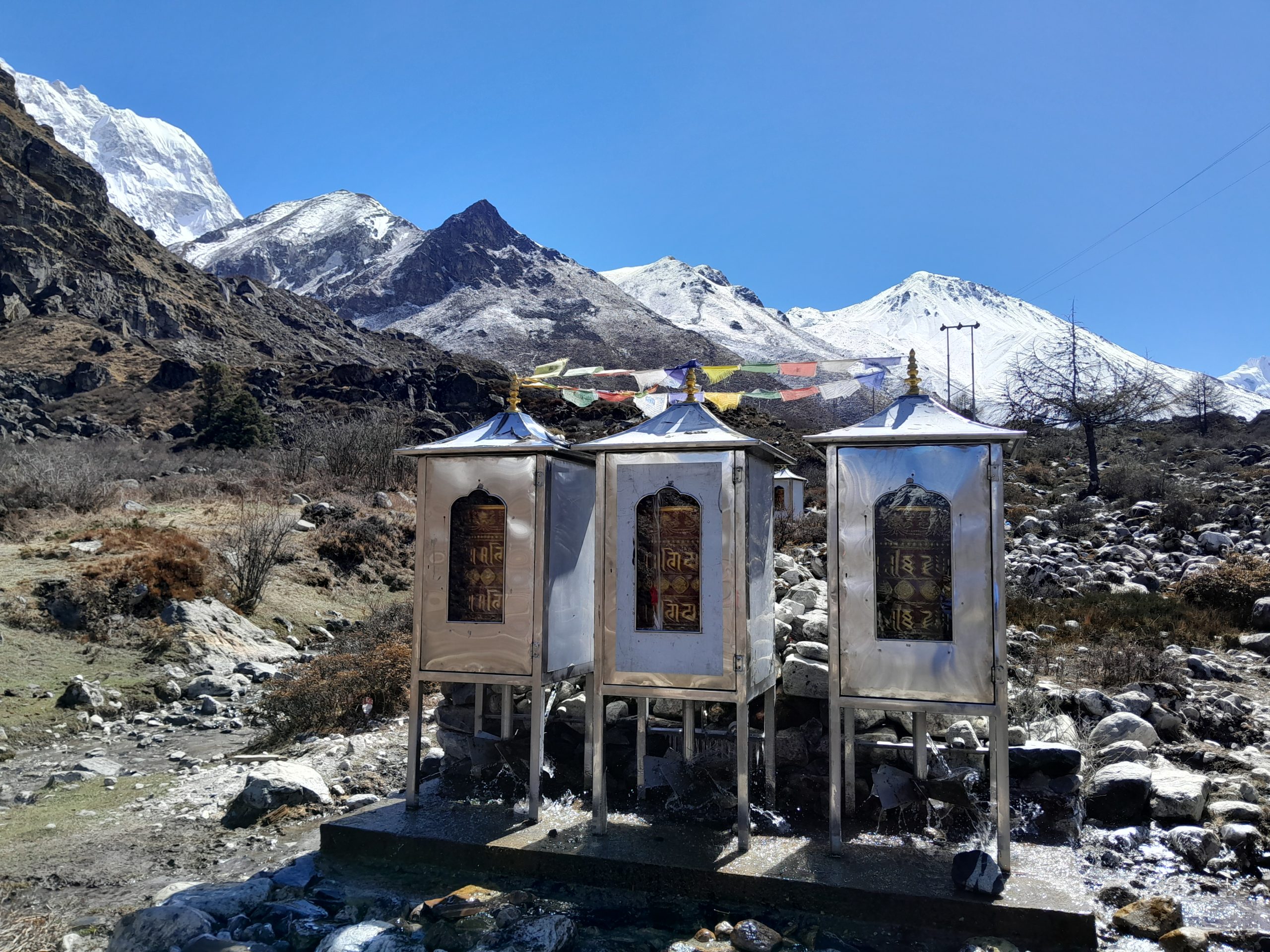
Continuing beyond Langtang Village, the route passes through Mundu before arriving at Kyanjin Gompa (3,830 meters), the spiritual and cultural heart of the Langtang Valley. Surrounded by towering snow-capped peaks and impressive glaciers, Kyanjin Gompa is home to an ancient Buddhist monastery, colorful prayer flags, spinning prayer wheels, and the region’s famous Yak Cheese Factory.
During your stay in Kyanjin Gompa, you have the opportunity to undertake rewarding acclimatization hikes. The ascent to Kyanjin Ri (4,400 meters) offers unforgettable sunrise views over Langtang Lirung, Langshisha Ri, Yala Peak, Dorje Lakpa, and the surrounding glaciers. Those seeking a greater challenge can continue to Tsergo Ri (4,984 meters), one of the highest viewpoints in the Langtang region, where spectacular 360-degree panoramas reward every step.
After exploring the upper valley, the trek retraces its route through Kyanjin Gompa, Langtang Village, Lama Hotel, and finally back to Syabrubesi, allowing you to appreciate the changing landscapes from a different perspective before returning to Kathmandu.
Beyond its stunning natural beauty, the Langtang Valley Trek offers an enriching cultural experience. The region is predominantly inhabited by the Tamang people, whose traditions, language, architecture, and Buddhist practices share deep historical connections with neighboring Tibet. Throughout the journey, trekkers encounter beautifully carved mani walls, traditional stone houses, prayer wheels, ancient monasteries, and warm hospitality that reflects centuries of Himalayan heritage.
Visitors who trek during local festivals enjoy an even richer cultural experience. Lhosar, the Tamang New Year, is celebrated with colorful dances, music, family gatherings, and traditional ceremonies during February or March. Buddha Jayanti, celebrated during the full moon in May, brings monasteries such as Kyanjin Gompa to life with prayers, butter lamps, chanting, and religious celebrations that provide a fascinating insight into local Buddhist traditions.
Combining breathtaking Himalayan landscapes, rich Tamang culture, rewarding trekking trails, and easy accessibility from Kathmandu, the Langtang Valley Trek remains one of Nepal’s finest trekking destinations for both first-time visitors and experienced hikers alike.
What Makes the Langtang Valley Trek Unique in 2026/2027?
Yak Cheese Factory at Kyanjin Gompa
One of the most memorable attractions of the Langtang Valley Trek is the historic Yak Cheese Factory located in Kyanjin Gompa. Situated at an elevation of nearly 3,900 meters, this small Himalayan dairy has become one of the region’s most iconic landmarks and offers trekkers a unique cultural and culinary experience.
Established during the 1950s with the support of Swiss dairy experts, the factory successfully combined modern cheese-making techniques with traditional Himalayan practices. Today, it continues to produce high-quality yak cheese using milk from female yaks, locally known as nak, whose rich and creamy milk creates cheese with a distinctive flavor and exceptional nutritional value.
Visitors can observe various stages of the traditional production process, from curdling and pressing to aging the cheese. The factory often allows trekkers to witness local cheesemakers at work while learning about the history of cheese production in the Langtang region.
The cheese itself is firm, flavorful, and slightly tangy, making it an excellent source of energy for trekkers. Many visitors enjoy sampling it fresh, spreading it on chapati or bread, or purchasing it as a unique souvenir and nutritious trekking snack.
Beyond its popularity among travelers, the Yak Cheese Factory plays a vital role in supporting the local economy. It provides sustainable employment for families in Kyanjin Gompa and neighboring villages while preserving a tradition that has become an integral part of Langtang’s cultural identity.
Kyanjin Ri Hike (4,400 Meters)
Among the highlights of the Langtang Valley Trek, the hike to Kyanjin Ri (4,400 meters) is considered one of the most rewarding side excursions. Beginning directly from Kyanjin Gompa, this challenging yet achievable hike takes approximately 2 to 4 hours, depending on individual fitness and trekking pace.
The trail follows a continuous uphill ascent across rocky ridges and alpine terrain. Although the climb can be physically demanding, every step brings increasingly impressive views of the surrounding mountains and glaciers.
Upon reaching the summit, trekkers are rewarded with one of the finest panoramic viewpoints in the Langtang region. The towering Langtang Lirung (7,227 meters) dominates the northern skyline, accompanied by the immense Langtang Glacier below. Nearby peaks such as Changbu (6,251 meters), Yubra (6,264 meters), Yala Peak (5,500 meters), Naya Kanga (5,844 meters), and the rugged Kangja La Pass create an extraordinary Himalayan panorama.
From the summit, visitors also enjoy magnificent views across the entire upper Langtang Valley, including glacial moraines, alpine ridges, snow-covered peaks, and pristine mountain wilderness extending in every direction.
For the best experience, trekkers are encouraged to begin the hike before sunrise when the skies are generally clear and the soft morning light beautifully illuminates the surrounding peaks. Early departures also increase the chances of enjoying unobstructed mountain views before afternoon clouds develop.
Besides offering spectacular scenery, the Kyanjin Ri hike serves as an excellent acclimatization excursion before attempting the higher ascent to Tsergo Ri (4,984 meters), helping trekkers adapt safely to the increasing altitude while enjoying one of Nepal’s most breathtaking Himalayan viewpoints.
Hike to Tsergo Ri Viewpoint (4,984 Meters)
The hike to Tsergo Ri (4,984 meters) is one of the most rewarding highlights of the Langtang Valley Trek and offers the highest accessible viewpoint on the classic trekking route. Rising approximately 1,150 meters above Kyanjin Gompa, this challenging ascent rewards trekkers with spectacular 360-degree panoramic views of the Langtang Himalaya.
The trail begins directly from Kyanjin Gompa and gradually ascends through alpine meadows, traditional yak pastures, ancient stone shelters, and colorful Buddhist prayer flags. Along the way, trekkers often encounter local Tamang herders tending their yak herds, providing an authentic glimpse into the traditional mountain lifestyle of the Langtang region.
As the trail climbs higher, the terrain becomes steeper and more demanding, with rocky ridges and exposed alpine slopes requiring careful footing. Although the hike is physically challenging, it is technically straightforward and suitable for trekkers with good fitness and proper acclimatization. Trekking poles, sturdy hiking boots, and adequate hydration are strongly recommended for a safe and comfortable ascent.
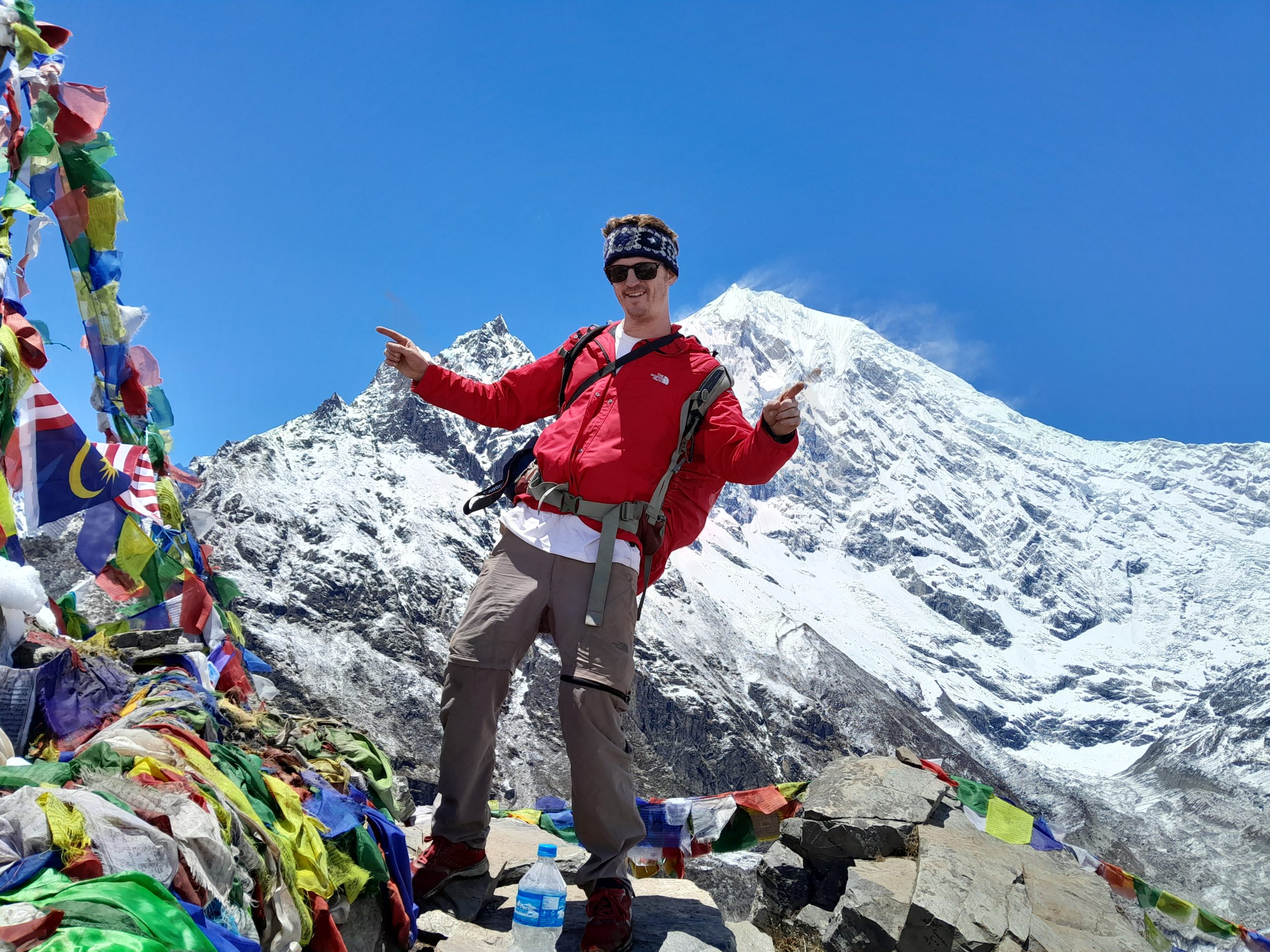
Reaching the summit of Tsergo Ri is an unforgettable experience. Colorful prayer flags flutter in the mountain breeze while breathtaking views unfold in every direction. On a clear day, trekkers are rewarded with magnificent panoramas of Langtang Lirung (7,227 meters), Yala Peak (5,500 meters), Langtang Ri, Naya Kanga (5,844 meters), Langshisha Ri, Dorje Lakpa, and numerous surrounding glaciers and snow-covered peaks.
For the best weather and visibility, hikers are encouraged to begin the climb before sunrise. Early morning typically offers crystal-clear skies, excellent photography conditions, and comfortable temperatures before afternoon clouds develop. The descent is equally demanding, so trekkers should allow sufficient time, maintain a steady pace, and take regular breaks while returning to Kyanjin Gompa.
For many trekkers, standing atop Tsergo Ri feels like standing on the roof of the Langtang Valley, surrounded by one of Nepal’s most spectacular Himalayan landscapes.
Side Trip to Langshisha Kharka (4,285 Meters)
For trekkers seeking a quieter and less-traveled adventure, the excursion to Langshisha Kharka (4,285 meters) offers one of the most peaceful and scenic experiences in the Langtang region. Located east of Kyanjin Gompa, this expansive alpine meadow showcases the untouched beauty of the upper Langtang Valley.
Unlike the popular viewpoint hikes to Kyanjin Ri and Tsergo Ri, the journey to Langshisha Kharka emphasizes natural beauty rather than summit views. The trail traverses glacial valleys, rocky paths, alpine grasslands, and pristine wilderness before opening into a vast meadow beneath the towering Langshisha Himal (6,807 meters). Massive glaciers descend from the surrounding peaks, feeding crystal-clear rivers that flow through this tranquil alpine landscape.
During spring and summer, Langshisha Kharka transforms into a vibrant alpine paradise covered with colorful wildflowers. Yak herds graze peacefully across the meadows while seasonal nomadic herders establish temporary camps throughout the valley. The area also provides excellent opportunities for wildlife observation, with chances to spot Himalayan tahr, musk deer, blue sheep, and a variety of alpine bird species.
The hike is not technically difficult, but the combination of high altitude and long walking hours requires good physical fitness and proper acclimatization. Since there are no permanent teahouses, restaurants, or accommodation facilities beyond occasional seasonal yak-herder shelters, most trekkers complete the journey as a day hike from Kyanjin Gompa.
Anyone planning this excursion should begin early in the morning and carry sufficient drinking water, snacks, warm clothing, and essential trekking equipment for a comfortable and enjoyable day.
Spectacular Langtang Himalaya Views
One of the defining features of the Langtang Valley Trek is the extraordinary variety of Himalayan landscapes encountered throughout the journey. From lush river valleys and dense forests to expansive alpine meadows and glacial terrain, every stage of the trek presents increasingly dramatic mountain scenery.
As the trail gradually climbs through the valley, magnificent peaks begin to dominate the horizon. By the time trekkers reach Kyanjin Gompa, they are surrounded by an impressive natural amphitheater of snow-covered mountains, glaciers, and rugged ridgelines.
Among the region’s finest viewpoints, Tsergo Ri (4,984 meters) offers an exceptional 360-degree panorama featuring Langtang Lirung (7,227 meters), Langshisha Ri (6,427 meters), Dorje Lakpa (6,988 meters), Yala Peak (5,500 meters), Naya Kanga (5,844 meters), and sections of the majestic Ganesh Himal range.
The nearby summit of Kyanjin Ri provides equally breathtaking perspectives, overlooking vast glaciers, glacial moraines, and the entire upper Langtang Valley. Even from the meadows surrounding Kyanjin Gompa, visitors can enjoy unforgettable scenes of grazing yaks set against towering snow-covered peaks.
During clear nights, the Langtang Valley becomes an exceptional destination for stargazing. The Milky Way stretches brilliantly across the Himalayan sky, creating unforgettable nighttime scenery. Sunrise and sunset are equally captivating as the first and last rays of sunlight illuminate the mountains with brilliant shades of gold, orange, and crimson.
Autumn (September to November) is widely regarded as the ideal season for the Langtang Valley Trek, offering crystal-clear skies, excellent visibility, comfortable temperatures, and some of the year’s most spectacular mountain views.
Wildlife and Natural Beauty of Langtang National Park
The Langtang Valley Trek passes through Langtang National Park, Nepal’s first Himalayan national park, established to conserve the region’s remarkable biodiversity and fragile alpine ecosystems.
The park encompasses an extraordinary range of landscapes, including subtropical forests, temperate woodlands, alpine meadows, glacial rivers, towering peaks, and permanent snowfields. This remarkable ecological diversity supports a wide variety of rare Himalayan wildlife.
Among the park’s most iconic inhabitants are the elusive Red Panda, Himalayan Tahr, Musk Deer, Snow Leopard, Himalayan Black Bear, Blue Sheep, and the Asiatic wild dog (Dhole). Although sightings of these rare mammals are never guaranteed, their presence highlights the ecological significance of the Langtang region.
Bird enthusiasts will also appreciate the park’s rich avian diversity. More than 250 bird species have been recorded here, including Nepal’s national bird, the colorful Himalayan Monal, along with pheasants, woodpeckers, eagles, vultures, and numerous high-altitude species.
The vegetation changes dramatically with elevation. Lower sections of the trail feature dense forests of oak, pine, hemlock, fir, bamboo, maple, and rhododendron. During spring (March to May), the hillsides burst into vibrant colors as thousands of rhododendrons bloom across the landscape.
Higher elevations reveal expansive alpine meadows, glacial valleys, and yak grazing pastures around Kyanjin Gompa and Langshisha Kharka. Summer brings colorful alpine wildflowers, including primroses, gentians, and Himalayan blue poppies, while winter transforms the valley into a peaceful snow-covered wonderland.
For nature lovers, photographers, and wildlife enthusiasts, Langtang National Park offers one of Nepal’s most diverse and rewarding mountain environments.
Local Tamang Culture and Tibetan Heritage
The Langtang Valley Trek offers not only spectacular mountain scenery but also an enriching cultural experience through its close connection with the indigenous Tamang community, whose history, traditions, and heritage have been shaped by centuries of interaction with neighboring Tibet.
The Tamang people primarily speak the Tamang language, a member of the Tibeto-Burman language family, while Nepali and basic English are commonly spoken in villages that welcome trekkers. Their warm hospitality, traditional lifestyle, and deep spiritual beliefs create an authentic cultural atmosphere throughout the journey.
As trekkers pass through settlements such as Lama Hotel, Langtang Village, Mundu, and Kyanjin Gompa, they encounter traditional stone houses, beautifully carved mani walls, Buddhist chortens, colorful prayer flags, spinning prayer wheels, and centuries-old monasteries that reflect the region’s rich Tibetan Buddhist heritage.
For travelers seeking a more immersive cultural experience, the Tamang Heritage Trail combined with the Langtang Valley Trek offers an outstanding opportunity to explore traditional villages, local customs, historic monasteries, and authentic Himalayan lifestyles in greater depth.
Visitors who trek during local festivals enjoy a particularly memorable cultural experience. Lhosar, the Tamang New Year, is celebrated with vibrant music, traditional Tamang Selo dances, colorful costumes, and community gatherings. Buddha Jayanti, commemorating the birth of Lord Buddha, is observed with prayers, butter lamps, and religious ceremonies in monasteries throughout the valley.
Another important celebration is the Dumje Festival, held at Kyanjin Gompa, where masked dances and sacred rituals honor Guru Rinpoche (Padmasambhava), one of Tibetan Buddhism’s most revered spiritual masters. The traditional Chyamgi Puja, also known as the Horse Festival, commemorates the Tamang people’s historic warrior heritage through unique ceremonies and cultural performances.
Experiencing these traditions firsthand allows trekkers to gain a deeper appreciation of the Langtang region, where breathtaking Himalayan landscapes and centuries-old Buddhist culture exist in remarkable harmony.
Why the Langtang Valley Trek is Perfect for Beginners, Families, and Trekkers of All Ages
The Langtang Valley Trek is one of Nepal’s most beginner-friendly Himalayan adventures, offering an exceptional combination of breathtaking mountain scenery, rich cultural experiences, comfortable trekking conditions, and easy accessibility from Kathmandu. Whether you are embarking on your first trek in the Himalayas, traveling with your family, or seeking a rewarding journey at a comfortable pace, the Langtang Valley Trek provides an unforgettable experience for trekkers of all ages and fitness levels.
Located approximately 145 kilometers north of Kathmandu, the journey begins with a scenic 6 to 7-hour drive to Syabrubesi, the gateway to the Langtang Valley. Unlike many popular trekking regions in Nepal, the Langtang Valley Trek does not require domestic flights, making it a more convenient, reliable, and cost-effective option while allowing travelers to spend more time enjoying the spectacular Himalayan landscapes.
The classic Langtang Valley Trek generally takes 10 to 11 days, making it ideal for travelers with limited holiday time who still wish to experience the beauty of the Nepalese Himalayas. For those looking to extend their adventure, the trek can easily be combined with the sacred Gosaikunda Lake Trek or the more comprehensive Langtang Gosaikunda Helambu Trek, creating a longer and more diverse Himalayan journey.
One of the reasons this trek is highly recommended for first-time trekkers is its moderate level of difficulty. Daily walking distances typically range between 5 and 12 kilometers, with trekking durations of approximately 4 to 7 hours. The gradual ascent allows ample time for rest, acclimatization, photography, and exploration of the surrounding landscapes without feeling overly demanding.
The trails are well-established, clearly marked, and maintained throughout the trekking route. There are no technical climbing sections, exposed mountaineering terrain, or specialized equipment requirements, making the trek suitable for anyone with a reasonable level of fitness and enthusiasm for outdoor adventure. Trekkers who wish to challenge themselves further can enjoy optional day hikes to Kyanjin Ri (4,400 meters) or Tsergo Ri (4,984 meters), both offering spectacular panoramic views of the Langtang Himalaya.
Accommodation along the trail is comfortable and welcoming. Traditional mountain teahouses and locally operated lodges provide clean rooms, warm meals, and genuine Himalayan hospitality. After each day’s trek, visitors can relax in cozy dining halls, enjoy freshly prepared local and international cuisine, and interact with friendly Tamang families who have welcomed trekkers to the valley for generations.
The trek’s carefully paced itinerary also promotes safe altitude acclimatization. Spending an additional night at Kyanjin Gompa (3,830 meters) allows trekkers to adjust naturally to the elevation before attempting optional hikes to higher viewpoints. This gradual ascent significantly reduces the risk of altitude-related illness while enhancing both safety and overall enjoyment.
Families appreciate the Langtang Valley Trek because it offers much more than mountain scenery. Children and young trekkers can explore beautiful rhododendron forests, cross suspension bridges, observe yaks grazing in alpine meadows, visit ancient monasteries, and learn about the fascinating traditions of the Tamang people. The journey combines outdoor adventure with meaningful cultural and educational experiences, making it an excellent destination for family holidays in Nepal.
Senior travelers also find the Langtang Valley Trek particularly rewarding. The moderate pace, comfortable accommodations, and availability of experienced guides and porters make the journey both manageable and enjoyable. Walking distances can be adjusted according to individual fitness levels, allowing plenty of time to appreciate the magnificent scenery without unnecessary physical strain.
With its outstanding accessibility, moderate difficulty, spectacular Himalayan scenery, rich Buddhist culture, abundant wildlife, and excellent trekking infrastructure, the Langtang Valley Trek continues to rank among the finest trekking destinations in Nepal. Whether you are a solo traveler, a couple, a family, or a group of friends, this remarkable journey offers the perfect introduction to the beauty, culture, and adventure of the Nepalese Himalayas.
Day 1: Kathmandu → Syabrubesi
🍳 Breakfast: 7:00 AM | 🚗 Drive: 7–8 hrs
Day 2: Syabrubesi → Lama Hotel
🍳 Breakfast: 7:00 AM | 🥾 Trek: 5–6 hrs
Day 3: Lama Hotel → Langtang Village
🍳 Breakfast: 7:00 AM | 🥾 Trek: 5–6 hrs
Day 4: Langtang Village → Kyanjin Gompa
🍳 Breakfast: 7:00 AM | 🥾 Trek: 3–4 hrs
Day 5: Acclimatization / Kyanjin Ri Hike
🍳 Breakfast: 6:30 AM | 🥾 Hike: 4–5 hrs
Day 6: Kyanjin Gompa → Lama Hotel
🍳 Breakfast: 7:00 AM | 🥾 Trek: 6–7 hrs
Day 7: Lama Hotel → Syabrubesi → Kathmandu
🍳 Breakfast: 7:00 AM | 🚗 Drive: 7–8 hrs
Itineraries
Day 1
Drive from Kathmandu to Syabrubesi (1,503 m / 4,931 ft)
Driving Duration: 7 Hours (145 km)Overnight Altitude: 1,503 m / 4,931 ftMeals: Breakfast, Lunch, and DinnerAccommodation: Tea House
Today, you leave the vibrant capital of Kathmandu and begin your scenic drive to Syabrubesi, the gateway to the Langtang Valley and the official starting point of your trekking adventure. Accompanied by your experienced trekking guide, you travel through picturesque countryside while receiving assistance and valuable insights about the journey ahead.
The drive initially follows a well-maintained highway before gradually climbing into the Himalayan foothills. The road remains generally comfortable throughout, with only a few unpaved sections that are easily manageable. Along the way, you’ll witness Nepal’s diverse landscapes, from bustling towns and terraced farmlands to lush forests, winding rivers, and charming hillside villages.
One of today’s highlights is following the beautiful Trishuli River for much of the journey. The route passes cascading waterfalls, deep river gorges, cultivated fields, and traditional settlements that showcase authentic rural life. On clear days, you may even enjoy your first distant views of the Himalayan foothills.
Several scheduled stops are made during the drive for tea, lunch, and refreshments, allowing you to stretch your legs, sample authentic Nepali cuisine, and admire the ever-changing scenery. These breaks also offer a wonderful opportunity to experience the warm hospitality of local communities before venturing deeper into the mountains.
Day 2
Trek from Syabrubesi to Lama Hotel (2,470 m / 8,104 ft)
Walking Duration: 6 Hours (11 km)Overnight Altitude: 2,470 m / 8,104 ftMeals: Breakfast, Lunch, and DinnerAccommodation: Tea House
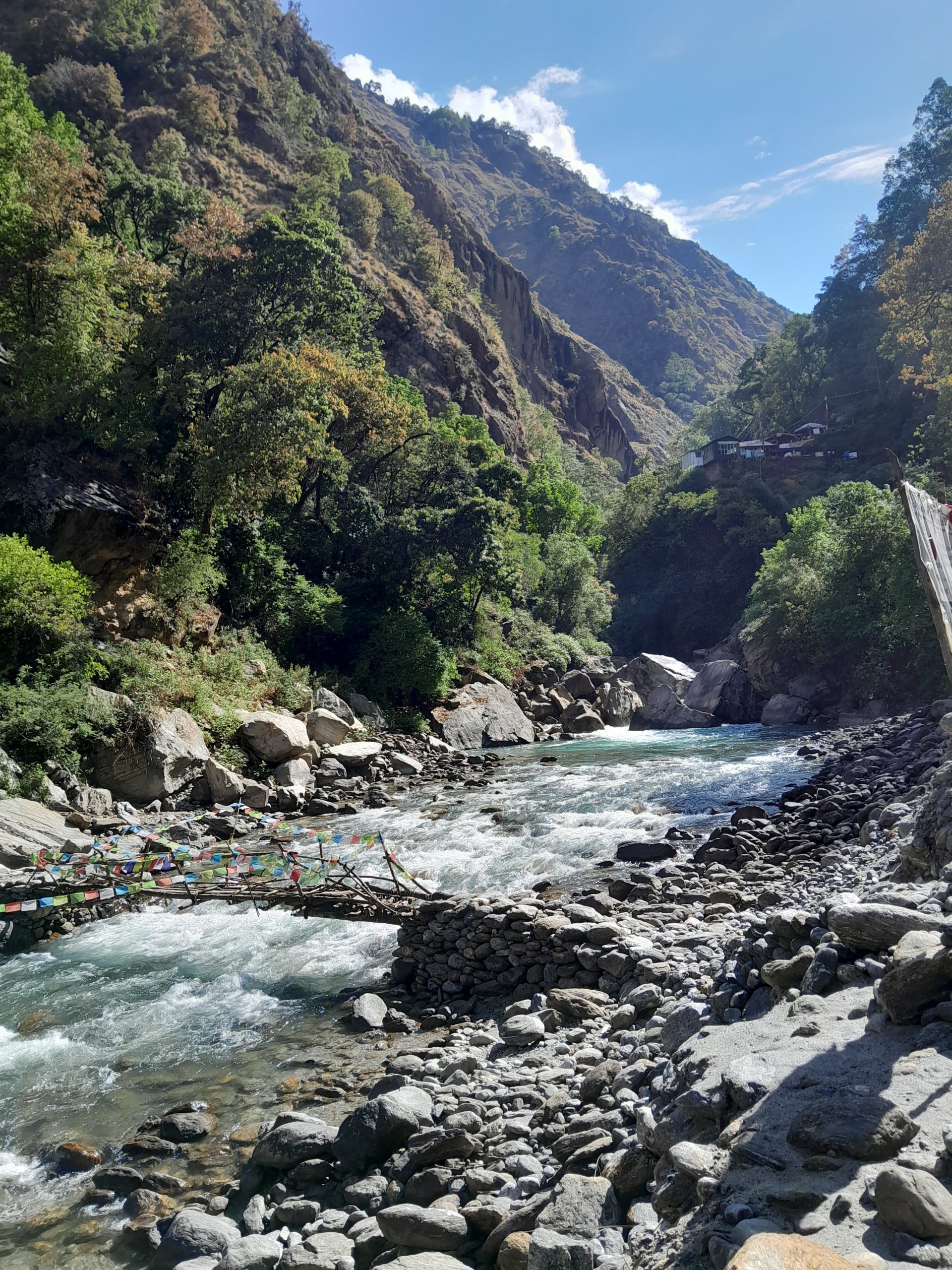
Your Langtang Valley Trek officially begins today as you leave Syabrubesi and follow the beautiful Langtang Khola upstream into the heart of Langtang National Park. The trail crosses a suspension bridge over the glacial river, whose rushing waters accompany you for much of the day’s journey.
The path winds through dense subtropical forests filled with bamboo, oak, rhododendron, and pine trees. Well-maintained stone steps, compact forest trails, and occasional rocky sections create an enjoyable and comfortable trekking experience. Although the route includes several short ascents and descents, the overall elevation gain is gradual and suitable for trekkers of all experience levels.
Passing through the small settlement of Domen, you continue deeper into the forest before reaching Bamboo, a popular lunch stop nestled among towering trees. The peaceful surroundings, colorful prayer flags, and traditional tea houses create a welcoming Himalayan atmosphere.
Beyond Bamboo, the valley narrows as the trail follows waterfalls, moss-covered rocks, and thick forests toward Rimche. This quieter section of the trek offers excellent opportunities to observe native birds and, with a bit of luck, some of the region’s remarkable wildlife.
Day 3
Trek from Lama Hotel to Langtang Village (3,430 m / 11,253 ft)
Walking Duration: 6 Hours (12 km)Overnight Altitude: 3,430 m / 11,253 ftMeals: Breakfast, Lunch, and DinnerAccommodation: Tea House
Today’s journey takes you deeper into the spectacular Langtang Valley as the dense forests gradually give way to expansive alpine meadows and breathtaking mountain scenery. The trail follows the Langtang Khola, steadily ascending through one of Nepal’s most beautiful Himalayan landscapes.
After leaving Lama Hotel, you cross a suspension bridge and continue through enchanting forests of pine, oak, and rhododendron. The well-defined trail consists of stone staircases, forest paths, and occasional rocky sections. Although the climb is continuous, it remains steady and manageable.
Along the route, you pass the small settlements of Chhunama and Pering Kharka before reaching Ghodatabela, a popular rest stop where many trekkers enjoy lunch. Here, the forest begins to thin, revealing magnificent views of the surrounding peaks.
Beyond Ghodatabela, the valley opens dramatically into broad yak pastures and traditional mountain settlements. The crisp mountain air and increasingly spectacular scenery signal your arrival in the high Himalayas. As you approach Thyangsyap, the majestic summit of Langtang Lirung gradually emerges above the valley, creating one of the trek’s most unforgettable moments.
Langtang National Park is also home to a remarkable variety of wildlife. If you’re fortunate, you may spot Himalayan monals, langurs, musk deer, or even the elusive red panda hidden within the surrounding forests.
Your destination today, Langtang Village, carries deep historical significance. The original settlement was tragically destroyed by a massive avalanche triggered by the devastating 2015 Nepal earthquake, resulting in the loss of many lives. The village has since been thoughtfully rebuilt in a safer location, symbolizing the resilience and determination of the local community. A memorial near the former village serves as a moving tribute to those who lost their lives.
Day 4
Trek from Langtang Village to Kyanjin Gompa (3,870 m / 12,697 ft)
Walking Duration: 3 Hours (7 km)Overnight Altitude: 3,870 m / 12,697 ftMeals: Breakfast, Lunch, and DinnerAccommodation: Tea House
Today’s shorter trek allows for a relaxed pace while exploring the breathtaking upper Langtang Valley. Leaving Langtang Village behind, the trail gently ascends across wide alpine meadows with uninterrupted views of snow-capped Himalayan peaks.
The route passes countless mani walls intricately carved with Buddhist prayers, colorful prayer flags fluttering in the mountain breeze, ancient stupas, and small monasteries that beautifully reflect the region’s rich Tibetan Buddhist heritage. The well-maintained trail combines stone-paved pathways and gentle dirt tracks, making for an enjoyable walk.
After passing through the peaceful settlement of Mundu, surrounded by traditional stone houses and yak pastures, the valley widens dramatically. Towering glaciers, rugged cliffs, and magnificent mountain peaks dominate the landscape.
Along the way, you’ll notice memorials and reconstructed buildings that stand as reminders of the devastating 2015 Nepal earthquake. The remarkable rebuilding efforts throughout the valley reflect the resilience, strength, and determination of the local communities.
Arriving at Kyanjin Gompa is one of the highlights of the trek. Believed to be several centuries old, this sacred monastery has long served as the spiritual heart of the Langtang region. Surrounded by prayer wheels, chortens, and spectacular mountain scenery, the monastery offers a peaceful and deeply spiritual atmosphere.
Nearby, the magnificent peaks of Langtang Lirung, Dorje Lakpa, and numerous glaciers dominate the skyline, while herds of yaks graze peacefully across the alpine meadows, creating an unforgettable Himalayan setting.
Day 5
Acclimatization Hike to Tserko Ri (4,984 m / 16,352 ft)
Hiking Duration: 7–8 HoursHighest Altitude: 4,984 m / 16,352 ftOvernight Altitude: 3,870 m / 12,697 ftMeals: Breakfast, Lunch, and DinnerAccommodation: Tea House
Today is dedicated to acclimatization with an unforgettable day hike to Tserko Ri, one of the finest viewpoints in the Langtang region. Standing at 4,984 meters, the summit rewards your efforts with breathtaking panoramic views of the surrounding Himalayan giants.
The ascent is moderately challenging, requiring a steady pace as you climb through rocky ridges, alpine meadows, yak grazing fields, and sparse high-altitude vegetation. Along the way, you may encounter local yak herders tending their livestock while enjoying ever-expanding mountain vistas.
Upon reaching the summit, you’ll be rewarded with spectacular 360-degree views of Langtang Lirung, Yala Peak, Dorje Lakpa, Gangchempo, Langshisa Ri, and countless snow-covered Himalayan peaks stretching into the distance.
After spending ample time enjoying the scenery and capturing photographs, you descend carefully back to Kyanjin Gompa. The remainder of the afternoon is free to relax, visit the famous yak cheese factory, explore the village, or simply enjoy the tranquil Himalayan atmosphere.
Day 6
Trek from Kyanjin Gompa to Lama Hotel (2,470 m / 8,104 ft)
Walking Duration: 7–8 Hours (18 km)Overnight Altitude: 2,470 m / 8,104 ftMeals: Breakfast, Lunch, and DinnerAccommodation: Tea House
After exploring the upper Langtang Valley, today’s journey follows a mostly downhill trail back to Lama Hotel. Descending through spectacular alpine scenery provides a completely different perspective of the valley while allowing you to appreciate the landscapes you experienced during the ascent.
Retracing your route through Kyanjin, Langtang Village, Ghodatabela, and Bamboo, you pass yak pastures, mountain streams, traditional settlements, colorful prayer flags, and dense forests of pine, oak, and rhododendron.
The comfortable descent makes for an enjoyable day, with plenty of opportunities to admire the surrounding scenery and reflect on your memorable Himalayan adventure.
Day 7
Trek from Lama Hotel to Syabrubesi via Sherpagaun (1,503 m / 4,931 ft)
Walking Duration: 6 Hours (14 km)Overnight Altitude: 1,503 m / 4,931 ftMeals: Breakfast, Lunch, and DinnerAccommodation: Tea House
Today, you return to Syabrubesi by following the scenic upper trail through Sherpagaun, avoiding the lower route used during the ascent. This alternative path provides magnificent panoramic views of the Langtang Valley while offering a quieter and more rewarding trekking experience.
The trail winds through peaceful Tamang and Sherpa villages, where traditional stone houses, terraced fields, Buddhist prayer flags, and ancient monasteries showcase the rich cultural heritage of the region. Compared to the riverside trail, this route offers broader mountain vistas and a greater sense of tranquility.
The surrounding forests support diverse birdlife, colorful wildflowers, and various Himalayan wildlife species. As you gradually descend, the warmer climate and lush vegetation signal your return to the lower valley.
Arriving back in Syabrubesi, you check into your tea house and celebrate the successful completion of your Langtang Valley Trek while enjoying your final evening in the mountains.
Day 8
Drive from Syabrubesi to Kathmandu (1,400 m / 4,593 ft)
Driving Duration: 7 Hours (145 km)Overnight Altitude: 1,400 m / 4,593 ftMeals: Breakfast and LunchAccommodation: 3-Star Hotel
Following breakfast, you bid farewell to the Langtang region and begin the scenic drive back to Kathmandu. The journey retraces the winding mountain roads alongside the Trishuli River, passing picturesque villages, terraced hillsides, waterfalls, and lush green forests.
As you travel through Rasuwa District, you’ll enjoy one final glimpse of rural Nepal, observing traditional farming communities, bustling roadside markets, and daily village life. The drive provides an excellent opportunity to reflect on the unforgettable experiences, spectacular landscapes, and cultural encounters that made your Langtang Valley adventure truly memorable.
Includes
- Kathmandu–Syabrubesi–Kathmandu transportation
- Langtang National Park entry permit
- TIMS card (if required)
- Professional trekking guide
- One experience Porter.
- Teahouse accommodation during trek
- Three meals per day during trekking
- Guide and Porter salary, insurance, food, and accommodation
- First aid kit
Excludes
- Nepal visa fee
- International airfare
- Travel insurance
- Personal expenses
- Hot showers and Wi-Fi charges
- Drinks and snacks
- Tips for guide and porter




The Langtang Valley Trek is considered a moderate trek, making it suitable for beginners with a reasonable level of fitness as well as experienced trekkers. The trails involve daily walks of 5–7 hours with gradual ascents through forests, villages, and alpine landscapes. Although no technical climbing is required, proper preparation and acclimatization are important due to the high altitude.
The best seasons for the Langtang Valley Trek are spring (March to May) and autumn (September to November). During these months, the weather is generally stable, mountain views are crystal clear, rhododendron forests bloom in spring, and temperatures are comfortable for trekking. Winter is also possible for experienced trekkers, while the monsoon season brings heavy rainfall and slippery trails.
Yes. According to the latest trekking regulations in Nepal, international trekkers are encouraged to trek with a licensed trekking guide for safety and support. A guide enhances your trekking experience by providing local knowledge, handling logistics, assisting with communication, and ensuring your safety throughout the journey.
You need two permits for the Langtang Valley Trek:
Langtang National Park Entry Permit
TIMS (Trekkers’ Information Management System) Card (if applicable under current regulations)
Your trekking agency usually arranges these permits before the trek begins.
The highest overnight stop is Kyanjin Gompa (3,870 meters / 12,697 feet). However, most trekkers take an optional day hike to Kyanjin Ri (4,773 meters / 15,659 feet) or Tserko Ri (approximately 5,000 meters / 16,404 feet) for breathtaking panoramic views of the Langtang Himalayas.
Yes. Although the Langtang Valley Trek is lower than many Everest-region treks, altitude sickness can still occur above 3,000 meters. Walking at a steady pace, staying well hydrated, avoiding alcohol, and following a proper acclimatization schedule significantly reduce the risk. Your guide will monitor your health and assist if any symptoms appear.
Accommodation is mainly in comfortable teahouses run by local families. Rooms are generally simple but clean, with twin beds and shared bathrooms in most villages. Meals include a variety of Nepali and international dishes such as Dal Bhat, noodles, fried rice, pasta, soups, pancakes, eggs, potatoes, and hot drinks. Food quality is good and improves every year due to growing tourism.
Yes. The Langtang Valley Trek is one of Nepal’s best Himalayan treks for beginners. It offers excellent mountain scenery, authentic Tamang culture, and manageable trekking distances without requiring technical mountaineering skills. Regular walking or light fitness training before the trek will help make the experience more enjoyable.
The Langtang Valley Trek is ideal for trekkers seeking a rewarding Himalayan adventure within a relatively short timeframe. It combines spectacular snow-capped peaks, peaceful forests, glaciers, rivers, Buddhist monasteries, traditional Tamang villages, and rich wildlife inside Langtang National Park. Its close proximity to Kathmandu, fewer crowds compared to Everest and Annapurna, and diverse natural and cultural experiences make it one of Nepal’s most rewarding trekking destinations.
There are no reviews yet.