
Everest Basecamp :12 Days

Everest Basecamp :12 Days
Trip Type
Trip
Locations
Activities
Group Size
Reviews
Keywords
Trip code
WT-CODE 3087
- Overview
- Trip Outline
- Trip Includes
- Trip Excludes
- Gallery
- Reviews
- Booking
- FAQ
Everest Base Camp Trek
Witness the magnificence of the world’s most famous mountain, Mt. Everest,- Duration15 Days
- Difficulty LevelStrenuous
- ActivityTrekking/Hiking
- Max. Altitude5550 meters / 18209 feet
- StartsLukla
- EndsLukla
- Group Size1-12
- Best SeasonSeptember to November, and March to May
Everest Base Camp Trek Highlights
- Experience the legendary mountain flight from Kathmandu to Lukla, one of the world’s most scenic and thrilling aviation journeys.
- Trek through the breathtaking Sagarmatha National Park, a UNESCO World Heritage Site renowned for its alpine forests, diverse wildlife, and spectacular Himalayan landscapes.
- Cross iconic suspension bridges suspended above the Dudh Koshi River while following the famous Everest trekking trail.
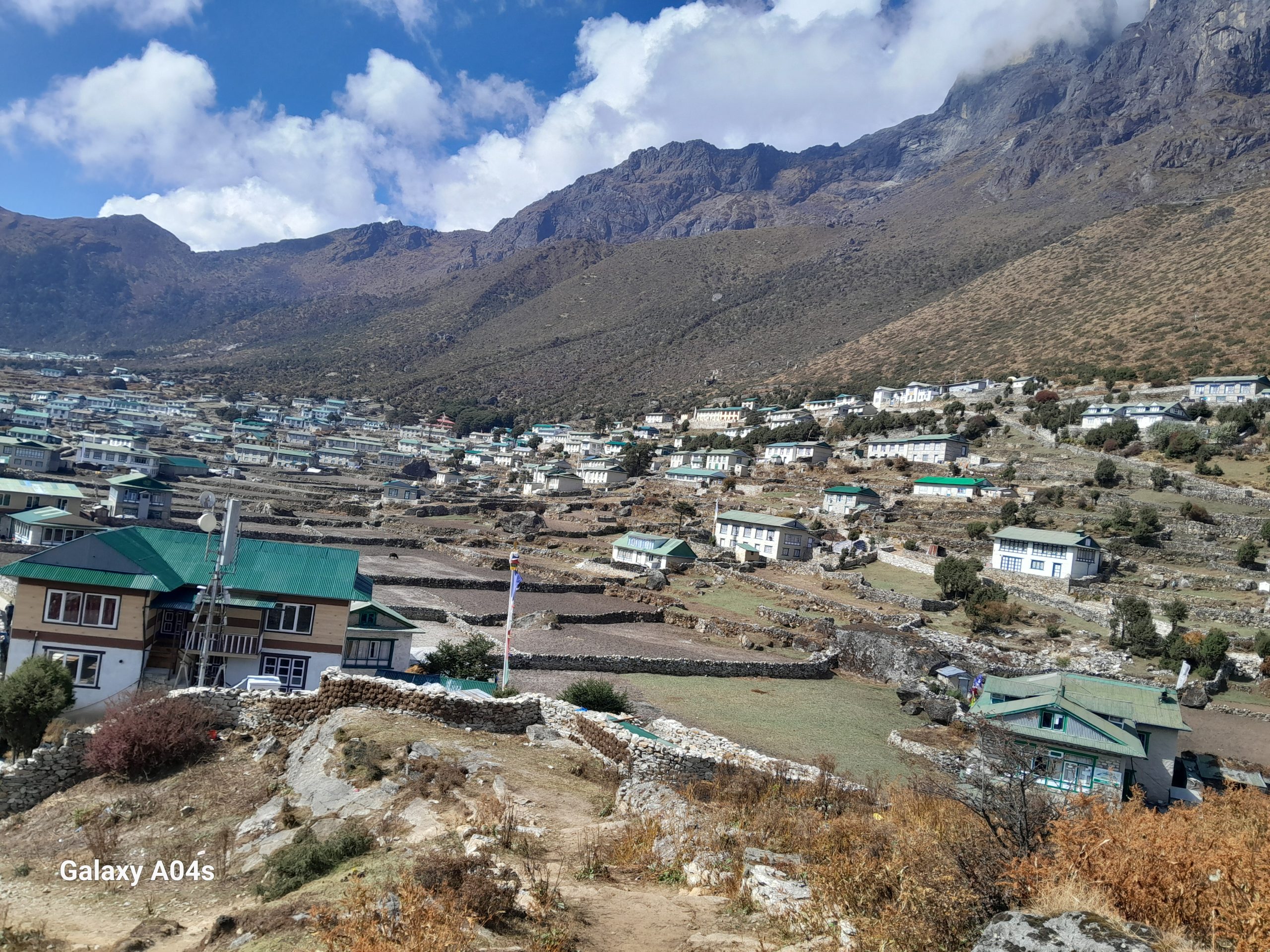
- Explore traditional Sherpa settlements, including Namche Bazaar, Khumjung, Tengboche, Dingboche, and Lobuche.
- Experience authentic Sherpa hospitality, vibrant local markets, and the unique culture of Nepal’s high Himalayan communities.
- Visit the historic Tengboche Monastery, the spiritual heart of the Khumbu region, and witness centuries-old Buddhist traditions.
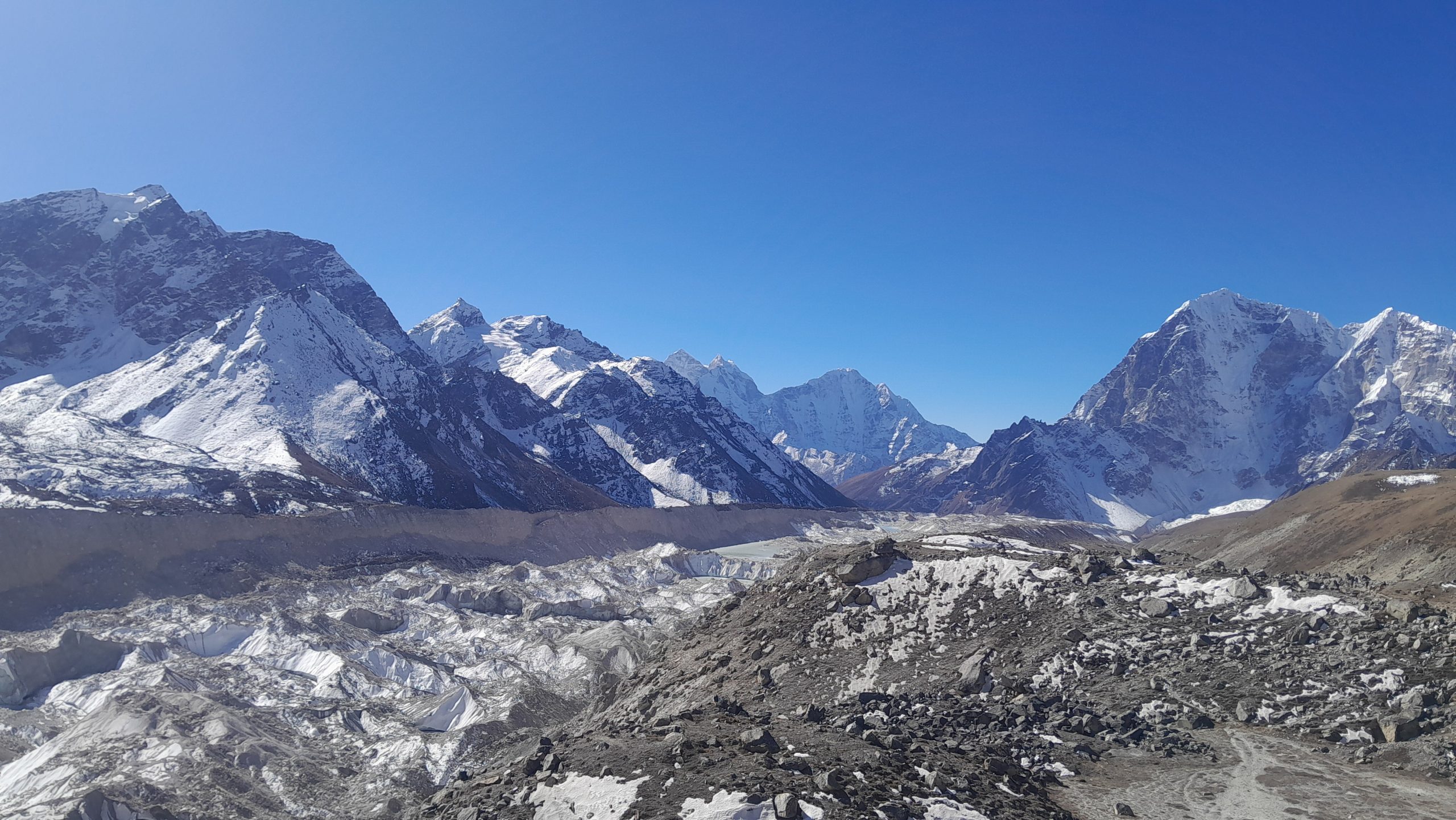
- Trek alongside the magnificent Khumbu Glacier, one of the world’s highest glaciers, surrounded by dramatic ice formations and towering Himalayan peaks.
- Reach the legendary Everest Base Camp (5,364 m / 17,598 ft), the starting point for Everest expeditions.
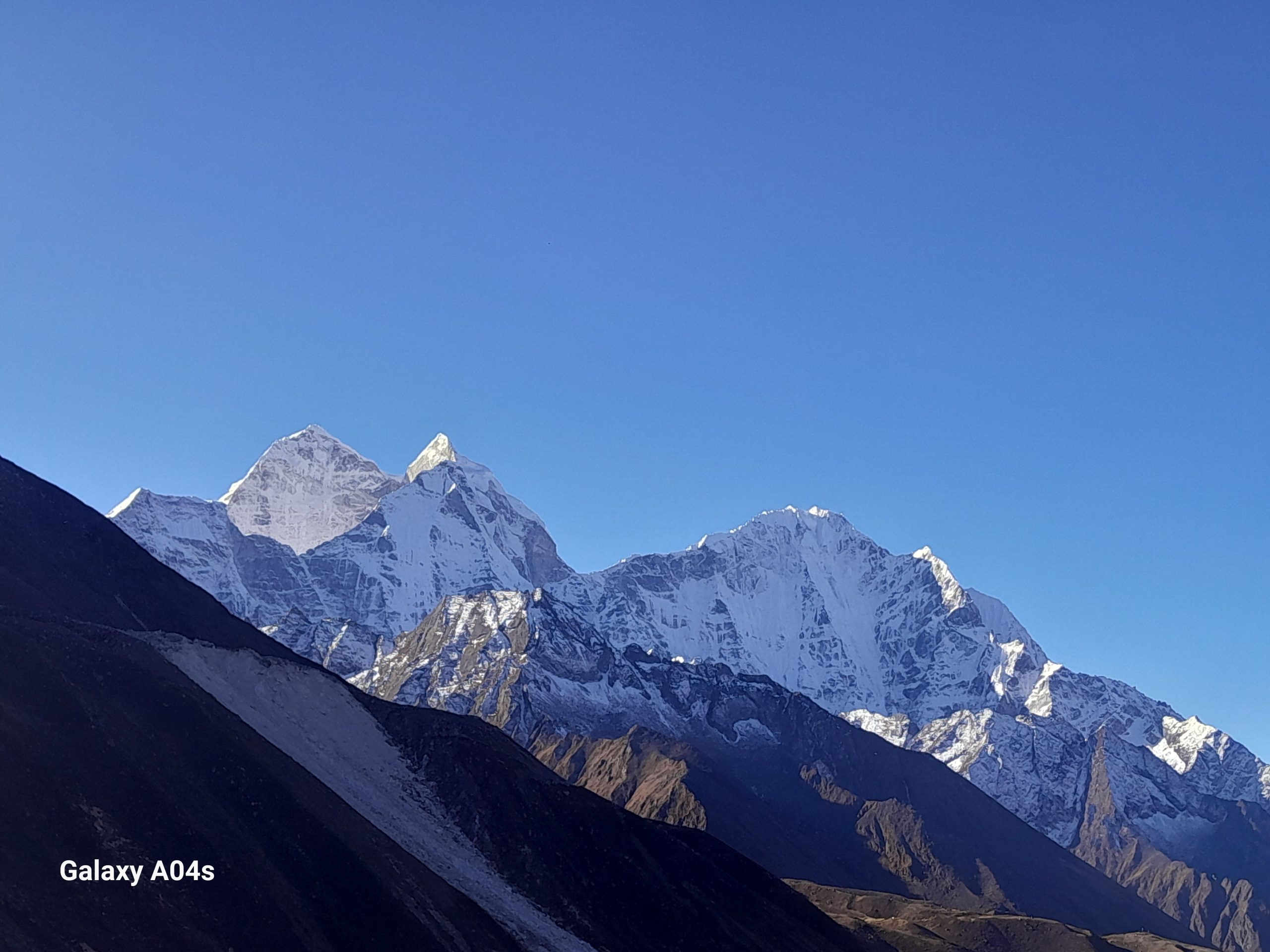
- Climb Kala Patthar (5,550 m / 18,209 ft) for the finest panoramic sunrise views of Mount Everest, Lhotse, Nuptse, Ama Dablam, Makalu, Pumori, and numerous Himalayan giants.
- Experience colorful Sherpa festivals, including Mani Rimdu (October–November), Buddha Jayanti (May), Gyalpo Lhosar (February–March), and Dumje (July), depending on your travel season.
Everest Base Camp Trek Overview
The Everest Base Camp Trek is one of the world’s most iconic trekking adventures, offering an unforgettable journey through Nepal’s breathtaking Khumbu region. Combining spectacular mountain scenery, authentic Sherpa culture, ancient Buddhist monasteries, and the excitement of standing beneath the world’s highest mountain, this trek has become a dream destination for adventurers from across the globe.
Situated within Sagarmatha National Park, a UNESCO World Heritage Site, the trek leads to the foot of Mount Everest (8,848.86 meters / 29,031 feet) while passing through picturesque mountain villages, glacial valleys, and dramatic alpine landscapes.
The route gained worldwide recognition after Sir Edmund Hillary and Tenzing Norgay Sherpa successfully summited Mount Everest in 1953. Since then, Everest Base Camp has become a symbol of adventure, determination, and mountaineering excellence. Walking these historic trails allows trekkers to follow in the footsteps of legendary climbers while witnessing some of the most spectacular mountain scenery on Earth.
Your adventure begins with the famous scenic flight from Kathmandu to Lukla (2,840 meters), home to the renowned Tenzing-Hillary Airport. Over the following 14 to 18 days, depending on your itinerary and acclimatization schedule, you will trek approximately 130 kilometers (80 miles) through breathtaking Himalayan landscapes, crossing suspension bridges, passing ancient chortens, and gradually ascending into the heart of the Everest region.
From Lukla, the trail gently follows the Dudh Koshi River to Phakding (2,610 meters) through peaceful pine forests decorated with colorful prayer flags and spinning prayer wheels. The journey gradually climbs toward Namche Bazaar (3,440 meters), the vibrant commercial and cultural center of the Khumbu. This bustling Sherpa town serves as an important acclimatization stop, offering panoramic mountain views, excellent cafés, local museums, and the popular hike to the Everest View Hotel.
Continuing beyond Namche, the trail traverses alpine forests and open hillsides before reaching the magnificent Tengboche Monastery (3,867 meters). Surrounded by Everest, Ama Dablam, Lhotse, and Nuptse, Tengboche is both the spiritual heart of the Khumbu and one of the trek’s most scenic highlights.
The journey then continues to Dingboche (4,410 meters), a beautiful high-altitude village enclosed by traditional stone walls. Here, trekkers spend another acclimatization day, often hiking to Nangkartshang Peak (5,050 meters) for breathtaking views of Makalu, Island Peak, Lhotse, and Ama Dablam. Beyond Dingboche, vegetation gradually disappears as the landscape transforms into rugged glacial terrain leading toward Lobuche (4,940 meters) via the poignant memorials at Thukla Pass.
From Lobuche, the trail follows the rocky moraine of the Khumbu Glacier to Gorak Shep (5,164 meters), the final settlement before Everest Base Camp. Trekking beside towering ice formations and the legendary Khumbu Icefall, you eventually arrive at Everest Base Camp (5,364 meters)—a lifelong achievement for countless trekkers. Although Everest’s summit itself is partially hidden from Base Camp, standing at the foot of the world’s highest mountain is an unforgettable and deeply rewarding experience.
The following morning, an early ascent to Kala Patthar (5,550 meters) rewards you with the finest panoramic views of Mount Everest. As the first rays of sunlight illuminate Everest, Lhotse, Nuptse, Ama Dablam, Pumori, and countless surrounding peaks, the breathtaking Himalayan panorama creates one of the most memorable moments of the entire journey.
After celebrating your achievement, the return trek retraces the scenic route through Pheriche, Namche Bazaar, and Lukla, allowing you to appreciate the spectacular landscapes from a different perspective.
Whether you are an experienced trekker or a well-prepared first-time adventurer, the Everest Base Camp Trek offers an extraordinary combination of natural beauty, cultural discovery, physical challenge, and personal accomplishment. It remains one of the world’s greatest trekking experiences and an unforgettable journey into the heart of the Himalayas.
What Makes the Everest Base Camp Trek in Nepal Unique?
Scenic Flight to Lukla
The Everest Base Camp adventure begins with one of the world’s most exciting mountain flights. The 30 to 40-minute flight from Kathmandu to Lukla (or from Ramechhap during the peak trekking seasons) offers breathtaking aerial views of Nepal’s valleys, terraced hillsides, snow-capped mountains, and deep river gorges.
Flights generally depart between 6:00 AM and 8:00 AM, when weather conditions are at their most stable. As the aircraft approaches Lukla, passengers enjoy magnificent views of Everest, Lhotse, Ama Dablam, and numerous Himalayan peaks before landing at the famous Tenzing-Hillary Airport, known worldwide for its short uphill runway dramatically carved into the mountainside.
Explore Namche Bazaar – The Gateway to Everest
Located at 3,440 meters (11,286 feet), Namche Bazaar is the commercial, cultural, and social center of the Khumbu region. Built into a natural horseshoe-shaped hillside, the town offers spectacular views of Kongde Ri, Thamserku, and, on clear days, the distant summit of Mount Everest.
Historically an important trading center between Nepal and Tibet, Namche continues to host its traditional Saturday market, where local traders sell yak cheese, handicrafts, textiles, spices, and fresh produce.
Today, Namche serves as the primary acclimatization stop for Everest trekkers, featuring comfortable lodges, cafés, bakeries, outdoor gear shops, museums, and excellent viewpoints. Visitors can also explore the Sherpa Culture Museum, nearby monasteries, and enjoy the scenic hike to the renowned Everest View Hotel.
Acclimatization Hike to Everest View Hotel
One of the best acclimatization activities during the trek is the hike to the Everest View Hotel, situated at approximately 3,880 meters (12,730 feet) above sea level.
Beginning from Namche Bazaar, the trail climbs steadily through rhododendron forests and alpine ridges before reaching one of the world’s highest luxury hotels. The 3 to 4-hour round-trip hike rewards trekkers with spectacular panoramic views of Mount Everest, Ama Dablam, Lhotse, Nuptse, and Thamserku.
Enjoying a cup of tea while admiring the Himalayan skyline is an unforgettable experience and an excellent way to aid acclimatization before continuing to higher elevations.
Tengboche Monastery – The Spiritual Heart of the Khumbu
At an elevation of 3,867 meters, Tengboche Monastery is the largest and most significant Buddhist monastery in the Everest region. Surrounded by magnificent peaks including Everest, Ama Dablam, Lhotse, Nuptse, and Thamserku, it occupies one of the most scenic locations in the Himalayas.
Inside the monastery, visitors discover beautifully painted murals, sacred Buddhist statues, colorful prayer flags, intricate wood carvings, and the peaceful sounds of monks chanting during daily prayer ceremonies.
Trekkers visiting during the famous Mani Rimdu Festival can witness vibrant masked dances, religious ceremonies, and centuries-old Buddhist traditions that remain central to Sherpa culture.
Sunrise Hike to Kala Patthar
At 5,550 meters (18,209 feet), Kala Patthar represents the highest point reached during the Everest Base Camp Trek and offers the finest panoramic views of Mount Everest.
Before sunrise, trekkers climb the rocky trail above Gorak Shep, where golden morning light gradually illuminates Everest, Lhotse, Nuptse, Pumori, Changtse, and the vast Khumbu Glacier below.
The breathtaking panorama from Kala Patthar is widely regarded as the ultimate photographic viewpoint in the Everest region and serves as the crowning highlight of the entire journey.
Experience Authentic Sherpa Culture and Himalayan Hospitality
Beyond its spectacular mountains, the Everest region offers a rich cultural experience through the traditions of the Sherpa people, whose lives have been shaped by the Himalayas for centuries.
Throughout the trek, visitors encounter beautifully decorated monasteries, prayer wheels, mani walls, chortens, and fluttering prayer flags while experiencing the warmth and hospitality of family-run teahouses.
Depending on the season, trekkers may also witness important Sherpa festivals such as Mani Rimdu, Gyalpo Lhosar, and Dumje, featuring traditional masked dances, religious ceremonies, communal celebrations, and vibrant cultural performances.
Walk Beside the Khumbu Glacier and Cross Iconic Suspension Bridges
The Everest Base Camp Trek features some of the most dramatic landscapes in the Himalayas. Along the route, trekkers cross several impressive suspension bridges spanning the roaring Dudh Koshi River, including the famous Hillary Suspension Bridge, one of the trek’s most photographed landmarks.
Higher up the valley, the trail follows the edge of the magnificent Khumbu Glacier, where towering ice formations, deep crevasses, and rugged glacial moraines create a truly awe-inspiring alpine environment. Surrounded by Everest, Lhotse, Nuptse, and countless snow-covered peaks, this remarkable section of the trek offers an unforgettable glimpse into the raw power and beauty of the high Himalayas.
Required Permits for the Everest Base Camp Trek
Trekking to Everest Base Camp (EBC) requires official permits that grant access to Nepal’s protected Himalayan region. These permits help preserve the natural environment, support local communities, and ensure sustainable tourism throughout the Khumbu region.
To complete the Everest Base Camp Trek, you will need the following two permits:
Khumbu Pasang Lhamu Rural Municipality Entrance Permit
The Khumbu Pasang Lhamu Rural Municipality Entrance Permit is mandatory for all trekkers entering the Khumbu region.
- Permit Fee: NPR 3,000 per person
- Where to Obtain: Lukla (issued in person upon arrival)
- Purpose: Supports local infrastructure, conservation projects, and tourism management within the Khumbu region.
Sagarmatha National Park Entry Permit
Since the Everest Base Camp Trek passes through Sagarmatha National Park, a UNESCO World Heritage Site, every trekker must obtain a national park entry permit.
- Permit Fee: NPR 3,000 per person
- Purpose: Grants access to Nepal’s highest national park while supporting wildlife conservation and environmental protection.
Documents Required
To obtain your trekking permits, you should carry:
- A valid passport
- A photocopy of your passport (recommended)
- Passport-sized photographs (optional but useful)
If you book your adventure with Nepal Trekking Experts, all trekking permits are arranged on your behalf. Your experienced guide will handle the permit process, allowing you to focus entirely on enjoying your Himalayan adventure.
How Difficult Is the Everest Base Camp Trek?
The Everest Base Camp Trek is generally rated as moderately difficult to challenging. While it does not require technical climbing or mountaineering skills, the combination of high altitude, long trekking days, and rugged mountain terrain makes it a physically demanding adventure.
Over the course of 14 to 18 days, trekkers walk approximately 10 to 15 kilometers (6–9 miles) each day across steep mountain trails, rocky paths, suspension bridges, and glacial moraines. As the trail ascends above 5,000 meters, oxygen levels decrease to nearly half of those at sea level, making even gentle climbs considerably more strenuous.
Trekkers should also be prepared for:
- Continuous altitude gain throughout the journey
- Cold temperatures, particularly at night
- Occasional snowfall and strong mountain winds
- Long hiking days of 5 to 8 hours
Despite these challenges, the trek is achievable for beginners with a good level of physical fitness, proper preparation, and a well-planned itinerary that includes adequate acclimatization days.
The key to a successful Everest Base Camp trek is maintaining a slow, steady pace, staying hydrated, and listening carefully to your body. Trekkers with pre-existing medical conditions should consult their physician before undertaking the journey.
Is There a Risk of Altitude Sickness on the Everest Base Camp Trek?
Yes. Acute Mountain Sickness (AMS) is one of the most important health considerations when trekking to Everest Base Camp.
Altitude sickness commonly begins above 3,000 meters, with the likelihood increasing significantly beyond 3,500 to 4,000 meters. Since Everest Base Camp sits at 5,364 meters and Kala Patthar reaches 5,550 meters, every trekker should understand the symptoms and prevention methods.
Common Symptoms of Acute Mountain Sickness (AMS)
- Headache
- Fatigue and unusual tiredness
- Dizziness
- Nausea or vomiting
- Loss of appetite
- Difficulty sleeping
- Shortness of breath, even while resting
Most cases of mild AMS improve with rest and proper acclimatization. However, ignoring symptoms can lead to serious and potentially life-threatening conditions, including:
- High Altitude Pulmonary Edema (HAPE) – fluid accumulation in the lungs
- High Altitude Cerebral Edema (HACE) – swelling of the brain
Both conditions require immediate descent and urgent medical attention.
How to Prevent Altitude Sickness
Following proper acclimatization practices significantly reduces the risk of AMS.
- Avoid increasing your sleeping altitude by more than 300–500 meters per day once above 3,000 meters.
- Follow the “Climb High, Sleep Low” principle whenever possible.
- Take acclimatization days in Namche Bazaar and Dingboche.
- Drink 3–4 liters of water daily.
- Avoid alcohol and excessive caffeine.
- Eat a carbohydrate-rich diet and maintain a slow, steady trekking pace.
- Consider taking Acetazolamide (Diamox) after consulting your doctor.
- Descend immediately if symptoms worsen or signs of HAPE or HACE develop.
Physical Fitness and Training for the Everest Base Camp Trek
Proper preparation greatly enhances your trekking experience and increases your chances of completing the Everest Base Camp Trek comfortably.
Ideally, begin training 8 to 12 weeks before departure.
Cardiovascular Training
Build endurance through activities such as:
- Hiking
- Brisk walking
- Jogging
- Cycling
- Stair climbing
- Swimming
Aim for 30 to 60 minutes, four to five times per week.
Strength Training
Strengthen your lower body and improve stability with exercises such as:
- Squats
- Lunges
- Step-ups
- Deadlifts
- Calf raises
Core exercises including planks and Russian twists also improve balance while carrying a backpack.
Flexibility and Mobility
Regular stretching or yoga improves flexibility, reduces muscle soreness, and helps prevent injuries during long trekking days.
If possible, practice hiking with a loaded backpack on uneven terrain to simulate actual trekking conditions.
Best Time and Season for the Everest Base Camp Trek
The ideal seasons for trekking to Everest Base Camp are Spring (March to May) and Autumn (September to November).
During these months, trekkers enjoy stable weather, excellent visibility, moderate temperatures, and spectacular mountain scenery.
Everest Base Camp Trek in Spring (March to May)
Spring is one of the most popular seasons for the Everest Base Camp Trek, offering colorful landscapes, comfortable temperatures, and outstanding mountain views.
March
March marks the beginning of spring in the Everest region.
Highlights
- Pleasant daytime temperatures
- Cold but manageable mornings and evenings
- Clear skies with excellent mountain visibility
- Fewer trekkers than April
- Melting snow at lower elevations
- Early rhododendron blossoms
- Crisp weather with spectacular Himalayan views
April
April is widely considered one of the finest months for trekking in the Everest region.
Highlights
- Warm, stable weather
- Rhododendron forests in full bloom
- Crystal-clear views of Everest, Ama Dablam, Lhotse, and Thamserku
- Peak trekking season with lively trails
- Opportunity to observe Everest expedition teams preparing for summit attempts
- Increased wildlife activity, including Himalayan monals, musk deer, and yaks
- Calm evenings ideal for mountain photography
May
May offers warm weather and excellent trekking conditions before the arrival of the summer monsoon.
Highlights
- Comfortable daytime temperatures
- Outstanding mountain visibility
- Colorful wildflowers along the trail
- Celebration of Buddha Jayanti
- Minimal snowfall at lower elevations
- Occasional afternoon clouds and light pre-monsoon showers later in the month
- Best mountain views during early morning hours
Everest Base Camp Trek in Autumn (September to November)
Autumn is regarded as the premier trekking season in Nepal, offering stable weather, exceptional visibility, and ideal trail conditions.
September
September marks the beginning of Nepal’s autumn trekking season.
Highlights
- Fresh post-monsoon landscapes
- Lush forests and vibrant alpine meadows
- Fewer trekkers compared to October
- Crisp mountain air and excellent visibility
- Occasional light showers early in the month
October
October is widely considered the best month for the Everest Base Camp Trek.
Highlights
- Exceptionally stable weather
- Crystal-clear mountain views
- Dry, comfortable trekking trails
- Mild daytime temperatures
- Excellent photography conditions
- Minimal Lukla flight delays
- Vibrant autumn landscapes
- Increased wildlife sightings
- Opportunity to experience Nepal’s major festivals, including Dashain and Tihar
November
November concludes the autumn trekking season with consistently excellent weather.
Highlights
- Clear blue skies
- Outstanding mountain visibility
- Cool, crisp temperatures
- Excellent stargazing opportunities
- Light snowfall possible later in the month
- Pleasant daytime hiking conditions
- Quieter trails compared to October
Recommended Trekking Gear and Equipment for Everest Base Camp
Packing the right equipment is essential for a safe and comfortable trek.
Clothing
- Insulated down jacket
- Waterproof and windproof jacket
- Waterproof trekking pants
- Fleece or soft-shell jacket
- Thermal base layers
- Moisture-wicking trekking shirts
- Trekking pants and lightweight shorts
- Warm beanie or balaclava
- Sun hat or cap
- Insulated gloves
- Warm wool trekking socks
- Buff or neck gaiter
- Comfortable sleepwear
Footwear
- Waterproof trekking boots with ankle support
- Lightweight hiking shoes
- Camp shoes or sandals
Trekking Equipment
- 50–65L trekking backpack with rain cover
- 20–30L daypack
- Sleeping bag rated to -15°C to -20°C
- Adjustable trekking poles
- Headlamp with spare batteries
- UV-protection sunglasses
- Water bottles or hydration bladder (2–3 liters)
- Water purification tablets or filtration system
- Personal first aid kit
Personal Essentials
- High-SPF sunscreen
- SPF lip balm
- Toiletries
- Quick-dry towel
- Toilet paper and wet wipes
- Hand sanitizer
- Personal medications
- Diamox (if prescribed)
- Energy bars and trail snacks
- Power bank and charging cables
Do You Need Travel Insurance for the Everest Base Camp Trek?
Yes. Comprehensive travel insurance is strongly recommended and should be considered an essential part of your Everest Base Camp adventure.
The trek reaches elevations above 5,500 meters, where unpredictable weather, altitude-related illnesses, and emergency situations can occur.
A suitable travel insurance policy should include:
- Emergency medical treatment
- High-altitude trekking coverage above 5,000 meters
- Emergency helicopter evacuation
- Trip cancellation and interruption
- Lost or delayed baggage
- Personal accident coverage
Before purchasing insurance, carefully review the policy to ensure it specifically covers high-altitude trekking and helicopter rescue in Nepal.
Nepal Tourist Visa for the Everest Base Camp Trek
Most international travelers can obtain a Nepal Tourist Visa on Arrival at Tribhuvan International Airport in Kathmandu.
Upon arrival, simply complete the electronic application form, submit your passport, and pay the applicable visa fee.
Alternatively, you may apply for a tourist visa in advance through a Nepalese embassy or consulate in your home country.
Passport Requirements
Your passport must be valid for at least six months from your date of arrival in Nepal.
Tourist Visa Options
Nepal offers the following tourist visa durations:
- 15-Day Tourist Visa
- 30-Day Tourist Visa
- 90-Day Tourist Visa
Choose the visa that best matches the duration of your trekking itinerary and any additional travel plans within Nepal.
The detailed day-by-day itinerary for the 12-Day Everest Base Camp Trek is outlined below. Each day has been carefully planned to ensure proper acclimatization, comfortable trekking distances, and an enjoyable experience while exploring the breathtaking landscapes, rich Sherpa culture, and spectacular Himalayan scenery of Nepal’s Everest region.
Itineraries
Day 1
Scenic Flight from Kathmandu to Lukla (2,840 m) and Trek to Phakding (2,610 m)
Flight Duration: 35–45 Minutes
Walking Distance: 8 km (5 miles)
Trekking Duration: 4–5 Hours
Overnight Altitude: 2,610 m / 8,563 ft
Meals: Lunch & Dinner
Accommodation: Comfortable Teahouse
Your unforgettable Everest Base Camp adventure begins with one of the world’s most spectacular mountain flights. Early in the morning, after breakfast, your trekking guide will transfer you to the domestic terminal of Tribhuvan International Airport for your scenic flight to Lukla. Since mountain weather is most stable during the morning hours, flights generally depart between 6:00 AM and 8:00 AM.
Whenever possible, request a window seat on the right-hand side of the aircraft to enjoy the finest panoramic views. During the 35 to 45-minute flight, the bustling Kathmandu Valley gradually disappears beneath you as the aircraft glides over lush hills, deep river valleys, terraced farmland, and snow-capped Himalayan peaks. On clear days, you may catch breathtaking views of Langtang Lirung, Gauri Shankar, Numbur Himal, and even the distant summit of Mount Everest.
Landing at the famous Tenzing-Hillary Airport in Lukla is an adventure in itself. Perched on a mountainside with its short uphill runway, the airport is regarded as one of the most thrilling airports in the world. Upon arrival, you will meet your porters, organize your trekking gear, and enjoy your first glimpse of the vibrant Sherpa town, where colorful prayer flags flutter above traditional teahouses and trekkers from around the world gather before setting off into the Khumbu.
The trek to Phakding is a pleasant introduction to the Everest region. The trail gently descends through picturesque Sherpa villages, fragrant pine forests, and cultivated farmland while following the crystal-clear Dudh Koshi River. Along the way, you cross suspension bridges, spin traditional prayer wheels, pass intricately carved mani walls, and encounter yak and mule caravans transporting supplies to higher settlements.
After approximately four to five hours of easy trekking, you arrive in the peaceful village of Phakding, nestled beside the Dudh Koshi River. Surrounded by forested hills and distant snow-covered peaks, this charming village offers a relaxing first overnight stop. Enjoy a warm meal at your teahouse and unwind beside the dining room stove as you prepare for the exciting days ahead.
Day 2
Trek from Phakding to Namche Bazaar (3,440 m)
Walking Distance: 11 km (6.8 miles)
Trekking Duration: 6 Hours
Overnight Altitude: 3,440 m / 11,286 ft
Meals: Breakfast, Lunch & Dinner
Accommodation: Comfortable Teahouse
After breakfast, today’s journey follows the beautiful Dudh Koshi River through dense pine forests and traditional Sherpa villages. The trail crosses several suspension bridges decorated with colorful prayer flags before reaching one of the trek’s most famous landmarks—the iconic Edmund Hillary Suspension Bridge.
Suspended high above the roaring river, crossing this impressive bridge is both exhilarating and unforgettable. As the bridge gently sways beneath your feet, breathtaking views of the deep river gorge, forested hillsides, and fluttering Buddhist prayer flags create one of the classic moments of the Everest Base Camp Trek.
Continuing through the villages of Toktok and Benkar, you pass beautifully carved mani walls, ancient chortens, spinning prayer wheels, and small monasteries that offer a fascinating introduction to the rich Buddhist heritage of the Sherpa people.
By late morning, you arrive at Monjo, the gateway to Sagarmatha National Park, a UNESCO World Heritage Site. Here, your trekking permits are checked before you officially enter Nepal’s highest national park. After a short break, the trail crosses the river once again before beginning the day’s most demanding section—a steady uphill climb toward Namche Bazaar.
The ascent winds through dense forests of pine, fir, and rhododendron, gradually gaining elevation. On clear days, patient trekkers are rewarded with their first distant glimpse of the summit of Mount Everest, an exciting milestone that energizes the climb.
By late afternoon, you arrive at Namche Bazaar, the vibrant commercial and cultural center of the Khumbu region. Built into a natural amphitheater overlooking the valley, Namche is surrounded by towering Himalayan peaks and bustling with trekkers, mountaineers, cafés, bakeries, equipment shops, and traditional Sherpa homes. The lively atmosphere makes it one of the most memorable destinations on the Everest trail.
Day 3
Acclimatization Day in Namche Bazaar (3,440 m)
Overnight Altitude: 3,440 m / 11,286 ft
Meals: Breakfast, Lunch & Dinner
Accommodation: Comfortable Teahouse
Today’s acclimatization day plays a vital role in preparing your body for the higher elevations ahead. Rather than remaining inactive, you follow the proven mountaineering principle of “climb high, sleep low,” allowing your body to gradually adapt to the thinner mountain air.
Namche Bazaar is the ideal place for acclimatization, offering excellent facilities alongside fascinating cultural experiences. Historically an important trading center between Nepal and Tibet, Namche remains the economic and cultural heart of the Sherpa community.
During your exploration, you’ll discover charming stone-paved streets lined with traditional Sherpa homes, colorful prayer flags, monasteries, bakeries, cafés, outdoor gear shops, and local markets. If your visit falls on a Saturday, you can experience the vibrant weekly market, where local villagers gather to trade vegetables, yak products, handicrafts, clothing, and household goods.
The highlight of the day is the scenic hike to the renowned Everest View Hotel (3,880 m), one of the highest-altitude luxury hotels in the world. The gradual uphill walk provides excellent acclimatization while rewarding you with breathtaking panoramic views of Mount Everest, Ama Dablam, Lhotse, Thamserku, Kangtega, and Taboche.
For those wishing to explore further, the trail continues to the beautiful Sherpa village of Khumjung, home to the famous Khumjung Monastery, believed to house the legendary Yeti scalp. The village also features one of the longest mani walls in the Khumbu and offers an authentic glimpse into traditional Sherpa life.
After returning to Namche Bazaar, you’ll spend the evening relaxing and preparing for the higher elevations that await in the coming days.
Day 4
Trek from Namche Bazaar to Tengboche (3,860 m)
Walking Distance: 9 km (5.6 miles)
Trekking Duration: 5–6 Hours
Overnight Altitude: 3,860 m / 12,664 ft
Meals: Breakfast, Lunch & Dinner
Accommodation: Comfortable Teahouse
Today’s trek is widely regarded as one of the most scenic sections of the Everest Base Camp route. Leaving Namche Bazaar, the trail follows a spectacular hillside path offering uninterrupted panoramic views of Everest, Lhotse, Ama Dablam, and Thamserku.
The trail gradually descends through beautiful forests of pine, fir, and rhododendron before reaching the small riverside settlement of Phunki Tenga, where many trekkers stop for lunch. Along the way, you’ll encounter traditional water-powered prayer wheels, colorful prayer flags, and crystal-clear mountain streams.
After crossing the suspension bridge over the Imja Khola, the trail begins a steady uphill climb through peaceful rhododendron forests. During spring, these forests burst into brilliant shades of red, pink, and white, creating one of the most colorful landscapes in the Himalayas.
By afternoon, you arrive at the picturesque village of Tengboche, home to the famous Tengboche Monastery, the largest and most important Buddhist monastery in the Everest region. For generations, climbers have received blessings here before attempting Everest and other Himalayan peaks.
Surrounded by Everest, Ama Dablam, Nuptse, Lhotse, and Thamserku, Tengboche offers one of the most breathtaking mountain panoramas in Nepal. As evening falls, the golden light reflecting off the snow-covered peaks creates an unforgettable Himalayan atmosphere, while the soothing chants of resident monks add a profound sense of peace and spirituality.
Day 5
Trek from Tengboche to Dingboche (4,410 m)
Walking Distance: 11 km (6.8 miles)
Trekking Duration: 6 Hours
Overnight Altitude: 4,410 m / 14,469 ft
Meals: Breakfast, Lunch & Dinner
Accommodation: Comfortable Teahouse
Today’s journey takes you deeper into the heart of the upper Khumbu, where dense forests gradually give way to rugged alpine landscapes. Leaving Tengboche, you descend through peaceful rhododendron and pine forests to the quiet settlement of Deboche, home to a small Buddhist monastery.
Continuing along the banks of the Imja Khola, the trail crosses suspension bridges and passes ancient mani walls, chortens, and prayer wheels, offering continuous insight into the rich spiritual heritage of the Sherpa people. Towering above the valley, the magnificent pyramid-shaped peak of Ama Dablam dominates the skyline throughout much of the day’s walk.
The trail gradually climbs to Pangboche, one of the oldest Sherpa villages in the Everest region. Here, you’ll find traditional stone houses and the historic Pangboche Monastery, one of the oldest monasteries in the Khumbu.
Beyond Pangboche, the landscape becomes noticeably more rugged as trees become increasingly scarce and the valley widens into open alpine terrain. Following the trail toward Pheriche, you cross another suspension bridge before ascending through high-altitude meadows dotted with yak pastures, stone shelters, glacial streams, and long mani walls.
Magnificent views of Ama Dablam, Taboche, Cholatse, Lhotse, and surrounding Himalayan peaks accompany you throughout the afternoon.
By late afternoon, you arrive in the beautiful mountain village of Dingboche, nestled within a broad glacial valley and surrounded by protective stone walls that shelter crops from strong Himalayan winds and grazing yaks. This peaceful high-altitude village serves as another important acclimatization stop before your journey continues toward Everest Base Camp.
Day 6
Acclimatization Day in Dingboche – Hike to Nangkartshang View Point (5,050 meters / 16,568 feet)
Overnight Altitude: 4,410 meters / 14,469 feet
Meals: Breakfast, Lunch, and Dinner
Accommodation: Tea House
Today is your second and most important acclimatization day on the Everest Base Camp Trek. As you ascend above 4,000 meters, oxygen levels decrease significantly, making proper acclimatization essential for a safe and enjoyable journey. Instead of taking a complete rest, you will follow the proven mountaineering principle of “climb high, sleep low,” allowing your body to gradually adjust to the thinner mountain air while reducing the risk of Acute Mountain Sickness (AMS).
After a hearty breakfast, you leave Dingboche behind and begin a steady ascent toward the spectacular Nangkartshang View Point. Although the hike is relatively short, the high altitude makes every step more demanding, so your guide will encourage a slow, comfortable pace with regular breaks along the way.
As the trail climbs above the village, the cultivated stone-walled fields gradually disappear, giving way to rugged alpine terrain. The surrounding landscape becomes increasingly dramatic, featuring rocky ridges, glacial moraines, grazing yaks, colorful prayer flags, and uninterrupted views across the beautiful Imja Valley. With every step, the towering Himalayan peaks appear closer and more impressive.
Upon reaching Nangkartshang View Point (5,050 meters), you are rewarded with one of the finest panoramic viewpoints on the entire Everest Base Camp route. The breathtaking 360-degree panorama showcases some of the highest and most beautiful mountains in Nepal, including Makalu (8,485 meters), the world’s fifth-highest mountain, alongside Lhotse, Lhotse Shar, Chhukung Ri, Island Peak (Imja Tse), Ama Dablam, and numerous snow-covered Himalayan summits.
This rewarding acclimatization hike is widely regarded as one of the highlights of the Everest region, offering spectacular scenery without the demands of a full day’s trek.
After spending time admiring the magnificent mountain views and capturing unforgettable photographs, you descend gradually to Dingboche. The remainder of the afternoon is free to relax, enjoy the peaceful mountain surroundings, and prepare for tomorrow’s journey into the higher Himalayas.
Day 7
Trek from Dingboche to Lobuche (4,910 meters) – 6 Hours / 10 km
Overnight Altitude: 4,940 meters / 16,207 feet
Meals: Breakfast, Lunch, and Dinner
Accommodation: Tea House
Today’s journey takes you further into the heart of the Khumbu, where the landscape becomes increasingly rugged and the towering Himalayan peaks dominate every direction. Leaving Dingboche after breakfast, you follow a gradual uphill trail across the broad alpine valley above Pheriche, surrounded by breathtaking mountain scenery.
The path consists of rocky trails, compact dirt, and loose stones, making the trek moderately challenging. Although the gradient remains relatively gentle during the first half of the day, the higher elevation means you will notice the thinner air and slower pace required for comfortable trekking.
Throughout the walk, magnificent mountain views accompany you, including the striking peaks of Ama Dablam, Taboche, Cholatse, Lobuche East, and Lobuche West. As you continue higher, vegetation becomes increasingly sparse, replaced by dramatic glacial landscapes and barren alpine terrain.
Upon reaching Thokla, you stop briefly before tackling the day’s steepest ascent. The climb up the rocky moraine ridge of Thokla Pass (4,830 meters) is short but demanding due to the altitude. A slow and steady pace is essential as you negotiate the winding switchbacks leading to the summit.
At the top of the ridge, you arrive at one of the most emotional and memorable landmarks of the Everest Base Camp Trek. Numerous memorials, stone cairns, chortens, and monuments honor the Sherpas and mountaineers who lost their lives while climbing Everest and neighboring Himalayan peaks. This solemn site serves as a powerful reminder of both the extraordinary beauty and the inherent challenges of the world’s highest mountains.
Beyond Thokla, the trail follows the edge of the mighty Khumbu Glacier, where the scenery transforms into a spectacular world of glacial moraine, scattered boulders, windswept ridges, and rugged mountain terrain. Although much of the glacier lies hidden beneath layers of rock and debris, its immense size is unmistakable as it stretches through the valley below.
Arriving at Lobuche, you settle into a small cluster of traditional tea houses situated beside the glacier. Surrounded by towering peaks and dramatic alpine scenery, Lobuche provides an unforgettable overnight stop in the heart of the high Himalayas.
As evening falls, temperatures drop rapidly, and the thin mountain air becomes even more noticeable. From the village, you can enjoy magnificent views of Lobuche Peak, Nuptse, Pumori, and sections of the impressive Khumbu Glacier, while preparing for tomorrow’s long-awaited journey to Everest Base Camp.
Day 8
Trek to Gorak Shep and Hike to Everest Base Camp (5,364 meters / 17,598 feet), Return to Gorak Shep (5,164 meters) – 7 to 8 Hours / 15 km
Overnight Altitude: 5,164 meters / 16,942 feet
Meals: Breakfast, Lunch, and Dinner
Accommodation: Tea House
Today marks the pinnacle of your Everest Base Camp Trek as you finally reach the legendary Everest Base Camp (5,364 meters), the starting point for climbers attempting to summit the world’s highest mountain. After several days of trekking through picturesque Sherpa villages, alpine forests, and rugged glacial landscapes, you will stand at one of the most iconic destinations in the Himalayas.
Following an early breakfast in Lobuche, you begin the gradual ascent toward Gorak Shep, following a rugged trail that winds along the edge of the mighty Khumbu Glacier. The route traverses rocky moraines, glacial debris, and uneven terrain, requiring careful footing throughout the journey. Although the distance is relatively short, the high altitude makes every step more physically demanding, so maintaining a slow, steady pace and staying well hydrated is essential.
As you progress higher into the Khumbu Valley, the scenery becomes increasingly spectacular. Towering peaks such as Nuptse, Pumori, Lobuche Peak, and distant glimpses of Mount Everest dominate the skyline, while the immense Khumbu Glacier stretches dramatically across the valley below.
After several hours of trekking, you arrive at Gorak Shep, the highest permanent settlement on the standard Everest Base Camp route. Situated on the dried bed of an ancient glacial lake, this isolated outpost is surrounded by barren hills, towering mountains, and vast glacial landscapes. After checking into your tea house, you enjoy lunch and take a short rest before continuing to Everest Base Camp.
The trail from Gorak Shep to Everest Base Camp follows the rugged lateral moraine of the Khumbu Glacier. Although technically straightforward, the constantly changing terrain of rocks, ice, and glacial debris demands careful attention. Along the way, you pass colorful prayer flags, stone cairns, and fellow trekkers from around the world, all sharing the same dream of reaching this legendary destination.
Finally, you arrive at Everest Base Camp, one of the world’s most celebrated trekking achievements. Standing at the foot of the mighty Khumbu Icefall, surrounded by towering Himalayan giants, is an unforgettable experience that few places on Earth can rival. Although the summit of Mount Everest is hidden behind Nuptse from Base Camp itself, the atmosphere is nothing short of extraordinary.
During the spring climbing season, the glacier comes alive with vibrant expedition camps as climbers prepare for their summit attempts on Mount Everest. The colorful tents scattered across the ice create an inspiring scene that perfectly captures the spirit of Himalayan mountaineering.
After celebrating your remarkable achievement, capturing photographs, and taking in the incredible surroundings, you retrace your steps back to Gorak Shep. Although the return trek is tiring after a long day at high altitude, the satisfaction of reaching Everest Base Camp fills you with renewed energy and a profound sense of accomplishment.
Day 9
Sunrise Hike to Kala Patthar (5,550 meters / 18,209 feet) and Trek to Pheriche (4,270 meters) – 7 to 8 Hours / 18 km
Overnight Altitude: 4,270 meters / 14,009 feet
Meals: Breakfast, Lunch, and Dinner
Accommodation: Tea House
Today is widely regarded as the most spectacular day of the Everest Base Camp Trek. While reaching Everest Base Camp is a remarkable milestone, the ascent to Kala Patthar (5,550 meters) rewards you with the finest panoramic views of Mount Everest and the surrounding Himalayan giants.
Before sunrise, usually between 4:30 and 5:00 AM, you leave Gorak Shep equipped with a headlamp and warm clothing. The trail climbs steadily over rocky slopes, loose gravel, and uneven terrain. At this altitude, where oxygen levels are nearly half those at sea level, every step requires patience, determination, and controlled breathing.
As dawn gradually breaks over the Himalayas, the snow-covered peaks slowly emerge from the darkness. Reaching the summit of Kala Patthar is one of the defining moments of the entire adventure.
From this extraordinary viewpoint, you are rewarded with an uninterrupted 360-degree panorama of the Everest massif, including Mount Everest, Lhotse, Nuptse, Pumori, Ama Dablam, Lingtren, Changtse, and the magnificent Khumbu Glacier stretching below.
Watching the first golden rays of sunlight illuminate the summit of Mount Everest is a truly unforgettable experience. As the world’s highest peak glows in brilliant shades of gold and orange, the breathtaking scenery creates one of the most memorable moments of your Himalayan adventure. Standing above 5,500 meters, surrounded by the highest mountains on Earth, is both humbling and inspiring.
After spending time at the summit taking photographs and absorbing the incredible scenery, you descend carefully back to Gorak Shep for a well-deserved breakfast. Once refreshed, you collect your belongings and begin the long descent toward Pheriche.
Retracing your steps through Lobuche and past the memorials at Thukla Pass, the trail gradually loses elevation, making breathing noticeably easier. The barren glacial landscapes slowly transition into broader alpine valleys, and the return of grassy meadows and grazing yaks signals your descent into lower elevations.
By late afternoon, you arrive in the peaceful village of Pheriche, nestled within a wide Himalayan valley surrounded by spectacular mountain scenery. Compared to the harsh alpine environment of Gorak Shep, Pheriche feels more welcoming and comfortable, offering a relaxing place to recover after one of the most rewarding days of your Everest Base Camp adventure.
Day 10
Trek from Pheriche to Namche Bazaar (3,440 meters / 11,286 feet) – 7 to 8 Hours / 19 km
Overnight Altitude: 3,440 meters / 11,286 feet
Meals: Breakfast, Lunch, and Dinner
Accommodation: Tea House
After an unforgettable journey to Everest Base Camp and Kala Patthar, today’s trek takes you back to the vibrant Sherpa capital of Namche Bazaar. Although you follow the same trail, the descent offers an entirely new perspective of the breathtaking Himalayan landscape. With each step downward, the air becomes richer in oxygen, making the walk noticeably more comfortable while allowing you to fully appreciate the spectacular scenery that may have been overlooked during the ascent.
Leaving Pheriche after breakfast, the trail follows the broad alpine valley with magnificent views of Ama Dablam, Taboche, Cholatse, and the surrounding snow-capped peaks. The route descends gradually over rocky mountain paths, compact dirt trails, and occasional stone staircases, making for a pleasant and rewarding day’s walk.
Continuing downhill, you arrive at the historic Sherpa village of Pangboche, one of the oldest settlements in the Khumbu region. Here, traditional stone houses, fluttering prayer flags, ancient mani walls, and the renowned Pangboche Monastery create a peaceful atmosphere that reflects the rich Buddhist heritage of the Everest region.
From Pangboche, the trail continues through the tranquil village of Deboche, where the rugged alpine terrain gradually transitions into lush forests of rhododendron, pine, and juniper. The refreshing sounds of birdsong, flowing mountain streams, and whispering trees provide a welcome contrast to the harsh glacial landscapes of the higher Himalayas.
Crossing the suspension bridge over the Imja Khola, you arrive once again at the famous Tengboche Monastery, the spiritual heart of the Khumbu region. If time permits, you may revisit the monastery and admire its stunning backdrop of Ama Dablam, Everest, Lhotse, and Nuptse, making it one of the most picturesque locations on the entire trek.
The trail then descends through beautiful forests toward Phunki Tenga, where colorful prayer flags decorate suspension bridges spanning the rushing Dudh Koshi River. Along the way, you pass traditional water-powered prayer wheels, intricately carved mani stones, and several small Buddhist shrines that enrich the cultural experience.
Following the river crossing, one final uphill climb leads you back to Namche Bazaar. Compared to the demanding ascents of previous days, this climb feels relatively manageable thanks to the lower altitude. As the bustling hillside town gradually comes into view, you are welcomed once again by its lively cafés, bakeries, trekking shops, and comfortable lodges.
Returning to Namche after several nights at high altitude feels especially rewarding. Enjoy a hot shower, delicious meal, and perhaps celebrate your successful Everest Base Camp adventure with fellow trekkers while soaking in the warm hospitality of the Sherpa people.
Day 11
Trek from Namche Bazaar to Lukla (2,860 meters / 9,383 feet) – 6 to 7 Hours / 18 km
Overnight Altitude: 2,860 meters / 9,383 feet
Meals: Breakfast, Lunch, and Dinner
Accommodation: Tea House
Today marks your final day of trekking in the breathtaking Everest region. Leaving Namche Bazaar after breakfast, you descend through beautiful pine and rhododendron forests before rejoining the scenic trail that follows the Dudh Koshi River toward Lukla.
As you retrace your steps through the Khumbu Valley, you cross several iconic suspension bridges draped with colorful prayer flags and pass familiar Sherpa villages, including Monjo, Benkar, Toktok, and Phakding. Walking through these picturesque settlements offers one last opportunity to experience the unique mountain culture and warm hospitality that define the Everest region.
The trail features a mixture of gentle descents, riverside paths, and a few gradual uphill sections after Phakding. Although the final climb back to Lukla requires a little extra effort, the lower elevation makes it considerably easier than the high-altitude trekking of previous days.
As the colorful rooftops of Lukla come into view, a deep sense of pride and accomplishment sets in. What was once the exciting starting point of your Himalayan adventure has now become the place where you celebrate completing one of the world’s most iconic trekking journeys.
After checking into your lodge, you have the remainder of the afternoon free to relax and reflect on your incredible achievement. Many trekkers gather in the evening to enjoy a farewell dinner with their guides and porters, sharing stories, laughter, and unforgettable memories from their journey through the Khumbu.
The final evening in Lukla is often one of the most memorable moments of the trek—a celebration of teamwork, perseverance, and the successful completion of a once-in-a-lifetime adventure to the foot of the world’s highest mountain.
Day 12
Scenic Flight from Lukla to Kathmandu (1,400 meters / 4,593 feet)
Overnight Altitude: 1,400 meters / 4,593 feet
Meals: Breakfast
Accommodation: 3-Star Hotel
Your unforgettable Everest Base Camp Trek concludes today with another spectacular mountain flight from Lukla to Kathmandu, offering one final opportunity to admire the breathtaking beauty of the Himalayas from above.
After an early breakfast, you walk to Tenzing-Hillary Airport, where morning flights typically operate under the most favorable weather conditions. As your aircraft takes off from Lukla’s famous mountain runway, the snow-capped peaks, deep river valleys, and picturesque Sherpa villages gradually unfold beneath you, providing a magnificent farewell to the Everest region.
During the 35 to 45-minute scenic flight, enjoy incredible aerial views of the Himalayan range before the dramatic mountain landscape gradually gives way to the lush green hills surrounding Kathmandu Valley. It is the perfect conclusion to an extraordinary journey through one of the world’s most spectacular trekking destinations.
Cost Includes,
- All necessary trekking permits such as Sagarmatha National park, TIMS card, etc.
- Flights to Lukla and from Lukla
- All accommodations during the trek
- Three meals a day during the trek
- A cup of tea or coffee each time with the meal
- Fresh fruits if and when available
- Complimentary duffel bag, down jacket, trekking map, and sleeping bag if needed
- Government-trained first-aid trained professional local guide who speaks English
- Porter to carry bagpacks
- First-aid kit
- Staff insurance, meals, accommodation, equipment, transportation, etc.
- Rescue arrangements if necessary
- Agency service charge and government tax/VAT
- Certificate of achievement
Cost Excludes
- International airfare and Nepal visa fee
- food and Accommodation in Kathmandu
- Personal Insurance, personal expenses, loss of property and theft, etc.
- Sightseeing costs in the city. (temples, monasteries entrance fee, etc.)
- All beverages, snacks, and additional expenses such as laundry, hot showers, battery charging, Wifi, etc.
- Additional cost due to natural calamities and unforeseen circumstances
- Tip to staff




The 12-day Everest Base Camp Trek is considered moderately challenging to strenuous. Although no technical climbing skills are required, you will trek for 5 to 8 hours daily over rugged mountain trails while reaching a maximum altitude of 5,550 meters (18,209 feet) at Kala Patthar. Good physical fitness, proper acclimatization, and mental determination are essential for completing the trek successfully.
The highest point of the trek is Kala Patthar (5,550 meters / 18,209 feet), which offers the most spectacular panoramic views of Mount Everest, Lhotse, Nuptse, Pumori, Ama Dablam, and the surrounding Himalayan peaks. Everest Base Camp itself sits at 5,364 meters (17,598 feet).
Previous trekking experience is beneficial but not mandatory. Beginners with good physical fitness, proper preparation, and a positive attitude can successfully complete the trek. Regular cardio training, hiking, and strength exercises before your trip will greatly improve your experience.
You need two permits for the trek:
Sagarmatha National Park Entry Permit
Khumbu Pasang Lhamu Rural Municipality Entrance Permit
If you book with a reputable trekking company, these permits are usually arranged on your behalf.
The best seasons are:
Spring (March to May): Clear skies, blooming rhododendrons, and mild temperatures.
Autumn (September to November): Stable weather, crystal-clear mountain views, and excellent trekking conditions.
Winter is suitable for experienced trekkers, while the monsoon season is generally less recommended due to rain and limited visibility.
Yes. Since the trek reaches elevations above 5,000 meters, there is a risk of Acute Mountain Sickness (AMS). The itinerary includes acclimatization days in Namche Bazaar and Dingboche to help your body adjust. Staying hydrated, walking at a steady pace, and informing your guide of any symptoms are essential for a safe trek.
Accommodation is provided in traditional Sherpa tea houses. Rooms are generally clean, comfortable, and twin-sharing with shared bathroom facilities at most locations. Lower villages offer more amenities, while higher-altitude lodges provide simpler but welcoming accommodation.
Tea houses offer a wide variety of freshly prepared meals, including:
Dal Bhat (traditional Nepali meal)
Fried rice
Noodles
Pasta
Soups
Momos (dumplings)
Eggs
Pancakes
Porridge
Tea, coffee, and hot chocolate
A carbohydrate-rich diet is recommended to maintain energy at higher elevations.
Yes, Wi-Fi is available in most villages for an additional fee, although the connection becomes slower at higher elevations. Mobile network coverage is available in many areas through NTC and Ncell, but service may be limited near Everest Base Camp and Kala Patthar.
Yes. Most tea houses offer charging facilities for phones, cameras, and power banks. However, charging usually requires a small additional fee at higher elevations. Bringing a high-capacity power bank is highly recommended.
Absolutely. Comprehensive travel insurance is highly recommended and should include:
Trekking above 5,000 meters
Emergency helicopter evacuation
Medical treatment
Trip cancellation
Lost or delayed baggage
This provides peace of mind throughout your Himalayan adventure.
Besides your trekking package, you should budget approximately USD 20–35 per day for personal expenses such as Wi-Fi, hot showers, charging devices, snacks, drinks, bottled water, and tips for guides and porters. Costs generally increase with altitude due to transportation challenges.
The 12-day Everest Base Camp Trek is ideal for trekkers with limited vacation time who are physically fit and looking for a well-paced adventure. It includes the essential acclimatization days while allowing you to experience the region’s major highlights, including Namche Bazaar, Tengboche Monastery, Dingboche, Everest Base Camp, Kala Patthar, and breathtaking views of the world’s highest mountains—all within an efficient and rewarding itinerary.
There are no reviews yet.