
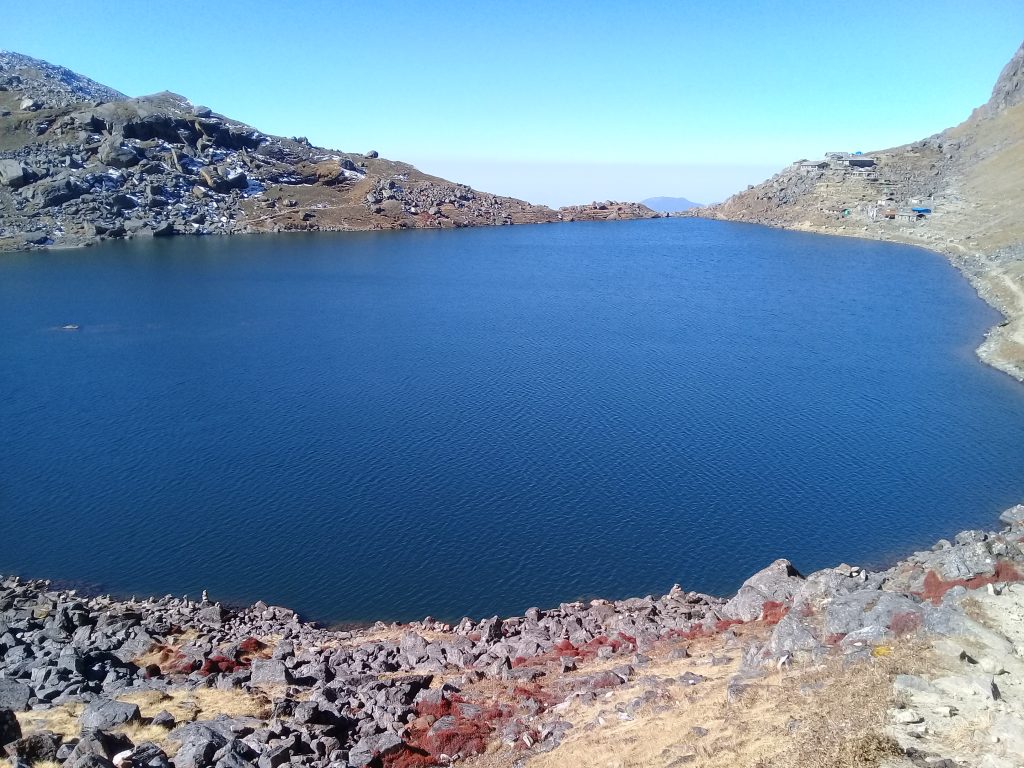
Everest Basecamp, Ama Dablam Basecamp 13 Days

Everest Basecamp, Ama Dablam Basecamp 13 Days
Keywords
Trip code
WT-CODE 3085
- Overview
- Trip Outline
- Trip Includes
- Trip Excludes
- Gallery
- Reviews
- Booking
- FAQ
The adventure begins with a thrilling flight from Kathmandu (or Ramechhap during peak seasons) to Lukla, the gateway to the Everest region. From Lukla, the trail follows the scenic Dudh Koshi River through charming Sherpa villages such as Phakding and Namche Bazaar. As you ascend higher into the Sagarmatha National Park, a UNESCO World Heritage Site, you pass through dense forests of rhododendron, pine, and juniper before entering the alpine landscapes of the upper Khumbu Valley. Along the way, trekkers enjoy magnificent views of snow-covered peaks, suspension bridges adorned with colorful prayer flags, traditional mani walls, and spinning prayer wheels that reflect the region’s deep Buddhist heritage.
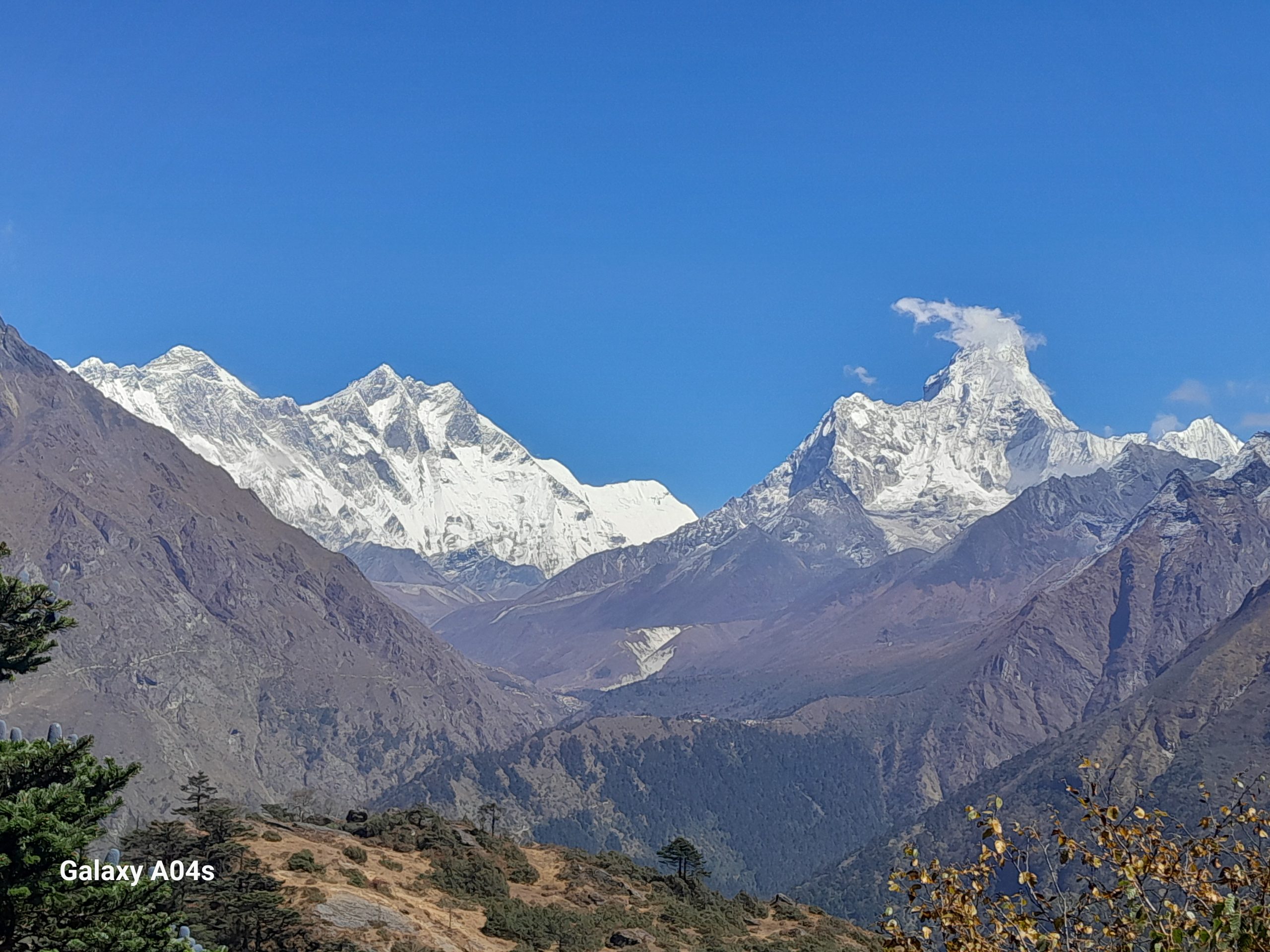
One of the highlights of the trek is a visit to Ama Dablam Base Camp. Standing at 6,812 meters (22,349 feet), Ama Dablam is widely regarded as one of the most beautiful mountains in the world because of its elegant pyramid shape and dramatic ridges. The name “Ama Dablam” translates to “Mother’s Necklace,” referring to the mountain’s resemblance to a mother protecting her child, with the hanging glacier representing the traditional Sherpa pendant known as a “dablam.” The base camp lies on a broad grassy meadow surrounded by towering cliffs, glaciers, and panoramic Himalayan vistas. Unlike the busy Everest Base Camp trail, Ama Dablam Base Camp offers a peaceful atmosphere where trekkers can fully appreciate the mountain’s grandeur and observe climbing expeditions preparing for their ascent during the spring and autumn climbing seasons.
From Ama Dablam Base Camp, the trek continues toward the upper Khumbu Valley, passing through the famous monastery village of Tengboche and the high-altitude settlements of Dingboche, Lobuche, and Gorakshep. Each village offers a unique glimpse into Sherpa life, with welcoming tea houses, yak pastures, and spectacular mountain scenery. The gradual ascent allows proper acclimatization while revealing increasingly dramatic views of Mount Everest, Lhotse, Nuptse, Pumori, Thamserku, Kangtega, Lobuche Peak, Cholatse, and many other Himalayan giants.
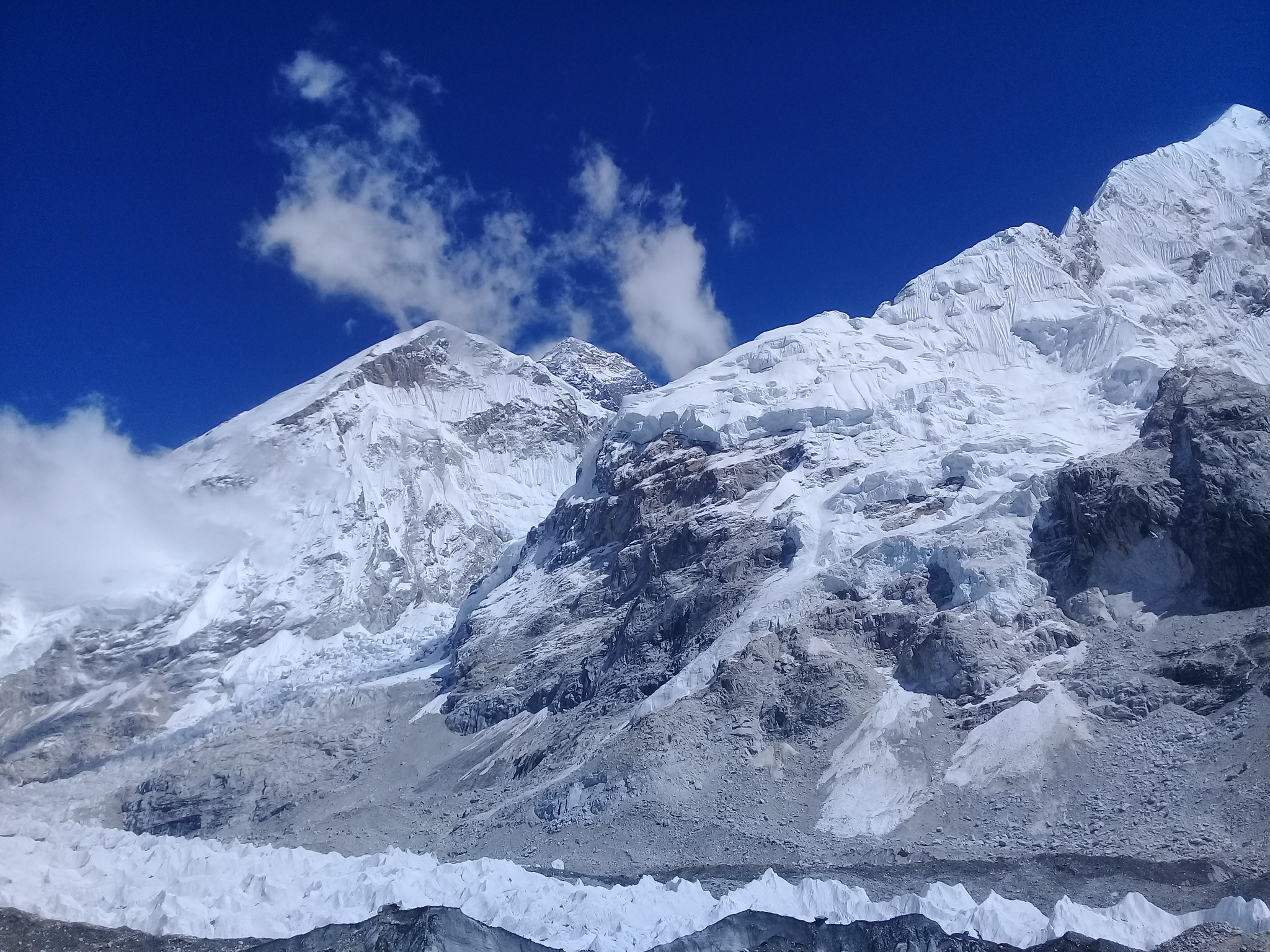
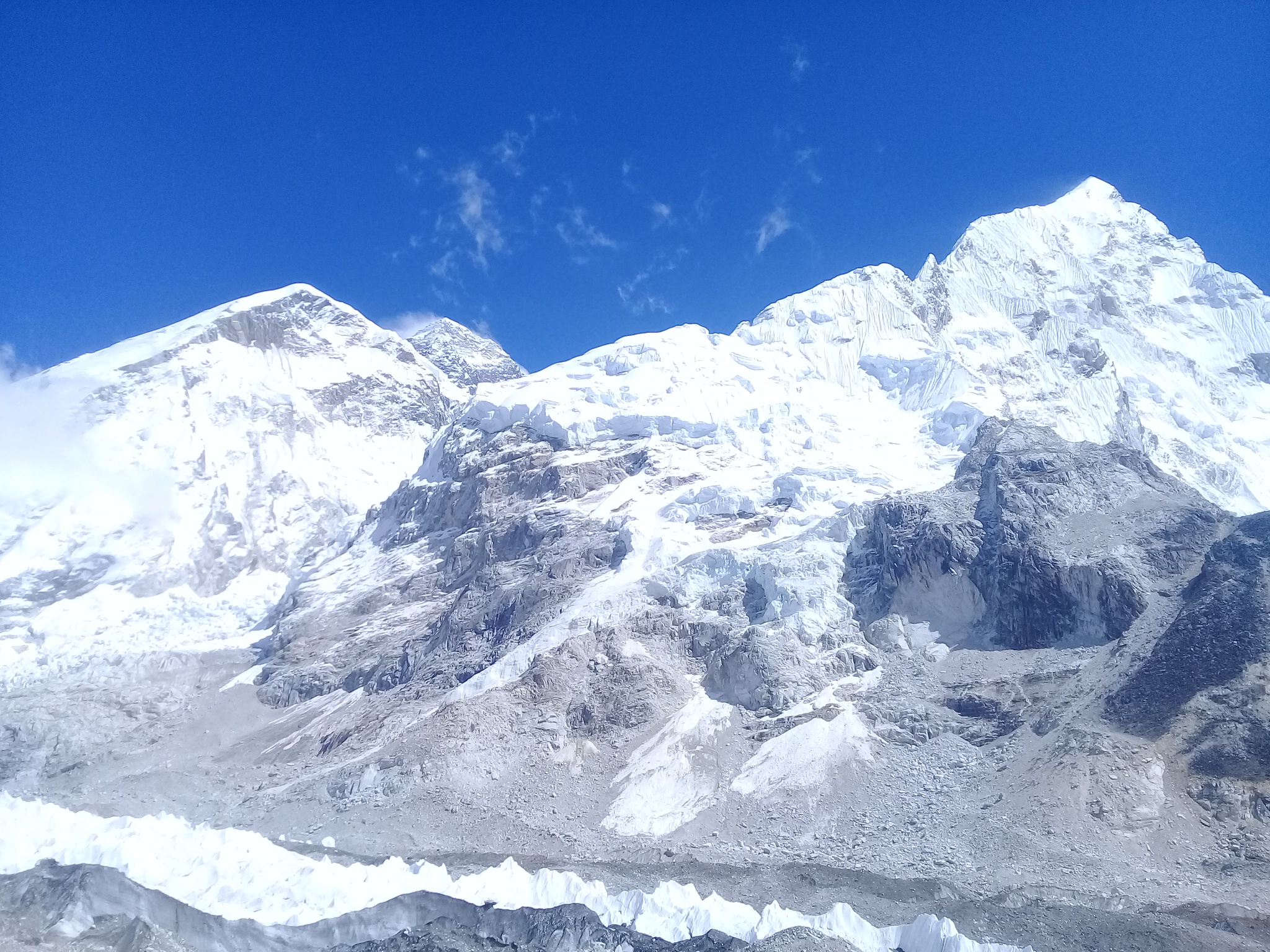
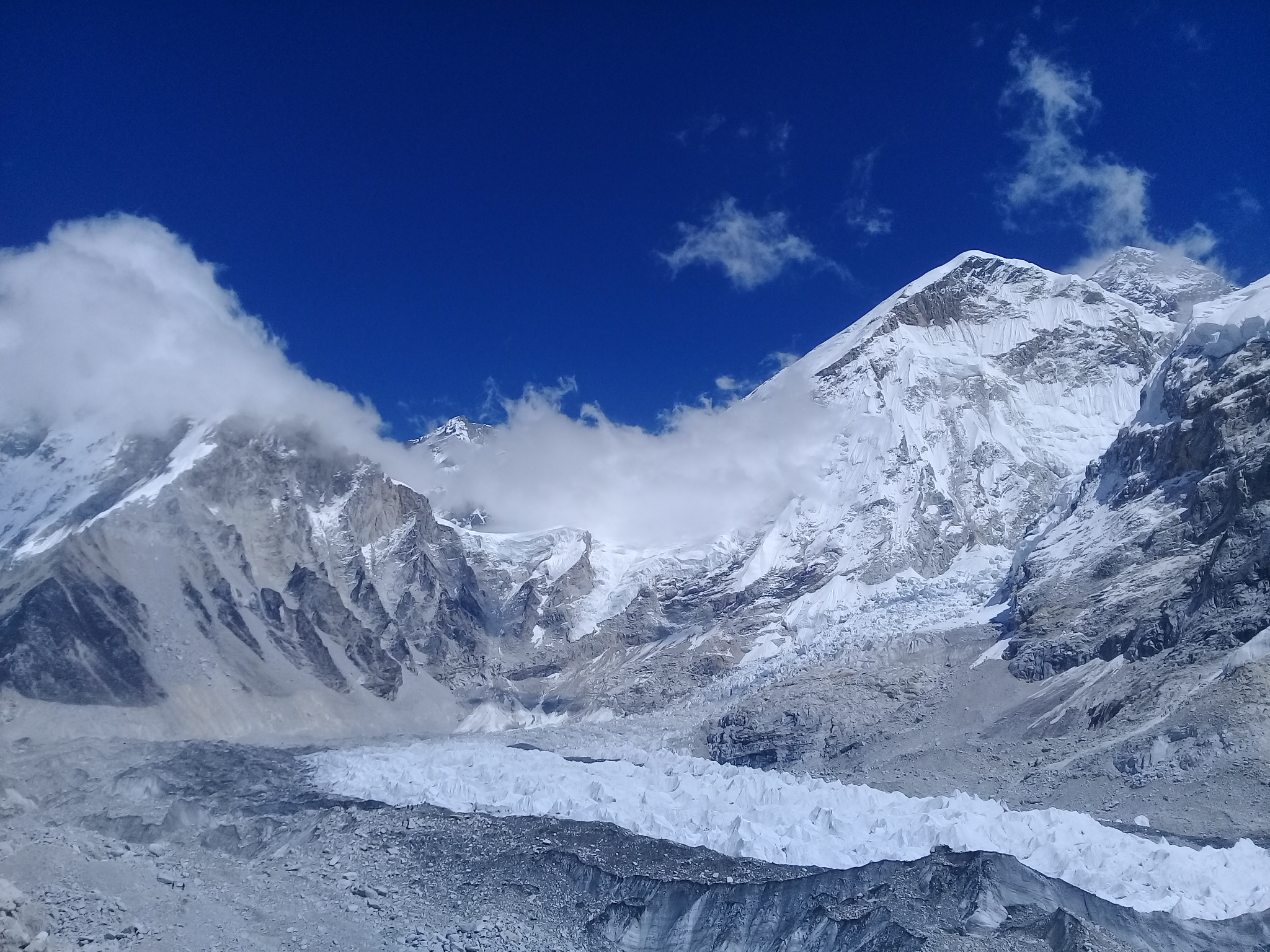
Reaching Everest Base Camp is the defining achievement of this extraordinary trek. Situated at an elevation of 5,364 meters (17,598 feet), Everest Base Camp serves as the primary staging area for climbers attempting to summit Mount Everest from the Nepalese side. During the spring climbing season, the base camp transforms into a colorful tent city occupied by mountaineers, guides, and support staff from around the world. Trekkers can witness the famous Khumbu Icefall, one of the most technically demanding sections of the Everest climbing route, while experiencing the excitement and atmosphere that surrounds Himalayan expeditions. Standing at the foot of the world’s highest mountain is an unforgettable experience that symbolizes determination, adventure, and the spirit of exploration.
Another unforgettable highlight is the early morning hike to Kala Patthar (5,545 meters/18,192 feet), the highest viewpoint of the trek. Although Everest Base Camp itself does not provide a clear view of Mount Everest’s summit, Kala Patthar offers the finest panoramic perspective in the entire Khumbu region. From its summit, trekkers are rewarded with breathtaking sunrise views over Mount Everest, Lhotse, Nuptse, Pumori, Lingtren, Changtse, and the surrounding Himalayan peaks as the first rays of sunlight illuminate the snow-covered mountains in brilliant shades of gold and orange.
Beyond its spectacular scenery, the trek offers a profound cultural experience. The Khumbu region is home to the Sherpa people, renowned worldwide for their mountaineering expertise, warm hospitality, and strong Buddhist traditions. Throughout the journey, trekkers visit ancient monasteries, pass intricately carved mani stones, spin prayer wheels, and walk beneath fluttering prayer flags that symbolize peace and compassion. Tengboche Monastery, the largest and most important monastery in the Everest region, provides an opportunity to witness traditional Buddhist ceremonies while surrounded by some of the Himalayas’ most stunning mountain panoramas.
The trek also showcases the incredible biodiversity of Sagarmatha National Park. Depending on the season, trekkers may encounter Himalayan tahr, musk deer, blue sheep, Himalayan monal (Nepal’s national bird), snow pigeons, blood pheasants, and various species of alpine wildlife. The changing landscapes—from lush forests to glacial valleys and rugged alpine terrain—make every day visually rewarding.
The Ama Dablam Base Camp and Everest Base Camp Trek is considered moderately to highly challenging due to its high elevations, long walking days, and demanding mountain environment. Proper acclimatization, good physical fitness, and a gradual ascent are essential for safely completing the journey. Most itineraries range from 14 to 18 days, allowing sufficient time to adapt to the altitude while fully enjoying the region’s natural beauty and cultural richness.
This trek is ideal for experienced hikers, adventure enthusiasts, photographers, and nature lovers seeking a comprehensive Everest experience beyond the traditional Everest Base Camp route. By combining the serene beauty of Ama Dablam Base Camp with the legendary destination of Everest Base Camp, trekkers experience two of the Himalayas’ most iconic locations in a single unforgettable adventure. The journey offers a perfect balance of world-class mountain scenery, authentic Sherpa culture, spiritual heritage, and the unmatched satisfaction of trekking through one of the most celebrated mountain regions on Earth.
The detailed day-by-day itinerary for the 13-Day Everest Base Camp and Ama Dablam Base Camp Trek is outlined below. Each day has been carefully planned to ensure proper acclimatization while allowing you to experience the region’s breathtaking Himalayan scenery, authentic Sherpa culture, and two of the Everest region’s most iconic destinations—Ama Dablam Base Camp and Everest Base Camp.
Itineraries
Day 1
to Lukla (2,860 m) and Trek to Phakding (2,610 Flym)
Overnight Altitude: 2,610 meters / 8,563 feet
Meals: Breakfast, Lunch & Dinner
Accommodation: Tea House
Your adventure begins with a spectacular mountain flight from Kathmandu (or Ramechhap during peak seasons) to Lukla, one of the world’s most thrilling and scenic airports. During the 35 to 45-minute flight, enjoy breathtaking aerial views of the Himalayan range, including Mount Everest, Lhotse, Nuptse, and countless snow-capped peaks.
Upon landing in Lukla, you will meet your trekking crew and begin your journey toward Phakding. The trail descends gently through picturesque Sherpa villages, lush pine and rhododendron forests, and cultivated farmlands while following the crystal-clear waters of the Dudh Koshi River.
Along the way, you will cross several traditional suspension bridges decorated with colorful prayer flags and pass ancient mani stones, spinning prayer wheels, and small Buddhist shrines that reflect the rich spiritual heritage of the Khumbu region.
After approximately three to four hours of trekking, you will arrive in the peaceful village of Phakding. Nestled beside the Dudh Koshi River at an altitude of 2,610 meters, this charming settlement is surrounded by dense pine forests and towering hills, making it an ideal place to spend your first night in the Everest region before continuing higher into the Himalayas.
Day 2
Trek from Phakding to Namche Bazaar (3,440 m)
Overnight Altitude: 3,440 meters / 11,286 feet
Meals: Breakfast, Lunch & Dinner
Accommodation: Tea House
After breakfast, you will begin one of the most rewarding trekking days of your journey. The trail follows the Dudh Koshi River through beautiful forests, crossing several iconic suspension bridges, including the famous Hillary Suspension Bridge.
As you trek through the traditional Sherpa villages of Toktok, Benkar, and Monjo, magnificent views of Thamserku (6,623 m) and Kusum Kanguru gradually emerge. Upon reaching Monjo, you will enter Sagarmatha National Park, a UNESCO World Heritage Site renowned for its spectacular mountain landscapes, diverse wildlife, and rich Sherpa culture.
After completing the park permit formalities, the trail continues through the small village of Jorsalle before following the river upstream. From here begins the day’s most challenging section—a steady uphill climb through dense forests of pine, fir, and rhododendron.
On a clear day, you will enjoy your first unforgettable glimpse of Mount Everest, standing proudly above the surrounding Himalayan peaks. The final ascent leads you to Namche Bazaar, the vibrant Sherpa capital of the Khumbu region.
After checking into your lodge, you can relax with a warm cup of tea or explore the lively streets filled with bakeries, trekking shops, cafés, and traditional markets.
Day 3
Acclimatization Day in Namche Bazaar
Overnight Altitude: 3,440 meters / 11,286 feet
Meals: Breakfast, Lunch & Dinner
Accommodation: Tea House
Today’s acclimatization day is essential for allowing your body to adjust safely to the increasing altitude. Rather than remaining inactive, you will follow the mountaineering principle of “climb high, sleep low.”
After breakfast, you will hike to the renowned Everest View Hotel (3,880 m), one of the highest luxury hotels in the world. The trail rewards you with breathtaking panoramic views of Mount Everest, Lhotse, Ama Dablam, Nuptse, Thamserku, and Kongde Ri. This scenic hike significantly improves acclimatization while offering some of the finest mountain vistas in the Khumbu region.
After returning to Namche Bazaar, you will have plenty of time to explore this vibrant mountain town. Visit the Sherpa Culture Museum and the Sagarmatha National Park Visitor Center to learn about Sherpa traditions, Himalayan wildlife, and the remarkable history of Everest expeditions.
If your visit falls on a Saturday, you may also experience Namche’s traditional weekly market, where local Sherpas and Tibetan traders gather to sell fresh produce, handmade crafts, yak products, and trekking supplies.
The remainder of the afternoon can be spent relaxing at a café, browsing local shops, or simply enjoying the lively atmosphere of the gateway to Everest.
Day 4
Trek from Namche Bazaar to Tengboche (3,860 m)
Overnight Altitude: 3,860 meters / 12,664 feet
Meals: Breakfast, Lunch & Dinner
Accommodation: Tea House
Leaving Namche Bazaar behind, today’s trail follows one of the most scenic sections of the Everest Base Camp route. The relatively gentle path traverses high above the Dudh Koshi Valley, offering uninterrupted views of Everest, Lhotse, Nuptse, Ama Dablam, Thamserku, and Kangtega.
The trail gradually descends through beautiful forests of rhododendron, pine, fir, and juniper before reaching the riverside settlement of Phunki Tenga, where you will stop for lunch.
From here begins a steady uphill climb through peaceful forests rich with Himalayan wildlife and colorful birdlife. During spring, blooming rhododendrons transform the hillside into a vibrant display of red, pink, and white blossoms.
After several hours of climbing, you will arrive at the magnificent Tengboche Monastery, the largest and most important Buddhist monastery in the Everest region. Set against the stunning backdrop of Ama Dablam, the monastery offers a truly spiritual atmosphere. If time permits, you may witness monks performing traditional Buddhist prayer ceremonies, adding a memorable cultural experience to your Himalayan adventure.
Day 5
Trek from Tengboche to Pangboche (3,985 m)
Overnight Altitude: 3,985 meters / 13,074 feet
Meals: Breakfast, Lunch & Dinner
Accommodation: Tea House
Today’s trek is relatively short yet incredibly rewarding as you continue deeper into the heart of the Khumbu Valley. Leaving Tengboche, the trail descends gently through peaceful forests of birch, fir, and rhododendron before crossing the Imja Khola River.
As the landscape gradually opens, the magnificent pyramid-shaped Ama Dablam dominates the skyline, providing spectacular photo opportunities throughout the day.
The trail passes ancient mani walls, colorful prayer flags, and traditional Sherpa settlements before reaching Pangboche, one of the oldest permanent villages in the Everest region.
Situated beneath the towering face of Ama Dablam, Pangboche is renowned for its centuries-old monastery, rich Buddhist heritage, and strong mountaineering traditions. Many legendary Sherpa climbers have called this village home, making it one of the most culturally significant settlements in the Khumbu region.
The remainder of the day can be spent exploring the village, visiting the historic monastery, or simply enjoying the incredible mountain scenery from your teahouse.
Day 6
Hike to Ama Dablam Base Camp (4,600 m) and Return to Pangboche
Overnight Altitude: 3,985 meters / 13,074 feet
Meals: Breakfast, Lunch & Dinner
Accommodation: Tea House
Today marks one of the most memorable highlights of your journey as you hike to the spectacular Ama Dablam Base Camp, situated at an altitude of 4,600 meters beneath one of the world’s most beautiful mountains.
After breakfast, you will leave Pangboche and ascend gradually across alpine meadows and traditional yak grazing pastures. As the trail climbs higher, the vegetation becomes sparse, giving way to rugged moraine, rocky ridges, and glacial landscapes.
Throughout the ascent, breathtaking panoramic views unfold in every direction. You will overlook the Imja Valley while enjoying magnificent views of Everest, Lhotse, Nuptse, Island Peak, Taboche, and numerous surrounding Himalayan peaks.
After several hours of steady climbing, you will reach Ama Dablam Base Camp—a peaceful alpine meadow surrounded by towering cliffs, glaciers, and dramatic mountain scenery. Directly above rises the magnificent southwest face of Ama Dablam (6,812 m), whose iconic hanging glacier resembles the traditional Sherpa pendant known as the “Dablam.”
Take time to rest, absorb the spectacular scenery, and capture unforgettable photographs before beginning your descent. During the return journey, you may spot Himalayan tahr, blood pheasants, or other wildlife native to the high Himalayas.
By early afternoon, you will arrive back in Pangboche, where you can spend the remainder of the day relaxing at your teahouse while reflecting on one of the most rewarding excursions in the Everest region.
Day 7
Trek from Pangboche to Dingboche (4,410 m)
Overnight Altitude: 4,410 meters / 14,469 feet
Meals: Breakfast, Lunch & Dinner
Accommodation: Tea House
After breakfast, you will leave Pangboche and continue trekking toward Dingboche through the beautiful Imja Valley. The trail gradually ascends across alpine meadows, yak pastures, and traditional stone-walled fields, offering magnificent views of Ama Dablam, Lhotse, Nuptse, Island Peak, and other surrounding Himalayan peaks.
Passing through the small settlements of Shomare and Orsho, you will cross the Imja Khola before making a steady climb to Dingboche. As the landscape becomes more rugged and vegetation grows sparse, you will truly feel yourself entering the high Himalayas.
After approximately four to five hours of trekking, you will arrive at the picturesque Sherpa village of Dingboche. Surrounded by towering snow-capped mountains, this beautiful village is an ideal place to rest, acclimatize, and prepare for the higher elevations ahead.
Day 8
Trek from Dingboche to Lobuche (4,940 m)
Overnight Altitude: 4,940 meters / 16,207 feet
Meals: Breakfast, Lunch & Dinner
Accommodation: Tea House
After breakfast, you will leave Dingboche and continue your ascent toward Lobuche through the rugged alpine landscapes of the upper Khumbu Valley. The trail gradually climbs to Thukla (Dhukla), where you will pause before making the steep ascent to the Thukla Memorial, a moving site dedicated to the Sherpas and mountaineers who lost their lives while climbing Everest.
From the memorial, the trail follows the edge of the magnificent Khumbu Glacier, offering dramatic views of its rugged ice formations and the surrounding Himalayan peaks. As the terrain becomes increasingly barren and windswept, you will truly experience the raw beauty of the high Himalayas.
After approximately six hours of trekking, you will arrive at the small settlement of Lobuche. Surrounded by towering mountains and glacial landscapes, Lobuche serves as the final overnight stop before your journey to Everest Base Camp.
Day 9
Trek from Lobuche to Gorak Shep (5,164 m) and Hike to Everest Base Camp (5,364 m)
Overnight Altitude: 5,164 meters / 16,942 feet
Meals: Breakfast, Lunch & Dinner
Accommodation: Tea House
Today is the most anticipated and rewarding day of your Everest adventure as you make your way to the legendary Everest Base Camp (5,364 m). After breakfast, you will leave Lobuche and follow the rugged trail alongside the Khumbu Glacier, surrounded by dramatic glacial moraine and towering Himalayan peaks.
After approximately three hours of trekking, you will reach Gorak Shep, the last permanent settlement in the Everest region. After checking into your teahouse and enjoying lunch, you will continue your hike toward Everest Base Camp.
The trail winds across rocky glacial terrain with spectacular views of the Khumbu Icefall and the surrounding mountains. Upon reaching Everest Base Camp, you will stand at the foot of the world’s highest mountain, surrounded by breathtaking Himalayan scenery. During the spring climbing season, you may also witness colorful expedition camps preparing for summit attempts, creating an unforgettable atmosphere.
After spending time exploring, taking photographs, and celebrating your achievement, you will retrace your steps to Gorak Shep for a well-earned dinner and overnight stay.
Day 10
Sunrise Hike to Kala Patthar (5,550 m) and Trek to Pheriche (4,280 m)
Overnight Altitude: 4,280 meters / 14,042 feet
Meals: Breakfast, Lunch & Dinner
Accommodation: Tea House
Before dawn, you will begin an unforgettable hike to Kala Patthar (5,550 m), the highest viewpoint of the trek and the best location to admire Mount Everest. As the sun rises over the Himalayas, the snow-covered peaks of Everest, Lhotse, Nuptse, Pumori, and the surrounding mountains glow in spectacular shades of gold and orange, creating one of the most memorable moments of the journey.
After enjoying the magnificent panorama, you will descend to Gorak Shep for breakfast before beginning your trek back down the valley. Following the familiar trail alongside the Khumbu Glacier, you will gradually descend through Lobuche and Thukla before reaching the peaceful village of Pheriche.
The lower altitude provides welcome relief after several days spent high in the mountains, allowing you to relax and recover for the remainder of your trek.
Day 11
Trek from Pheriche to Namche Bazaar (3,440 m)
Overnight Altitude: 3,440 meters / 11,286 feet
Meals: Breakfast, Lunch & Dinner
Accommodation: Tea House
After breakfast, you will continue your descent through the beautiful Khumbu Valley. Passing through Pangboche and Tengboche, you will once again enjoy magnificent views of Ama Dablam, Everest, and other surrounding Himalayan peaks.
After visiting the forests of rhododendron, pine, and juniper near Tengboche, the trail descends to Phunki Tenga before making the final gradual climb back to Namche Bazaar. Although you are following the same route, the changing perspective offers fresh views of the spectacular mountain scenery.
Upon arrival in Namche, you can celebrate your successful Everest Base Camp journey with a warm meal, fresh coffee, or a visit to one of the village’s bakeries and cafés.
Day 12
Trek from Namche Bazaar to Lukla (2,860 m)
Overnight Altitude: 2,860 meters / 9,383 feet
Meals: Breakfast, Lunch & Dinner
Accommodation: Tea House
Today marks your final day of trekking in the Everest region. Leaving Namche Bazaar, you will descend through dense forests and traditional Sherpa villages while crossing several suspension bridges over the Dudh Koshi River.
The trail passes through Monjo, the exit point of Sagarmatha National Park, before continuing through Phakding and finally returning to Lukla. Along the way, you can reflect on the incredible experiences and achievements of your Himalayan adventure.
Upon arrival in Lukla, you can relax at your teahouse, enjoy a hot shower, and celebrate the successful completion of one of the world’s most iconic trekking journeys with your guides and fellow trekkers.
Day 13
Fly from Lukla to Kathmandu
Overnight Altitude: 1,400 meters / 4,593 feet
Meals: Breakfast
Accommodation: 3-Star Hotel
After an early breakfast, you will board a scenic mountain flight from Lukla to Kathmandu (or Ramechhap during peak trekking seasons). The short flight offers one final opportunity to admire the breathtaking Himalayan landscapes from above before returning to Nepal’s vibrant capital.
Upon arrival in Kathmandu, you will be transferred to your hotel. The remainder of the day is free to relax, explore the city’s cultural landmarks, shop for souvenirs, or enjoy a farewell dinner celebrating the successful completion of your unforgettable Everest Base Camp and Ama Dablam Base Camp adventure.
Cost Includes
- All necessary trekking permits such as Sagarmatha National park, TIMS card, etc.
- Flights to and from Lukla
- All accommodations during the trek
- Three meals a day during the trek
- A cup of tea or coffee each time with the meal
- Fresh fruits if and when available
- Complimentary duffel bag, down jacket, trekking map, and sleeping bag if needed
- Government-trained first-aid trained professional local guide who speaks English
- First-aid kit
- Staff (Guide and Porter ) insurance, meals, accommodation, equipment, transportation, etc.
- Rescue arrangements if necessary
- Agency service charge and government tax/VAT
- Certificate of achievement
Cost Excludes
- International airfare and Nepal visa fee
- Lunch and Dinner in Kathmandu
- Personal Insurance, personal expenses, loss of property and theft, etc.
- Sightseeing costs in the city. (temples, monasteries entrance fee, etc.)
- All beverages, snacks, and additional expenses such as laundry, hot showers, battery charging, Wifi, etc.
- Additional cost due to natural calamities and unforeseen circumstances
- Tip to staff





The trek is considered moderately to highly challenging due to its high altitude, long trekking days, and rugged mountain terrain. A good level of physical fitness and proper acclimatization are essential for completing the trek safely and comfortably.
The highest point of the trek is Kala Patthar (5,550 meters / 18,209 feet), which offers the best panoramic views of Mount Everest. Everest Base Camp sits at 5,364 meters (17,598 feet), while Ama Dablam Base Camp is located at 4,600 meters (15,092 feet).
The best seasons are spring (March to May) and autumn (September to November). These months offer stable weather, excellent mountain visibility, comfortable trekking temperatures, and ideal trail conditions.
Previous trekking experience is helpful but not mandatory. If you have good physical fitness, determination, and adequate preparation, you can successfully complete the trek with the guidance of experienced trekking staff.
Yes. Since the trek reaches elevations above 5,000 meters, there is a risk of Acute Mountain Sickness (AMS). A well-planned itinerary with acclimatization days, gradual ascent, proper hydration, and experienced guides greatly reduces the risk.
You will need the Sagarmatha National Park Entry Permit and the Khumbu Pasang Lhamu Rural Municipality Permit. These permits are mandatory for all trekkers visiting the Everest region.
Accommodation is provided in comfortable mountain teahouses. Lower elevations offer more facilities, while lodges at higher altitudes provide clean, simple rooms with shared dining areas and basic amenities.
Teahouses offer a variety of meals, including Nepali Dal Bhat, noodles, fried rice, soups, pasta, potatoes, eggs, pancakes, porridge, tea, coffee, and other international dishes designed to provide energy during the trek.
Yes. Beginners with good physical fitness, proper training before the trek, and a gradual itinerary that includes acclimatization days can successfully complete this adventure.
This trek combines two of the Everest region’s most iconic destinations. In addition to reaching Everest Base Camp and Kala Patthar, you’ll visit the peaceful Ama Dablam Base Camp, enjoy spectacular views of Everest, Lhotse, Nuptse, and Ama Dablam, explore traditional Sherpa villages, visit Tengboche Monastery, and experience the rich culture of the Khumbu region.
Adding Ama Dablam Base Camp provides a quieter and less crowded side excursion while offering incredible close-up views of one of the world’s most beautiful mountains. It creates a more complete Everest experience by combining world-famous landmarks, pristine alpine scenery, and authentic Sherpa culture into a single unforgettable adventure.
There are no reviews yet.