
Ganesh Himal & Ruby Valley Trek

Ganesh Himal & Ruby Valley Trek
The Short Ganesh Himal Trek is a remote and culturally immersive trekking experience in central Nepal, located between the Langtang Himal and Manaslu Himal regions.
Keywords
Trip code
WT-CODE 1980
- Overview
- Trip Outline
- Trip Includes
- Trip Excludes
- Gallery
- Reviews
- Booking
- FAQ
Nestled between Langtang National Park and Manaslu Conservation Area lies one of Nepal’s most untouched trekking regions — Ganesh Himal and Ruby Valley.
Located northwest of Kathmandu, this remote Himalayan region offers pristine landscapes, authentic Tamang and Gurung culture, sacred alpine lakes, dramatic passes, and a fascinating gemstone history.
The trek is dominated by the majestic Ganesh Himal range, including:
- Ganesh I (Yangra) – 7,422 m
- Ganesh II – 7,118 m
- Ganesh III – 7,043 m
- Ganesh IV – 7,104 m
The route crosses scenic high passes such as Pangsang Bhanjyang (3,850 m) and reaches sacred lakes Kalo & Seto Kunda, offering a rare combination of wilderness, spirituality, geology, and authentic Himalayan village life.
Unlike Everest or Annapurna, this region remains quiet, culturally preserved, and ideal for trekkers seeking true off-the-beaten-path adventure.
No details found.
Itineraries
Day 1
Drive Kathmandu to Syabrubesi (1,460 m)
Your journey begins with an early morning scenic drive north from Kathmandu along the Trishuli River. The road winds through terraced hills, rural settlements, and lush green valleys. As you follow the river corridor, you may catch distant views of Ganesh Himal and surrounding peaks on a clear day. The drive passes through Dhunche, the administrative headquarters of Rasuwa District, offering mountain scenery and hillside villages. The road can be bumpy in sections, especially after Dhunche. Gradually, you descend to Syabrubesi, a lively Tamang town that serves as the gateway to Langtang and Ganesh Himal regions. The village has basic shops, restaurants, and lodges. Overnight stay at lodge.
Day 2
Trek Syabrubesi to Gatlang (2,238 m) via Goljung
After breakfast, you begin a steady uphill climb from Syabrubesi toward Goljung village. The trail ascends through terraced farmlands and scattered Tamang settlements. Goljung offers beautiful views of the Ganesh Himal range and insight into traditional Tamang culture. Continuing onward, the trail climbs gradually along ridges with expanding mountain panoramas. You observe stone houses with wooden carvings and prayer flags fluttering in the wind. Gatlang is a charming hillside village surrounded by terraced fields and traditional architecture. You may visit the local monastery and the sacred Parvati Kunda Lake nearby. Overnight at lodge.
Day 3
Trek Gatlang to Somdang (3,271 m)
Today the trail initially follows a rough motorable road before turning into a forest path. As you gain altitude, spectacular views of Langtang Lirung and Ganesh Himal become visible. The trail passes through pine and rhododendron forests with occasional glimpses of grazing yaks. You cross small streams and continue ascending toward Somdang. This area is historically known for zinc mining activity. The settlement is remote and quiet, surrounded by alpine terrain and dramatic ridges. The landscape begins to feel more rugged and less populated. Overnight at camp or homestay.
Day 4
Trek Somdang to Pangsang Bhanjyang (3,850 m) via Paldor Bhanjyang (3,600 m)
The trail climbs gradually through alpine meadows and forest sections toward Paldor Bhanjyang. As you ascend higher, the vegetation becomes thinner and mountain views expand dramatically. Upon reaching Pangsang Bhanjyang, you are rewarded with breathtaking panoramic views of Ganesh Himal, Manaslu, Langtang, and even Annapurna ranges on clear days. Colorful prayer flags decorate the ridge, creating a spiritual mountain atmosphere. The high pass is one of the best viewpoints in the entire trek. The sunset and sunrise views here are spectacular. Overnight at camp or homestay.
Day 5
Trek Pangsang Bhanjyang to Chalise (2,000 m)
Today involves a long descent through forests of bamboo, pine, and rhododendron. You pass through Tipling village, a culturally rich Tamang settlement with chortens, a monastery, and even a small church. The houses are built of stone and wood, and locals are known for bamboo craftsmanship. The trail continues downhill toward Gorkhen Khola, crossing a suspension bridge. After crossing the river, a steady uphill climb brings you to Sertung and finally Chalise village. Chalise is a traditional Gurung village known for its cultural harmony. Overnight at camp or homestay.
Day 6
Trek Chalise to Hindung (2,420 m)
The trail descends gently to Menchet Khola before beginning a steady climb toward Hindung. Along the way, you walk through terraced farmland and small Tamang settlements. The landscape is peaceful and rural, with locals engaged in farming activities. Hindung is a large Tamang village rich in Buddhist culture, with mani walls and prayer flags decorating the entrance. Agriculture is the main livelihood, and crops such as millet, barley, and potatoes are widely grown. The village offers beautiful views of surrounding hills and distant peaks. Overnight at camp or homestay.
Day 7
Trek Hindung to Rajgang Kharka (3,780 m)
Leaving Hindung, the trail climbs steadily through dense rhododendron forest. During spring, the forest blooms with vibrant red and pink flowers. The route gradually becomes more alpine as you approach Rajgang Kharka, a high grazing pasture. In summer and autumn, locals bring sheep and livestock here for grazing. The open meadow offers expansive mountain views and fresh alpine air. Wildlife such as Himalayan thar and various birds may be spotted. The environment feels remote and pristine. Overnight at camp or homestay.
Day 8
Trek Rajgang Kharka to Kalo Seto Kunda (3,691 m)
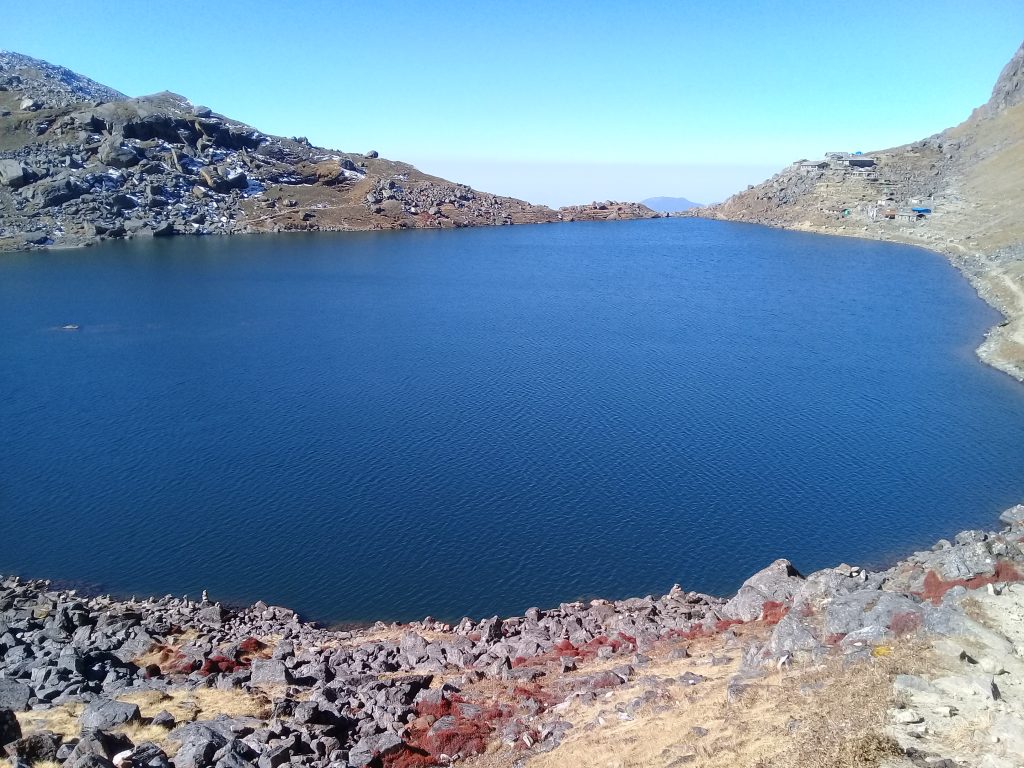
The trail climbs gradually through alpine terrain and rocky ridges. Vegetation becomes sparse as you approach higher elevation. Kalo (Black) and Seto (White) Kunda are sacred lakes with unique characteristics — black stones cover one lake while white stones cover the other. The lakes are considered holy by locals and are especially beautiful under clear skies. During winter, the lakes freeze completely. The surrounding mountain backdrop adds to the dramatic beauty of the area. Overnight camping near the lakes.
Day 9
Rest & Acclimatization – Ganesh Himal Base Camp (3,691 m)
This day is reserved for rest and acclimatization. You can explore around the lakes and hike toward viewpoints offering closer views of Ganesh I, II, III, and Paldor Himal. The alpine setting provides excellent photography opportunities. The silence and remoteness of the base camp area create a true Himalayan wilderness experience. Spending time at altitude helps your body adjust before descending. Overnight at camp.
Day 10
Trek Ganesh Himal Base Camp to Rajgang Kharka (3,780 m)
You retrace your steps along alpine ridges and descend through shrubland and meadows. The return walk offers different perspectives of the landscape. The downhill sections are gradual but require careful footing. Rajgang Kharka welcomes you again with open pastures and peaceful surroundings. Overnight at camp or homestay.
Day 11
Trek Rajgang Kharka to Chalise (2,000 m)
The descent continues through forest and hillside villages. Passing Hindung again, you follow familiar trails down to Chalise. The warmer climate and thicker vegetation return as you lose altitude. Evening at the village allows interaction with local families. Overnight at camp or homestay.
Day 12
Trek Chalise to Laba Village (1,750 m)
The trail descends to Laba Besi and then climbs gently toward Laba village. Pine forests and terraced fields dominate the landscape. Laba is a beautiful Gurung settlement with preserved cultural traditions. The peaceful rural setting provides a relaxing atmosphere. Overnight at camp or homestay.
Day 13
Trek Laba to Manyang Bhanjyang (2,934 m)
The trail ascends steadily through rhododendron and oak forests. Wildlife and bird species are commonly seen along the route. Manyang Bhanjyang is a scenic ridge offering first dramatic views of Ganesh Himal. The open grassland makes an excellent camping site. Overnight at camp.
Day 14
Trek Manyang Bhanjyang to Majhgaun (2,200 m)
Today involves descent through forest and terraced villages. On clear days, Manaslu and Buddha Peak are visible. Majhgaun is a peaceful agricultural village. Overnight at camp or homestay.
Day 15
Trek Majhgaun to Budhathum (852 m)
The final trekking day is mostly downhill through villages and forest trails. Budhathum is a small bazaar area with shops and lodges. The warmer subtropical climate signals the end of high mountain trekking. Overnight at lodge.
Day 16
Drive Budhathum to Kathmandu (1,400 m)
After breakfast, you take a scenic drive back to Kathmandu along river valleys and rural hills. The trek concludes with unforgettable memories of Ganesh Himal and Ruby Valley.
- Airport pick-up & drop-off (private vehicle)
- Licensed trekking guide
- Required porters & cook
- All meals during trek (Breakfast, Lunch, Dinner)
- Accommodation (Lodge / Camp / Homestay)
- Camping equipment (tents, mattress, sleeping bag, poles, utensils)
- Langtang National Park Entry Permit
- TIMS Card
- Private jeep transportation
- Staff insurance, salary & equipment
- First aid kit
- Tax, VAT & service charge
- Rescue coordination support
- Personal expenses
- Travel & medical insurance
- Lunch & dinner in Kathmandu
- Tips for staff
- Alcoholic beverages
No, it is one of the least crowded trekking routes in Nepal.
Moderate fitness is sufficient.
Yes, the trek requires:
Trekking boots, walking poles, down jackets, warm clothing.
Sleeping bag, personal trekking gear.
All essential trekking equipment is provided if you book the full package.
Maximum altitude is below 4,000 m; proper pacing minimizes risk.
There are no reviews yet.